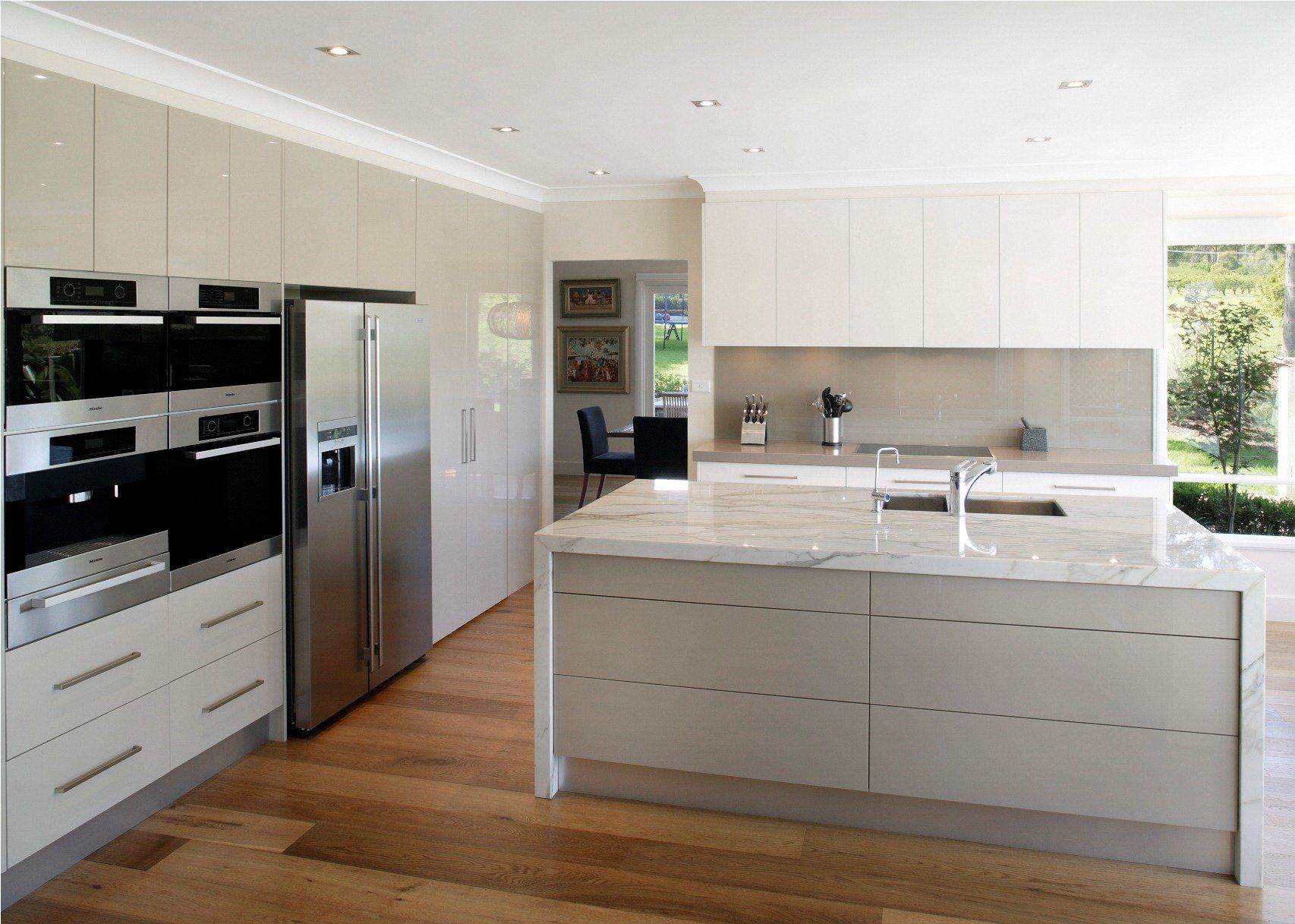
You're staring at those dated, honey-oak cabinets again. You hate them. But a full kitchen remodel costs as much as a new car, and painting takes three days of sanding and crying. So you start thinking about wallpaper on kitchen cupboards. It sounds like a hack you'd see on a late-night Pinterest scroll, but honestly, people are doing it—and it actually looks decent if you don't mess up the prep.
It's not just for grandma's floral prints anymore.
Modern peel-and-stick options have changed the game completely. We aren't talking about the flimsy contact paper from the 90s that bubbled if you breathed on it. Today's high-end vinyls are thick, wipeable, and—crucially—removable. This makes them a lifesaver for renters or anyone who has "decorating commitment issues." If you want a marble finish today and matte forest green by Christmas, you can actually do that.
The truth about durability in a "grease zone"
Let's be real for a second. The kitchen is a hostile environment. You've got steam from the pasta pot, splashing pasta sauce, and that weird layer of sticky dust that accumulates on top of cabinets. Can wallpaper on kitchen cupboards really survive that?
Yes, but only if you choose the right material.
Standard paper-based wallpaper is a disaster waiting to happen in a kitchen. It absorbs smells and oil. You want PVC or vinyl-based peel-and-stick. Brands like Spoonflower or Tempaper specifically offer moisture-resistant options that you can literally scrub with a damp cloth. Interior designer Bobby Berk has often pointed out that the key to any temporary wall covering is the adhesive quality; if the glue is cheap, the edges will curl the moment you boil a kettle nearby.
Don't skip the cleaning. This is where most people fail. If there is even a microscopic film of grease on your cupboard doors, the wallpaper will slide right off within a week. You need to hit those surfaces with a heavy-duty degreaser like Krud Kutter or a simple vinegar and water solution. It has to be "surgical suite" clean.
Flat vs. Shaker: Dealing with those annoying edges
If you have flat-panel (Slab) cabinets, you've hit the jackpot. It’s basically just wrapping a gift box. You cut the piece slightly larger than the door, squeegee it down, and trim the excess with a fresh X-Acto blade. Easy.
But what if you have Shaker-style doors with those recessed centers?
That's where things get tricky. You have two real choices. You can either just wallpaper the flat center "inset" and leave the frame painted a coordinating color—which looks very high-end and custom—or you can try to wrap the whole thing. Honestly? Wrapping the whole thing is a nightmare. You’ll end up with "darts" or folds at the corners that look amateur.
- The Inset Method: Great for a pop of pattern.
- The Full Wrap: Best left for flat surfaces or pros with a heat gun.
- The Hardware Factor: Always, always remove your handles first. Trying to cut around a knob is a recipe for jagged edges and regret.
Why people are choosing vinyl over paint
Paint is permanent. Or at least, it feels that way when you're on your fourth coat of primer trying to hide dark wood grain. Wallpapering kitchen cupboards is significantly faster. There’s no drying time. You don't have to worry about brush strokes or "orange peel" texture from a roller.
Plus, there are textures you just can't get with paint. You can find vinyl that mimics fluted wood, brushed brass, or even linen fabric. Interior stylist Emily Henderson has showcased how "contact paper" (the fancy kind) can bridge the gap between a "landlord special" kitchen and something that looks like it belongs in a magazine. It’s about adding layers.
However, there's a limit. If your cupboards are peeling, rotting, or have deep gouges, wallpaper isn't a magic wand. It’s thin. It will telegraph every single bump and bruise underneath it. It’s a "resurfacing" tool, not a structural fix.
Choosing the right pattern (and not going crazy)
When you're putting wallpaper on kitchen cupboards, scale is everything. A massive tropical leaf print might look cool on a wide wall, but once you chop it up across six different cabinet doors, it can look chaotic.
- Go for "Non-Directional" patterns: Things like marble veins, concrete textures, or small abstract dots. They are much easier to align across multiple doors.
- Geometric warning: If you pick a grid or a stripe, you have to be perfectly level. If your house is old and settled (and let's be honest, whose isn't?), those straight lines will highlight exactly how crooked your cabinets are.
- The "Pop of Color" strategy: You don't have to do every single cabinet. Try just the upper cabinets, or just the kitchen island. It creates a focal point without making the room feel like it’s closing in on you.
Real-world heat and steam issues
You have to think about the "hot spots." The cupboard right above the stove? That’s the danger zone. Most peel-and-stick adhesives start to soften at high temperatures. If you have a high-output gas range without a powerful vent hood, the wallpaper on those specific cupboards might start to sag over time.
In these cases, some DIYers use a tiny bit of extra adhesive spray at the corners, but that makes it harder to remove later. It’s a trade-off. If you’re a heavy cook who's constantly stir-frying or boiling large pots of water, maybe stick to wallpapering the "dry" side of the kitchen instead.
The "Renters' Revenge" and the removal process
The biggest selling point of putting wallpaper on kitchen cupboards is that it’s reversible. But "removable" is a relative term. If the wallpaper has been baked on by five years of sun and kitchen heat, it's going to be stubborn.
The trick is a hairdryer.
When it’s time to move out or change styles, hit the corner with a bit of heat to soften the glue. Pull slowly at a 45-degree angle. If you rip it off like a Band-Aid, you might actually pull the finish off cheap thermofoil cabinets. If there’s sticky residue left behind, Goo Gone or rubbing alcohol usually takes it right off without ruining the original surface.
Actionable steps for a flawless finish
If you're ready to pull the trigger on this project, don't just wing it. A little bit of strategy prevents a lot of wasted rolls.
- Measure twice, buy 20% extra: You will mess up a cut. You will find a weird air bubble that won't go away. Having that extra roll is the difference between a finished kitchen and a "work in progress" that stays that way for months.
- The "Hinge" trick: Use a piece of painter's tape at the top of the door to hang the wallpaper in place before you peel the backing. This lets you check the alignment without committing to the stick.
- Use a felt-edged squeegee: A credit card works in a pinch, but it can scratch the print. A felt-edged tool (you can get them for five bucks online) glides over the vinyl and pushes the air out perfectly.
- Check the "Repeat": Before you cut anything, make sure the pattern matches up from the left door to the right door. There’s nothing more distracting than a pattern that "jumps" an inch when it crosses the gap between cupboards.
- Seal the edges: On the very bottom of the upper cabinets (where steam hits), a tiny bead of clear silicone or even a swipe of clear nail polish along the seam can prevent the "peel" from starting.
Wallpapering your cabinets isn't a 20-year solution. It's a "right now" solution. It’s for the person who wants a beautiful space today without waiting for a lottery win. It’s messy, it’s a bit fiddly, and you’ll probably curse at least once during the process. But when you step back and see a kitchen that actually reflects your personality instead of a builder's boring choices, it’s worth every second.