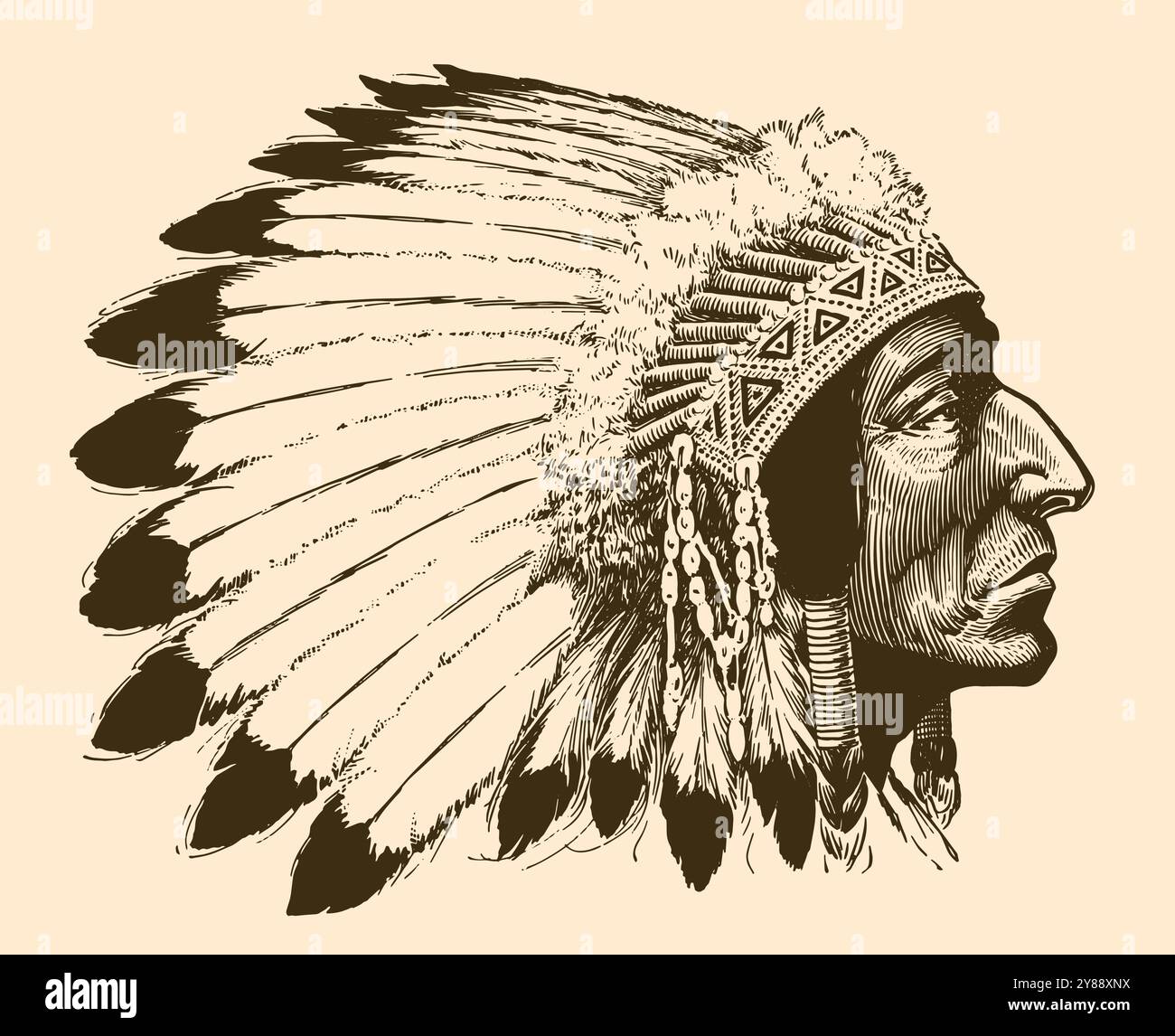
You see it in the portraits by Edward Curtis or on the face of the buffalo nickel. That sharp, striking silhouette. The high cheekbones. The prominent, often aquiline nose. Honestly, the Native American side profile is one of the most recognizable facial structures in the world, yet most of what we think we know about it is filtered through a lens of old Westerns or romanticized photography.
It's distinctive.
But why? Is there a biological reason for that specific bridge of the nose? Or is the "stoic warrior" profile we see in history books just a result of 19th-century photographers picking specific models who fit their preconceived notions? The truth is a mix of genetics, environmental adaptation, and a whole lot of artistic bias.
What Actually Defines the Native American Side Profile?
When people talk about this specific look, they’re usually pointing to a few key skeletal features. Anthropologists like those at the Smithsonian National Museum of Natural History have spent decades studying craniofacial variations across indigenous populations.
First, let's talk about the cheekbones. Biologically known as the zygomatic arches, they tend to be forward-projecting and wide. This creates a "flat" appearance from the front but a very deep, architectural look from the side. When you combine that with a strong mandible—the jawbone—you get that "chiseled" effect.
Then there’s the nose.
The "hooked" or "aquiline" nose is often cited as a classic trait. However, this isn't universal. If you look at tribes from the Pacific Northwest versus those from the Great Plains or the Southeast, the variation is massive. A 2016 study published in Nature Communications explored how the shape of the nose is often an evolutionary response to local climate. Narrower, higher-bridged noses are more efficient at warming and humidifying air, which is why you might see different profiles in the high-altitude Andes versus the humid woodlands of the East.
It isn't just one look. It's a spectrum.
The "Curtis Effect" and Photographic Bias
We can’t discuss the Native American side profile without talking about Edward S. Curtis. Between 1900 and 1930, he took over 40,000 photos of indigenous people.
He had a type.
Curtis was obsessed with capturing what he called the "Vanishing Race." He often carried a trunk of "authentic" costumes—sometimes mixing items from different tribes—and specifically sought out individuals with "traditional" features. He loved the profile shot. Why? Because it emphasized the ruggedness he wanted to portray. Because of him, the world’s mental image of an "Indian" became someone with a sharp, weathered profile looking off into the distance. This created a massive stereotype. It made people think that if a Native person didn't have that specific nose or those high cheekbones, they weren't "authentically" Native.
That’s obviously nonsense.
Genetics are messy. There is no "pure" profile. Thousands of years of trade, migration, and, later, forced relocation and intermarriage mean that the Native American side profile today looks like... well, everything. You have folks with soft features, rounded noses, and varied jawlines who are just as indigenous as the guy on the coin.
The Role of Dental Structure and the Jaw
Something people rarely mention is "shovel-shaped incisors."
It sounds technical. It is. But it’s one of the most consistent traits found in populations with East Asian and Indigenous American ancestry. If you look at the back of the front teeth, they have a scooped-out shape. This dental structure actually influences the support of the upper lip and the way the mouth sits in profile.
Anthropologist Christy Turner pioneered research into "Sinodonty," which links these dental traits back to ancient populations in Siberia. This isn't just about looks; it's a biological map of how people moved across the Bering Land Bridge. When you see a specific protrusion of the mouth or a certain fullness in the lips in a side profile, you're often looking at the result of these deep-seated genetic markers.
Let’s Clear Up the "High Cheekbone" Myth
You’ve heard it before. "I have high cheekbones, so my great-grandmother must have been a Cherokee princess."
Basically, this is the most common genealogical trope in America. While high, prominent cheekbones are a trait found in many Native populations, they are also found in Eastern Europeans, Central Asians, and West Africans. Having a "strong profile" isn't a DNA test.
In fact, the Cherokee Nation and other tribes have frequently pointed out that physical traits are a poor substitute for tribal citizenship and cultural connection. The profile is a point of pride for many, sure, but it’s not a legal or cultural definition of identity.
The Evolution of the Profile in Modern Media
Think about actors like Wes Studi, Zahn McClarnon, or Amber Midthunder.
Studi, a Cherokee actor, has perhaps one of the most famous side profiles in cinema history. His role in The Last of the Mohicans cemented that "stoic" look for a new generation. But look at McClarnon or Midthunder. Their profiles are different. They represent a more modern, nuanced reality of indigenous identity.
The "Warrior" stereotype is being replaced by actual human beings.
We are seeing a shift where the Native American side profile isn't just a prop for a Western film. It's becoming part of a broader conversation about beauty standards. For a long time, the "ideal" profile in the West was the Grecian or Roman standard—straight nose, small jaw. The indigenous profile offers a different kind of symmetry and strength that the fashion world is finally starting to acknowledge, though often through the problematic lens of "exoticism."
Why the Profile Matters Today
For many indigenous youth, seeing these features celebrated is a big deal.
In a world of "Instagram Face"—where everyone wants the same surgically sharpened jawline and button nose—the natural, rugged features of a traditional Native American side profile stand out. It’s a connection to ancestors who survived against incredible odds. It’s a literal, physical map of survival written on the face.
The science tells us it’s about climate and ancient migration.
The history tells us it’s about photography and stereotypes.
The reality is that it’s just one way of being.
Actionable Steps for Understanding and Representation
If you are researching this topic for artistic, genealogical, or historical reasons, here is how to approach it with accuracy and respect:
- Ditch the Stereotypes: Recognize that there is no "single" Native look. Use resources like Native Stock or Project 562 by Matika Wilbur to see the true diversity of indigenous faces across all 500+ federally recognized tribes.
- Study Regional Variation: If you are an artist or writer, look at the specific features of regional groups. The profile of a Navajo (Diné) person will often differ significantly from a Mohawk (Kanienʼkehá꞉ka) person due to different environmental adaptations and genetic histories.
- Consult Real Science: Look into the work of Dr. Jennifer Raff regarding ancient DNA and migration. This provides a factual basis for why certain craniofacial traits appear in the Americas without falling into the trap of "race science."
- Acknowledge the Impact of Colonialism: Understand that many Indigenous people today may not "look" like the 19th-century photos due to centuries of forced assimilation. This doesn't make their heritage any less valid.
- Support Indigenous Creators: Instead of looking at photos taken of Native people by outsiders, look at art and media created by Indigenous people. This gives a much more authentic view of how the community sees its own beauty and physical identity.
The Native American side profile is a powerful symbol, but it is also just a human face. It carries the weight of history, but it also exists in the present. Recognizing the difference between the myth and the person is the first step toward genuine understanding.