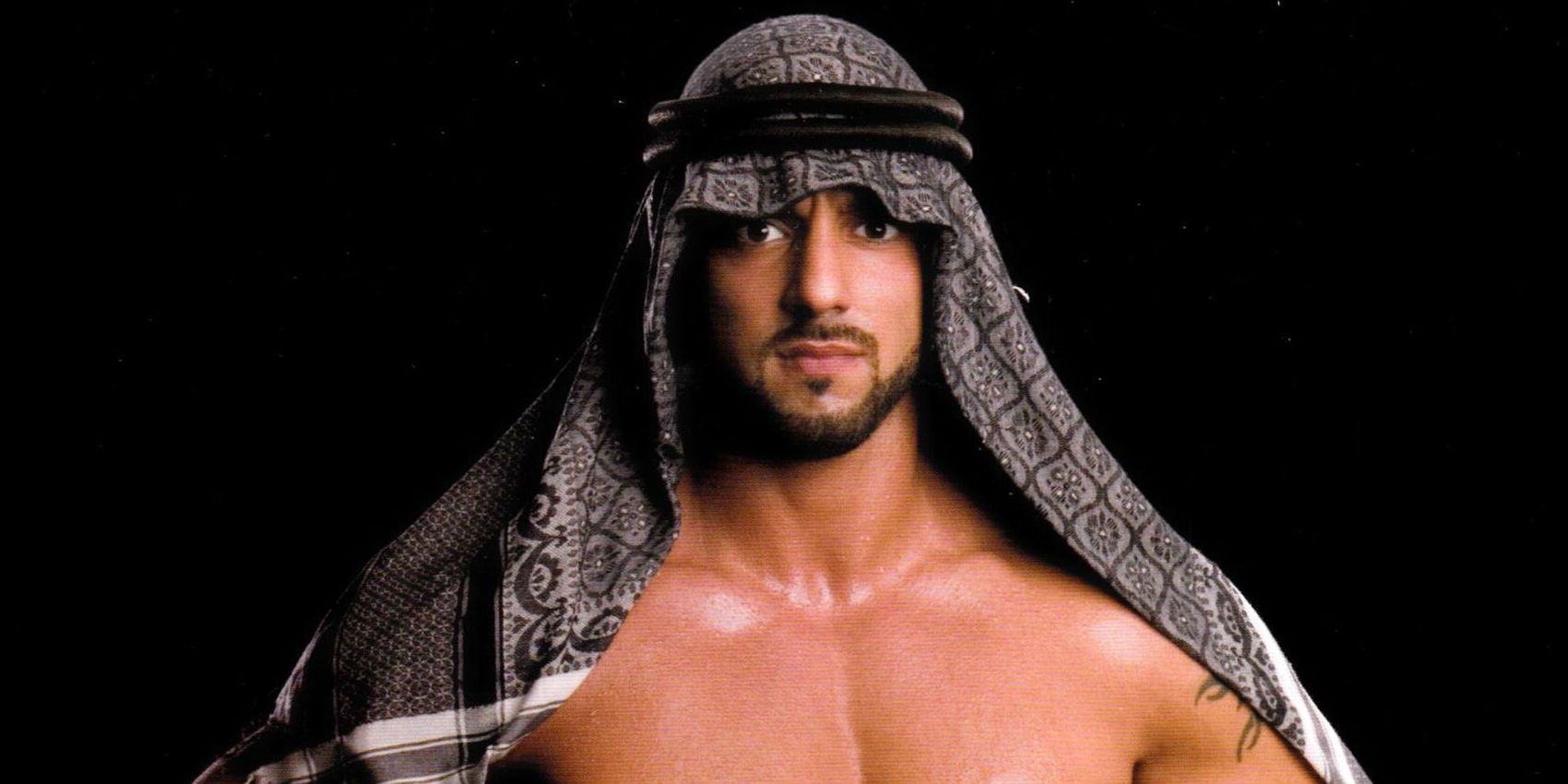
He was the most hated man in America. For about six months in 2005, you couldn’t find a person in a WWE arena who wasn't screaming their lungs out at Muhammad Hassan. It wasn't just "go away" heat, either. It was visceral.
But then, he just vanished.
One day he's main-eventing with The Undertaker, and the next, he's a ghost. No farewell match. No "future endeavors" post on the website that meant anything. Just a guy who was supposed to beat Batista for the World Heavyweight Championship at SummerSlam, suddenly replaced by a memory.
Honestly, the story of Marc Copani—the man behind the kaffiyeh—is way more complicated than just "WWE pushed the envelope too far." It’s a mix of terrible timing, corporate panic, and a locker room that wasn't exactly welcoming to a kid who grew up in Syracuse, New York.
The Gimmick That Was "Too Real"
When Muhammad Hassan first appeared in vignettes in late 2004, the character was actually pretty nuanced. That’s the irony. He wasn’t a "terrorist." He was an Arab-American who was pissed off about being stereotyped after 9/11.
He’d sit there with Daivari and talk about how he went to the same schools and ate the same food as everyone else, yet now he was being pulled aside for "random" security checks at airports.
It worked. Too well.
Fans didn't listen to the nuance. They saw a Middle Eastern man complaining about America and they booed him out of the building. WWE, being WWE, saw those boos and decided to lean into the wind. They took a character who was originally about social injustice and started turning him into the very thing he was complaining about being labeled as.
By the time he got to SmackDown, the "prejudice" angle was basically gone. It was replaced by something much darker.
That Infamous July 7th Episode
If you want to know why Muhammad Hassan disappeared, you have to look at the July 7, 2005, episode of SmackDown.
The segment was filmed a few days earlier. It featured Hassan summoning five masked men in camo gear and ski masks to attack The Undertaker. They used piano wire to choke the Deadman. They carried Daivari out like a martyr. It was heavy, graphic imagery that intentionally mimicked the terrorist videos circulating in the news at the time.
Then, the unthinkable happened.
On the morning the episode was set to air, real-life terrorist bombings hit the London Underground. 52 people died.
WWE had a choice. They could have edited the segment out of the US broadcast. They didn't. They ran a scroll at the bottom of the screen acknowledging the tragedy, but they let the "terrorist" angle play out anyway. The backlash was immediate and massive.
The New York Post and other major outlets tore into WWE. UPN, the network that aired SmackDown, basically told Vince McMahon: "Get this guy off our air. Now."
The Concrete Floor and the End of a Dream
At the Great American Bash 2005, WWE had to kill the character. Literally.
The Undertaker gave Hassan a Last Ride powerbomb through the stage onto the concrete floor. That was it. No hospital updates, no return promos. Marc Copani was written off TV for good.
What's really wild is that Copani wasn't even Middle Eastern. He’s of Italian descent. He was just a 24-year-old kid who was incredibly good at his job. He was so good that he actually stayed in character in public—wearing his ring gear at airports to draw "heat"—because he was told that’s what a professional does.
Backstage, things weren't much better.
Wrestling culture in 2005 was still very much "old school." Veterans didn't like a kid who had only been in the business for a couple of years getting a main event push. There’s a famous story where Copani bought a round of drinks for the locker room to show respect, and the veterans—led by some of the biggest names in the industry—poured the drinks out on the floor right in front of him.
He was 25. He was talented. And he was completely alone.
Where is Marc Copani Now?
After being released in September 2005, Marc Copani did something almost no one in wrestling does: he actually walked away.
He didn't go to TNA. He didn't work the indies for years. He went back to school. He got his degree and eventually became a teacher. Today, he’s a high school principal in New York.
Think about that. One of the most controversial figures in TV history is now responsible for the education of hundreds of kids. He’s been very open in recent years—especially in his 2026 memoir HEAT and on Dark Side of the Ring—about how the whole experience left him heartbroken. He lost his dream job not because he failed, but because he was too successful at a role the world wasn't ready for.
He did make a brief return to the ring in 2018 for a few matches, but he’s made it clear that his life is in the classroom now, not the squared circle.
Lessons from the Rise and Fall of Hassan
The Muhammad Hassan story is a textbook example of what happens when "cheap heat" meets real-world tragedy. It also shows the human cost of the wrestling business.
If you're looking for more info on how the industry has changed since then, here are a few things to keep in mind:
- Corporate Accountability: In 2026, WWE is a massive corporate entity. An angle like the 2005 London bombings incident would likely be pulled before it ever saw the light of day because of sponsor pressure.
- The "Foreign Heel" Evolution: While WWE still uses "anti-American" characters, they are much more careful about religious and ethnic sensitivity than they were twenty years ago.
- Life After the Ring: Marc Copani’s success as a principal is a rare "good ending" in a business often filled with tragedy. It proves there’s a path forward even after the most public of failures.
If you’re a fan of the "Ruthless Aggression" era, looking back at Hassan’s matches against Shawn Michaels or Hulk Hogan reveals a performer who had every tool to be a legend. He just happened to be the right man at the worst possible time.
To really understand the impact, you should check out his recent interviews where he discusses the psychological toll of being the most hated man in the country. It’s a perspective you don't often get from the guys who stayed in the bubble.