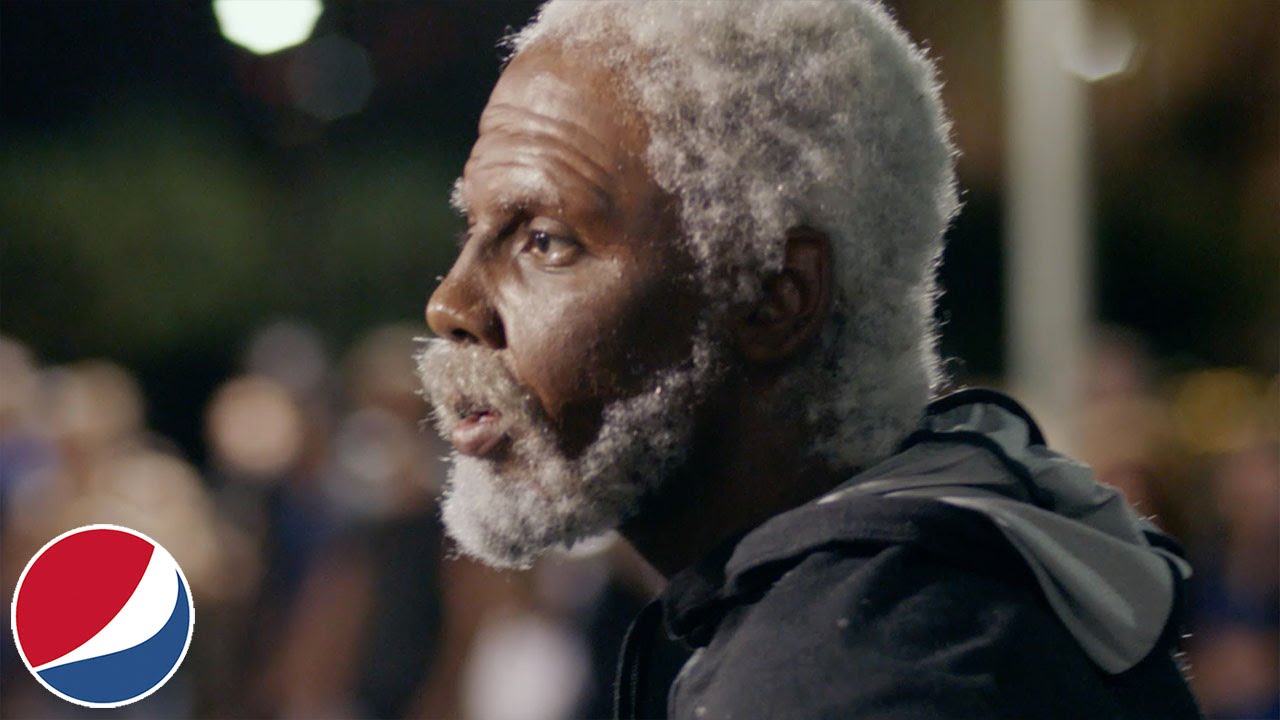
The old man with the gray beard and the limp stepped onto the concrete court in an urban park, looking like he’d get winded just walking to the mailbox. This was the setup. Again. But when Pepsi dropped Uncle Drew Chapter 2 back in 2012, they weren't just trying to catch lightning in a bottle twice; they were trying to prove that a viral fluke could become a legitimate cultural franchise. It worked.
People forget how skeptical we were back then. The first video was a shocker, sure. Seeing a heavily prosthetized Kyrie Irving school "young bloods" at Rucker Park felt fresh. But the sequel? That’s where the pressure sits. If it flopped, the whole thing was just a one-hit-wonder ad campaign. Instead, Chapter 2 doubled down on the mythology, brought in a legendary wingman, and basically wrote the blueprint for how brands should handle long-form storytelling in the YouTube era.
The Secret Sauce of the Second Chapter
Most sequels try to be bigger, louder, and more expensive. Chapter 2 did that by heading to Crenshaw District's Jim Gilliam Park in Los Angeles. The vibe was different. It felt sun-drenched and gritty. But the real genius move was the introduction of "Wes," played by Kevin Love.
Kyrie’s Drew was the flash, the guy with the handles who could break ankles while complaining about his hip. Kevin Love's character provided the muscle. At the time, Love was a double-double machine for the Minnesota Timberwolves, and seeing him in a fatsuit and a cardigan, grabbing boards and throwing outlet passes, gave the narrative a "buddy cop" dynamic that the first installment lacked. Honestly, it was the chemistry—or the choreographed lack thereof—that made it click.
Think about the technical side for a second. The makeup for Uncle Drew Chapter 2 took roughly four hours per person. That's a lot of time sitting in a chair just to prank some locals. They used a "Skin-tight" silicone application that allowed the players' real facial expressions to peak through the wrinkles. If you look closely at the footage, you can see Kyrie’s genuine smirk when he crosses someone over. That authenticity is what keeps it from feeling like a cheap Saturday Night Live sketch.
Why This Specific Video Went Nuclear
Success in the digital space isn't just about the star power. It's about the "reveal." In Chapter 2, the pacing is a slow burn.
The first three minutes are almost painful to watch. You see Drew and Wes "struggling." They miss layups. They look confused. The crowd—which consisted of actual neighborhood residents who had no idea what was happening—starts talking trash. This is the hook. Humans love a redemption story, even if it's staged for a soda commercial. When the switch finally flips and "The Big O" (a nickname Drew uses for Wes) starts dunking, the organic reaction from the sidelines is what sells the product.
Pepsi’s marketing team, led at the time by folks who understood that "content is king" before that phrase became a cliché, realized they didn't need to show the Pepsi Max can every five seconds. In fact, the product is almost secondary to the characters.
Breaking Down the Logistics
Let's get into the weeds of how they actually filmed this. You can't just roll up to a public park with a full Hollywood crew and expect people to act natural.
- The "Documentary" Cover: The crew told bystanders they were filming a documentary about basketball in the community. This explained the high-end cameras and the microphones.
- The Sound Design: If you listen to the audio in Chapter 2, it's remarkably crisp. They had mics hidden in the backboards and on the players’ bodies.
- The Editing: The jump cuts between the "old man" moves and the "pro" moves are timed to the beat of the music, creating a rhythm that makes the viewers feel the energy shift.
It wasn't just a video; it was a production. They used a mix of handheld cameras and stationary rigs to capture the chaos. When Drew starts his signature dribble-drive, the camera work mimics the frantic energy of a real streetball game. It’s shaky, it’s close-up, and it’s immersive.
The Cultural Impact and the "Old Man" Trope
After Uncle Drew Chapter 2, every brand under the sun tried to copy the "pro in disguise" format. We saw it in soccer with Cristiano Ronaldo, in golf, and even in MMA. But none of them quite captured the soul of the Drew series. Why? Because Kyrie Irving actually can act. Or at least, he can inhabit a character. He didn't just play basketball; he trash-talked like a guy who’s been sitting on a porch for forty years.
"I’m getting my buckets," Drew says in the video. It became a catchphrase.
There's a psychological element here too. There's something deeply satisfying about seeing "the underdog" or the "forgotten elder" remind the world that they've still got it. It taps into a universal respect for the game's roots. It bridged the gap between the flashy, modern NBA and the old-school, fundamentally sound era that fans often wax poetic about.
Beyond the Viral Hit: The Business Case
From a business perspective, the numbers were staggering. Chapter 2 racked up tens of millions of views within weeks. But more importantly, it boosted Pepsi Max’s brand favorability among the 18-34 demographic.
The strategy was simple: stop interrupting the entertainment and become the entertainment.
Usually, an ad is something you skip. Uncle Drew Chapter 2 was something people searched for. That’s the holy grail of SEO and digital marketing. By creating a character-driven narrative, Pepsi ensured that people would stay for the full five or six minutes, which is an eternity in internet time. They weren't selling soda; they were selling a moment.
Practical Takeaways for Your Own Content
If you're looking at this from a creator or a marketer's perspective, there are specific things to learn from the success of this chapter:
- Character over Product: Build a world people want to revisit.
- The Pivot Point: Every story needs a moment where the "status quo" is shattered. In this case, it’s the moment the hoodie comes off and the dunks start.
- High Stakes Humility: Allowing your "stars" to look bad for the first half of the video builds a massive amount of goodwill with the audience.
The legacy of this specific chapter eventually led to a full-length feature film. Think about that. A YouTube ad for a zero-calorie soda turned into a Hollywood movie starring Shaquille O'Neal and Reggie Miller. That doesn't happen without the groundwork laid in Chapter 2. It proved the concept was durable.
If you want to understand the modern landscape of sports media and brand integration, you have to look at this video. It’s the bridge between the 30-second TV spot and the creator-led economy we live in today.
Next Steps for Deepening Your Knowledge
To truly grasp the impact of the series, go back and watch the raw, unedited footage of the Jim Gilliam Park games if you can find them. Notice how the crowd's energy changes. Then, compare the editing style of Chapter 2 to modern "prank" videos on TikTok or Reels. You'll see that while the platforms have changed, the fundamental human desire to see an "expert" disguised as an "amateur" remains one of the most powerful hooks in digital storytelling.
Check out the "Behind the Scenes" features that Pepsi released alongside the main video. They reveal the intricate process of the prosthetic applications by specialized effects artists, which is a masterclass in movie-grade makeup used for commercial purposes.