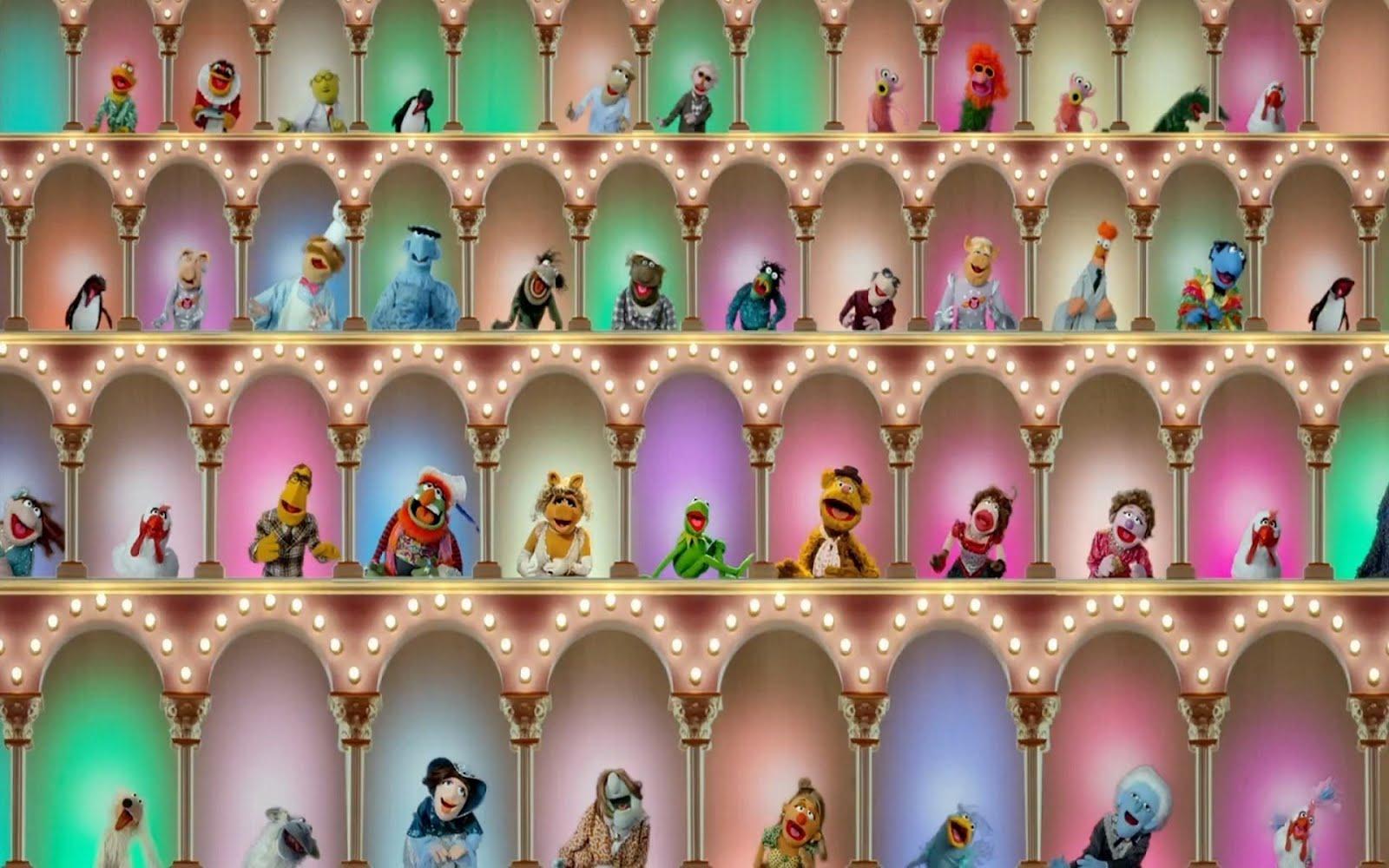
Jim Henson was a gambler. Not the kind you find hunched over a craps table in Vegas at 3 a.m., but the kind who puts his entire reputation on the line for a bunch of felt puppets. Before The Muppet Show became a global juggernaut, the industry basically thought Henson was crazy. Puppets were for kids. Puppets were for Saturday mornings. But Jim didn't see it that way. He saw vaudeville. He saw chaos. He saw a weird, high-wire act where a frog could have a nervous breakdown while a bear told terrible jokes.
It worked.
Between 1976 and 1981, The Muppet Show didn't just entertain people; it redefined what a variety show could be. It was meta before "meta" was a buzzword. It was self-aware, cynical, and deeply heartfelt all at once. If you look at the landscape of modern comedy today, from 30 Rock to The Office, you can see the DNA of Kermit’s frantic backstage management everywhere.
The Chaos Behind the Curtain
The genius of The Muppet Show wasn't actually the sketches on stage. It was the stuff happening behind the scenes. We weren't just watching a variety show; we were watching a documentary about a variety show that was constantly falling apart. Kermit the Frog wasn't just a host. He was a middle manager in a green felt suit, trying to stop a literal monster from eating the guest star.
Honestly, the logistics were a nightmare. Performers like Frank Oz, Jerry Nelson, and Richard Hunt spent hours with their arms held over their heads. They were cramped into pits, staring at monitors to see if their characters were looking in the right direction. It was physical labor disguised as whimsical art.
Lord Lew Grade was the man who finally gave Henson the green light in the UK after American networks passed. Imagine being the executive who said "no" to the Muppets. That’s a tough legacy to live down. Grade saw that the show wasn't just for children. It had a bite. It had Statler and Waldorf—two elderly hecklers in a box who existed solely to tell the audience that the show they were watching was garbage. That’s a incredibly bold move for a production. You’re literally providing the critique of your own work within the work itself.
The Guest Star Paradox
Getting people to appear on The Muppet Show was hard at first. Then it became the only thing anyone wanted to do. But look at how the guests were treated. They weren't just there to plug a movie. They had to inhabit the world.
When Rita Moreno won an Emmy for her appearance, it wasn't because she did a standard monologue. It was because she engaged in a violent, slapstick struggle with Animal while trying to perform "Fever." Or think about Steve Martin. He didn't even get to perform for an audience; he performed for an empty theater because the Muppets were "too busy" auditioning new acts. That kind of subversion is rare now. Modern talk shows feel like sterile PR machines. The Muppets felt like a riot where a celebrity just happened to be caught in the crossfire.
Why We Can't Replicate The Muppets Today
People keep trying to reboot The Muppet Show, and they usually get it wrong. They focus on the "IP" or the "brand." They forget the anarchic spirit. The 2015 ABC revival tried to make it like The Office, but it was too mean-spirited. It lost the "sunny day" optimism that balanced out the Muppets' inherent weirdness.
You've got to understand that Jim Henson’s workshop was a collective of weirdos. They weren't trying to build a multi-billion dollar franchise at the start; they were trying to see if they could make each other laugh. If a puppet looked funny, they used it. If a joke was so bad it was good, Fozzie Bear got it.
The technical mastery also shouldn't be overlooked. This was pre-CGI. Everything you saw was a physical object influenced by gravity. When Gonzo the Great tried to eat a rubber tire to the tune of "Flight of the Bumblebee," someone had to figure out how to make that look convincing on a 1970s television budget. It was tactile. You could almost feel the texture of the fleece through the screen. That’s something digital effects just can’t replicate. It lacks the "soul" of a hand in a sock.
The Complexity of Kermit
Kermit is often called the "everyman," but he's more complicated than that. He’s a frustrated artist. He’s a guy who just wants to do a good show but is surrounded by incompetence. There’s a specific kind of 1970s melancholy in some of those early episodes. It wasn't all bright lights and "Mahna Mahna." Sometimes it was quiet. Sometimes Kermit would sit in a swamp and talk about how it’s not easy being green.
That song, "Bein' Green," is a masterclass in songwriting by Joe Raposo. It’s a song about identity and self-acceptance that doesn't feel like a lecture. It’s just a frog thinking out loud. This emotional depth is why adults stayed tuned in after the kids went to bed.
The Cultural Impact Nobody Talks About
We talk about the humor, but we rarely talk about the musical education The Muppet Show provided. In one episode you’d have Alice Cooper doing "Welcome to My Nightmare," and in the next, you’d have Beverly Sills performing opera. It was a cultural blender. It exposed a generation of kids to jazz, classical, rock, and Broadway without ever feeling "educational."
- Vaudeville’s Last Stand: The show was a direct descendant of the old variety circuits.
- Breaking the Fourth Wall: Long before Deadpool, the Muppets were acknowledging the camera and the artifice of their own existence.
- The Power of the Ensemble: There was no "lead" other than Kermit, and even he was often overshadowed by the sheer force of Miss Piggy’s personality.
Miss Piggy is an interesting case study in herself. Created by Bonnie Erickson and brought to life by Frank Oz, she started as a background character. She became a feminist icon and a fashion mogul because she refused to be ignored. She was the first puppet to truly have a "diva" persona that felt lived-in. Her "karate chop" wasn't just a gimmick; it was a defense mechanism for a character who was constantly fighting for the spotlight in a male-dominated troupe.
What Most People Get Wrong
There’s a misconception that The Muppet Show was "wholesome."
It really wasn't.
It was subversive. It was often violent. Explosions were a recurring punchline. Characters were eaten. Gonzo’s entire existence was a commentary on performance art and masochism. If you go back and watch the "Sex and Violence" pilot, you’ll see exactly where Henson’s head was at. He wanted to push boundaries. He wanted to see what he could get away with on network television.
The show worked because it respected its audience. It didn't talk down to kids, and it didn't exclude adults. It existed in that perfect middle ground where everyone was in on the joke.
Real-World Lessons from the Muppet Workshop
If you're a creator today, there’s a lot to learn from the way the Muppets were built.
- Iterate Constantly. Many of the most famous characters started as "anything Muppets" (generic heads) and evolved over years of performance.
- Chemistry Matters. The bond between the performers (like Jim and Frank) was what drove the characters. You can't script that kind of timing.
- Embrace the Flaws. Fozzie is funny because he's a failure. If he were a good comedian, we wouldn't care about him. We love him because he keeps trying despite the tomatoes being thrown at his head.
Taking Action: How to Experience the Muppets Now
If you want to understand the true impact of The Muppet Show, don't just watch the YouTube clips of the most famous songs. You need to see the full episodes to appreciate the pacing—the way the tension builds backstage until it boils over into the sketches.
- Watch the original five seasons. They are currently available on Disney+, though some episodes have disclaimers or minor edits due to music licensing and outdated cultural depictions.
- Look for the "unscripted" moments. Pay attention to the background characters. The Muppet performers were notorious for ad-libbing and trying to make each other break character.
- Read "Jim Henson: The Biography" by Brian Jay Jones. It provides the most accurate, detailed account of how the show was built from the ground up, including the financial risks Henson took.
- Visit the Museum of the Moving Image in NYC. They have a permanent Jim Henson exhibition where you can see the actual puppets. Seeing them in person—realizing they are just fabric and foam—makes the "magic" of the television show even more impressive.
The Muppets remind us that even in a world that feels increasingly cynical and digital, there is immense value in something handmade, chaotic, and unapologetically weird. They taught us that you can be a dreamer and still get the job done, even if a boomerang fish-thrower is ruining your schedule.
Start by revisiting the Bernadette Peters or the Danny Kaye episodes. They represent the show at its peak: a perfect marriage of high-brow talent and low-brow puppet slapstick. Don't look for the "message." Just watch the frog try to keep it all together. That’s where the real truth is.