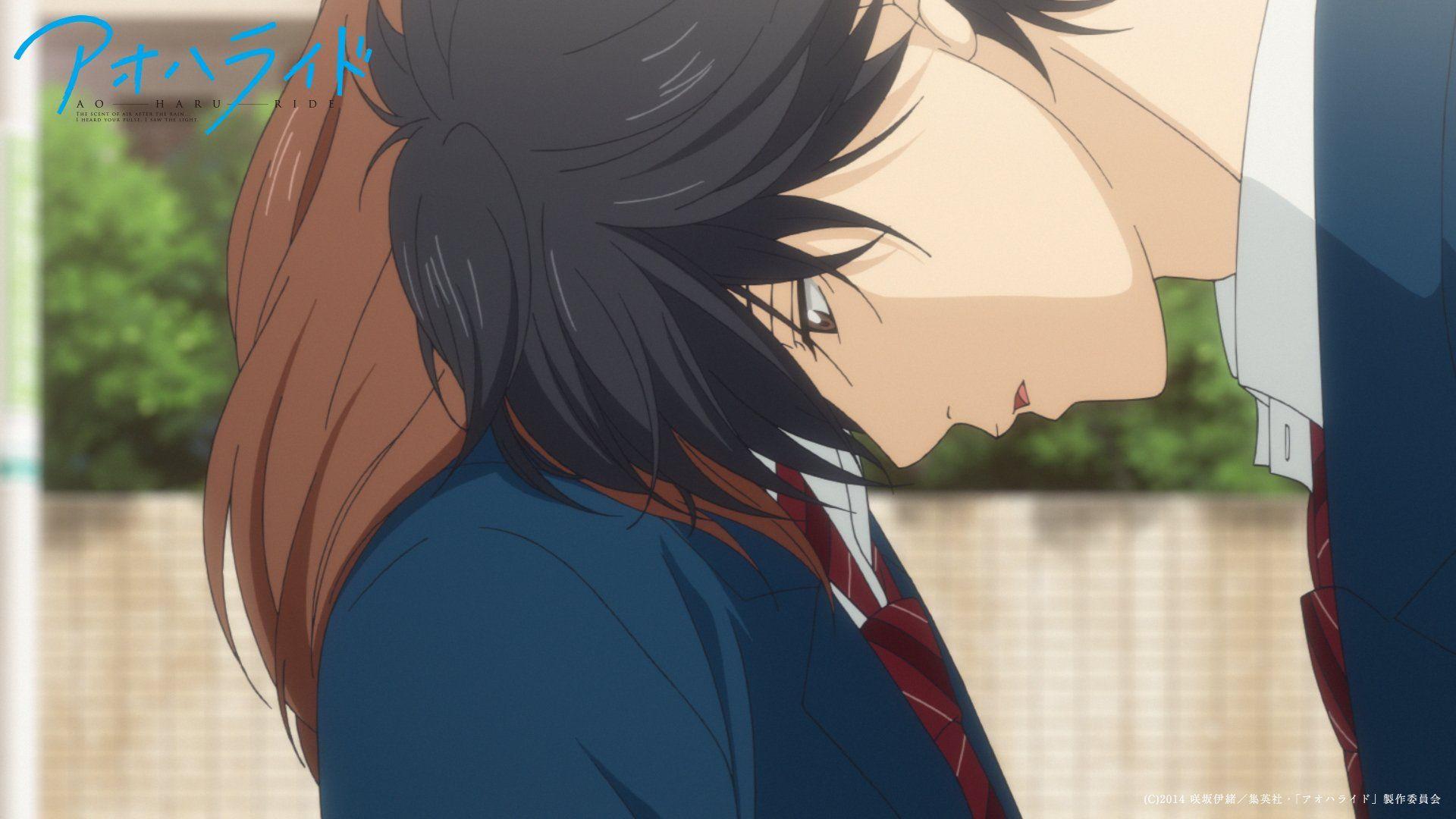
If you were deep in the anime tumblr trenches circa 2014, you remember the chokehold Blue Spring Ride had on the shojo community. It was the quintessential "will-they-won't-they" story. Then, the first Ao Haru Ride live action movie dropped in 2014, starring Tsubasa Honda and Masahiro Higashide. It was... fine. It was a standard two-hour condensation of a massive manga. But it felt rushed. It missed the breathing room.
Fast forward to 2023 and 2024. WOWOW decided to take another crack at it, not as a movie, but as a two-season television drama.
Honestly? It changed everything.
The 2023 Ao Haru Ride Live Action Shifted the Bar
Most fans were skeptical when the news broke that Natsuki Deguchi and Kaito Sakurai would be taking over the roles of Futaba and Kou. Re-adapting a classic is risky business. People have deep, nostalgic attachments to the original character designs by Io Sakisaka. However, the decision to split the Ao Haru Ride live action series into two distinct seasons was a stroke of genius by the producers at WOWOW.
Season 1 focuses on the reunion. Futaba Yoshioka, a girl who tries to be "unfeminine" to avoid being ostracized by her female peers, runs into her middle-school crush, Kou Tanaka. Except his name is now Kou Mabuchi. He’s cold. He’s different. He’s grieving.
Season 2 dives into the messy stuff. The stuff the 2014 movie barely touched. We get the full weight of the Narumi intervention and the introduction of Touma Kikuchi. If you know, you know. Kikuchi is the ultimate "second lead syndrome" catalyst.
The pacing here matters. Because it’s a series, we actually get to see the quiet moments in the hallways and the slow-burn realization that you can't just go back to being thirteen again. It feels raw. It feels like high school.
Casting That Actually Makes Sense
Natsuki Deguchi as Futaba is a revelation. She captures that specific brand of loud-but-insecure energy that makes Futaba relatable. But the real challenge was Kou. Kaito Sakurai had big shoes to fill. Kou Mabuchi is a character defined by what he doesn't say. In the Ao Haru Ride live action drama, Sakurai manages to look miserable without looking bored. That’s a hard line to walk for an actor.
The chemistry isn't just about the leads, though. The "squad" is what makes or breaks a shojo adaptation.
- Mizuki Itagaki plays Touma Kikuchi with just enough charm to make you genuinely conflicted about who Futaba should end up with.
- Sumire Fujiyoshi captures Makita’s softness without making her feel like a trope.
- The tension between Murao and Kominato feels earned rather than forced.
Why the 2014 Movie and the 2023 Series Feel So Different
It’s a matter of runtime. The 2014 film had to squeeze the entire "blue spring" metaphor into roughly 120 minutes. You lose the nuance. You lose the "scent of the air after rain" vibes that Sakisaka is famous for.
The 2023 Ao Haru Ride live action series uses its 16-episode total (eight per season) to let the trauma breathe. Kou’s relationship with his mother and the guilt he carries isn't just a plot point; it’s a shadow that hangs over every scene. When he finally breaks down, it hits harder because we’ve spent six episodes watching him pretend he’s fine.
Production quality also took a massive leap. WOWOW is known for a more "cinematic" look compared to standard daytime J-Dramas. The lighting is moodier. The sound design is crisp. It doesn't feel like a cheap cash-in on a popular IP. It feels like a love letter to the source material.
Handling the Narumi Problem
Let's talk about Yui Narumi. She is arguably one of the most disliked characters in shojo history because she stands in the way of the main couple. In the manga, her manipulation of Kou’s guilt is infuriating.
In the new Ao Haru Ride live action adaptation, they handle Narumi with a bit more empathy. She’s still an obstacle, but you see the shared trauma of the "grief support group" she and Kou essentially formed. It makes Kou’s hesitation to leave her more understandable. He isn't just being a "bad boyfriend" to Futaba; he’s a kid who doesn't know how to stop being a savior to someone who is drowning just like he was.
Realism Over Melodrama
One thing that often kills live-action anime is the "cosplay" feel. The bright hair, the exaggerated acting, the "anime-isms" that don't translate to real human faces.
This version of Ao Haru Ride live action avoids that. The styling is grounded. The school uniforms look like actual clothes. The dialogue is snappy but feels like things teenagers would actually mutter under their breath. They lean into the awkwardness.
The scene at the festival? Iconic.
The "stolen" kiss? Weighty.
The window scene? Heartbreaking.
They didn't try to recreate the manga panels 1:1 in a way that looks stiff. They captured the feeling of the panels. That’s the secret sauce.
A Quick Note on the Music
You can't talk about this series without the soundtrack. While the original anime had "Sekai wa Koi ni Ochiteiru" by CHiCO with HoneyWorks—which is a certified banger—the live action takes a more atmospheric approach. It uses silence effectively. Sometimes the most romantic thing isn't a J-Pop track; it's the sound of a train passing while two people realize they're in love.
Where Can You Actually Watch It?
Tracking down Japanese dramas can be a nightmare if you aren't in Japan. Since it’s a WOWOW original, it initially aired on their broadcast and streaming platforms.
For international fans, the Ao Haru Ride live action (2023) has popped up on various regional streaming services. Depending on your location, you might find it on Viki or local providers that license Fuji TV and WOWOW content. If you're looking for the 2014 movie, that’s widely available on DVD and several older streaming libraries.
If you want the full story—the one that actually concludes the manga's arc—the 2023/2024 series is the only way to go. It covers the cultural festival, the class trip, and the fallout of the final volume.
The Lasting Impact of Blue Spring Ride
Why are we still talking about a story that started over a decade ago? Because "Blue Spring" (Ao Haru) is a universal concept. It’s that fleeting, shimmering period of youth where everything feels like the end of the world.
The Ao Haru Ride live action works because it respects that intensity. It doesn't look down on Futaba's tears or Kou's brooding. It treats teenage emotions as the high-stakes drama they feel like when you're seventeen.
Whether you’re a die-hard fan of the manga or a newcomer looking for a solid romance drama, the recent adaptation is the gold standard for how to bring shojo to life. It’s messy, it’s frustrating, and it’s beautiful.
Actionable Steps for Fans
If you're ready to dive in, here is the best way to consume the story without getting overwhelmed by the different versions:
- Watch Season 1 of the 2023 Drama first. It covers the first half of the manga (Volumes 1–6) and sets the emotional groundwork.
- Don't skip Season 2. This is where the 2014 movie and the anime both stopped or drifted. It contains the actual resolution of Kou’s character arc and the Touma rivalry.
- Compare the "Window Scene." It’s a fun exercise for fans to watch the anime version (Episode 3) and then the 2023 live-action version (Episode 2). It shows exactly how the directors translated the visual language of the manga differently.
- Check Viki or CDJapan. If you want to support the official release, these are your best bets for streaming or physical copies with potential English subtitles.
The 2023 series proves that you don't need a massive budget or flashy effects to make a great adaptation. You just need to understand the heartbeat of the original story. Futaba and Kou’s journey isn't about the destination; it’s about the "ride" through the spring of their lives. And this time, the ride was worth it.