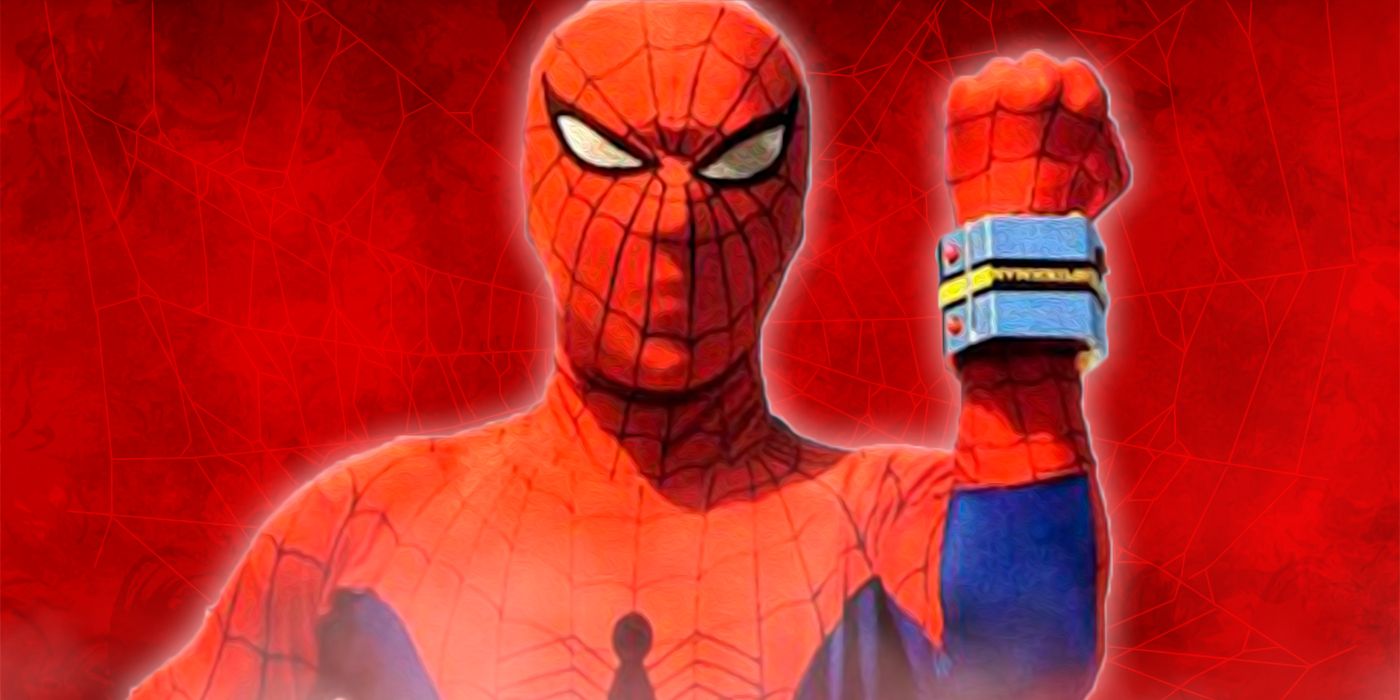
You probably think you know Peter Parker. The nerdy kid, the radioactive spider, the "great power, great responsibility" bit. But there is a version of Spider-Man in Japan that flips that entire script upside down, replaces the Uncle Ben guilt with a blood feud, and gives the wall-crawler a giant robot.
It sounds like a fever dream. Honestly, the 1978 Supaidāman series produced by Toei Company is one of the most bizarre yet influential chapters in pop culture history. Without this specific iteration of the web-slinger, we probably wouldn't have the Power Rangers as we know them today. It’s that deep.
The Bizarre Origin of Takuya Yamashiro
Forget the Daily Bugle. In this version, our hero is Takuya Yamashiro, a professional motorcycle racer. He doesn't get bitten by a spider at a science fair. Instead, he witnesses a UFO crash—the "Marveller" from the Planet Spider. Takuya’s father, an archaeologist, is killed by the evil Iron Cross Army, led by the terrifying Professor Monster.
Takuya meets the last survivor of Planet Spider, Garia, who injects him with "Spider Extract."
Suddenly, Takuya has spider-powers. He also has a cool bracelet that shoots webbing and summons a massive robot. It’s wild. The stakes aren't about paying rent in Queens; they are about stopping an alien invasion of Earth. Takuya is less of a friendly neighborhood hero and more of a "Messenger from Hell." That is literally how he introduces himself to villains. He shouts it. Frequently.
Why Marvel Let This Happen
You might wonder how Stan Lee felt about this. Surprisingly, he loved it. In the late 1970s, Marvel and Toei entered a three-year licensing agreement. It was basically a "do whatever you want" deal. Marvel got to use Toei’s Shogun Warriors in comics, and Toei got to adapt Marvel characters for Japanese television.
Toei knew a straight adaptation of the American comic wouldn't work for Japanese kids in 1978. They needed something flashy. They needed special effects. Most importantly, they needed a giant robot because the "Super Sentai" genre was just starting to find its legs. Gene Pelc, Marvel's man in Japan at the time, was the bridge between these two worlds. He saw the potential in blending Western IP with Eastern tokusatsu (special effects) storytelling.
The Giant Robot That Changed TV History
The most famous part of Spider-Man in Japan is Leopardon. When the "Machine Bem" monsters of the week grew to skyscraper size—a trope that is now standard—Takuya would call for his ship, the Marveller. It would transform into a massive humanoid robot named Leopardon.
He didn't really "fight" much in the robot. Mostly, Leopardon would just throw its sword, the Sword Vigor, and the monster would explode instantly. It was the ultimate "finish him" move.
Here is the kicker: the success of Leopardon is the reason why future Super Sentai series (the source material for Power Rangers) started using giant robots. Before Takuya Yamashiro and his mechanical friend, Sentai teams just fought on foot. Toei saw the toy sales for Leopardon and realized they had a gold mine. If you grew up watching the Megazord, you basically owe your childhood to this weird 70s Spider-Man show.
It's Not Just a Meme
If you look at clips on YouTube, it looks campy. The suit has a weird baggy fit. The eyes are a bit off. The "Spider-String" is clearly just a rope. But for its time, the stunt work was actually incredible. Mitsuo Ando, who played the villainous Professor Monster, brought a legitimate sense of menace to the screen.
The show ran for 41 episodes and even had a theatrical movie. It was a massive hit in Japan. It proved that the core concept of Spider-Man—a lone hero fighting against overwhelming odds—could be transplanted into any culture if you adjusted the dressing.
The Cinematic Multiverse Connection
For decades, this show was a forgotten relic, mostly shared via grainy VHS bootlegs at comic conventions. Then the Spider-Verse happened.
In the Marvel Comics event Spider-Verse (2014) by Dan Slott, Takuya Yamashiro and Leopardon were officially brought into the main Marvel multiverse. Seeing a live-action character from a 70s Japanese show standing alongside Peter Parker and Miles Morales was a "pinch me" moment for hardcore nerds.
He even showed up in the animated Across the Spider-Verse posters and has become a fan favorite. He isn't a joke anymore. He is a legend.
The Cultural Impact You Can Still See
We see the DNA of Spider-Man in Japan everywhere in modern media. It’s in the way Hideo Kojima designs tech. It’s in the choreography of modern Kamen Rider. It’s in the very concept of the "Spider-Verse."
There's a gritty sincerity to Takuya's quest for revenge that mirrors the darker "Gekiga" style of manga popular at the time. It wasn't trying to be funny. It was a serious action drama that just happened to feature a man in spandex fighting a giant mushroom monster.
What People Get Wrong About the Show
Common misconception: People think it was a "ripoff." It wasn't. It was fully licensed and sanctioned.
Another one: People think it failed. It was actually one of the most popular shows on TV during its run.
The budget was actually quite high for the era. They spent a lot on the Marveller/Leopardon suit and the motorcycle stunts. While the "Spider-Sense" was replaced by a "Spider-Ear" that could hear things from far away, the spirit of the character remained surprisingly intact. He was still an underdog.
How to Experience the Legend Today
If you want to dive into this piece of history, it’s easier than it used to be, but still a bit tricky due to licensing.
- Marvel.com: Occasionally, Marvel hosts episodes of the series on their official site for free streaming, though this varies by region and year.
- The 616 Documentary: On Disney+, there is an episode of the docuseries Marvel's 616 titled "Japanese Spider-Man." It is the gold standard for learning the behind-the-scenes drama of how this show got made. It features interviews with the original cast and crew.
- The Comics: Pick up the Spider-Verse or Spider-Geddon trade paperbacks. Takuya plays a pivotal role in the final battles.
Honestly, seeing the suit in person at a museum or a convention is a trip. It represents a time when global media was less homogenized. Producers were willing to take massive risks. They didn't care about "brand consistency" as much as they cared about making something that kids would actually want to watch on a Saturday afternoon.
Your Actionable Takeaway
If you're a fan of the web-head, don't just stick to the MCU. Broaden your horizons. Understanding Spider-Man in Japan gives you a much deeper appreciation for how flexible these characters are. They are modern myths. Myths change when they travel to different lands.
Next Steps to Explore:
- Watch the first episode of the 1978 series (The "Messenger from Hell" intro is iconic).
- Check out the "Japanese Spider-Man" episode of Marvel's 616 on Disney+.
- Look for Takuya Yamashiro's cameo in the Spider-Verse comic runs to see how he interacts with the "standard" Spider-Men.
- Research the link between Leopardon and the creation of the Battle Fever J Sentai team.
The world of Spidey is way bigger than Forest Hills, Queens. Sometimes, it involves a motorcycle racer, a spaceship from the Planet Spider, and a giant sword-throwing robot. Embrace the weirdness. It’s part of the legacy.