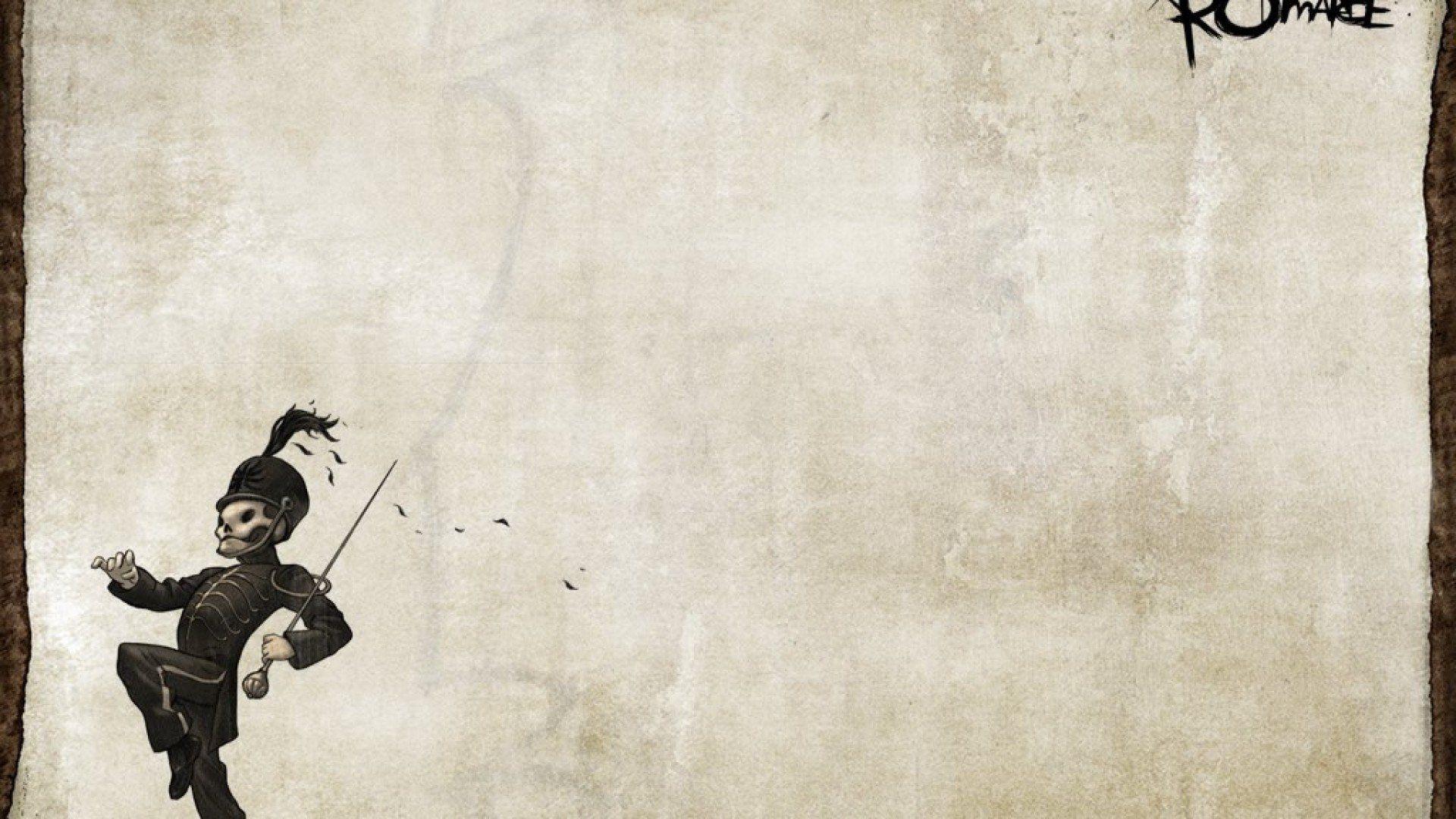
It started with a hospital bed and a heart monitor. If you were around in 2006, you remember the sheer confusion when My Chemical Romance—the guys who just a year prior were wearing bulletproof vests and singing about "Helena"—suddenly showed up in marching band uniforms looking like they’d been dug up from a Victorian cemetery. It was weird. It was loud. Honestly, it was a massive gamble that should have failed. Instead, the My Chemical Romance Black Parade album became the Sgt. Pepper of the emo generation, a sprawling rock opera that refused to be put in a box.
People call it "emo." Gerard Way hates that word.
The Death of the Patient and the Birth of a Legend
The record isn't just a collection of songs. It’s a conceptual beast. You’re following "The Patient," a character dying of cancer at a young age, as he reflects on his life and enters the afterlife. Way's central thesis was that death comes for you in the form of your fondest memory. For The Patient, that was a marching band parade his father took him to as a child. It’s bleak stuff, but the music is surprisingly triumphant.
Recording it was a nightmare. The band moved into the Paramour Estate, a reportedly haunted mansion in Los Angeles. Bassist Mikey Way struggled so much with the atmosphere and his own mental health that he actually had to leave the house for a while. You can hear that tension in the tracks. It’s claustrophobic. It’s grand. It’s the sound of a band trying to outrun their own shadows.
Producer Rob Cavallo, the guy behind Green Day’s Dookie, pushed them toward a Queen-inspired grandiosity. That’s why you get these massive, multi-tracked vocal harmonies and Brian May-esque guitar solos from Ray Toro. It wasn't just punk anymore. It was classic rock theater.
Why "Welcome to the Black Parade" is the Millennial Anthem
That G-note. Just one note on a piano. You play that in a crowded room of thirty-somethings today, and you’ll see people physically react. It’s a Pavlovian response.
The song itself is a masterpiece of arrangement. It starts as a fragile ballad, turns into a military march, and then explodes into a punk-rock finale. It took forever to get right. The band actually started writing it during the Three Cheers for Sweet Revenge era under the title "The Five of Us Are Dying," but it didn't click until they slowed down the intro and leaned into the theatricality. It’s basically "Bohemian Rhapsody" for kids who wore too much eyeliner and felt like the world didn't get them.
But it’s also remarkably hopeful. "We'll carry on" isn't a defeatist lyric. It’s a manifesto.
The Cultural Backlash Nobody Remembers
It’s easy to look back now and see the album as a universally loved classic. It wasn't. In 2006, the UK tabloid The Daily Mail launched a literal crusade against the band, labeling them a "suicide cult." They blamed the aesthetic for teen depression. It was a classic moral panic, totally ignoring the fact that the album is fundamentally about surviving and finding meaning in loss.
The band fought back. They didn't do it with lawsuits or angry press releases; they did it by leaning harder into the performance. They stayed in character. They wore the suits. They made the "Famous Last Words" video where Gerard Way ended up with torn ligaments and Bob Bryar got third-degree burns from the pyrotechnics. They suffered for the art, literally.
Breaking Down the Deep Cuts
Everyone knows "Teenagers" and "I Don't Love You." But the real soul of the My Chemical Romance Black Parade album lives in the weirder tracks.
Take "Mama," for instance. They got Liza Minnelli—yes, the Liza Minnelli—to sing on it. It’s a deranged polka-punk song about a soldier writing home to his mother, realizing he’s going to hell. It’s theatrical, grotesque, and brilliant. Then you have "Sleep," which features actual recordings of Gerard Way describing night terrors he was having while staying at the Paramour. It’s heavy, sludge-filled, and genuinely unsettling.
Then there's "The Sharpest Lives." It’s a frantic, drug-fueled dive into the lifestyle the band was living at the time. It captures that 2:00 AM desperation better than almost any other song from that era.
The Gear and the Sound
Ray Toro and Frank Iero are the most underrated guitar duo in rock history. Period. On this album, they moved away from the jagged, messy distortion of their early work. They used Les Pauls through Marshall JCM800s, but with a level of precision that was new for them. Toro’s leads are meticulously composed.
- Layering: They didn't just double-track guitars; they triple and quadruple-tracked them to create an orchestral wall of sound.
- The Bass: Mikey Way’s bass lines on "The Sharpest Lives" and "Cancer" provide a melodic foundation that keeps the songs from drifting off into pure chaos.
- Vocals: Gerard Way recorded his vocals while lying on the floor, while standing, while screaming—whatever it took to get the raw emotion of a dying man.
The mixing is what really saves it from being "too much." Even with fifty tracks of audio running at once, you can hear every snare hit and every breath.
Does it Still Matter in 2026?
We’re seeing a massive resurgence in this sound. Gen Z has discovered MCR through TikTok and streaming, and they don't see it as "cringe." They see it as authentic. In a world of polished, quantized pop, the raw, bleeding-heart theatricality of this record feels like a breath of fresh air.
The My Chemical Romance Black Parade album taught a generation that it’s okay to be dramatic. It taught them that you can take your trauma and turn it into a parade. It’s not about being sad; it’s about what you do with that sadness.
Actionable Steps for the Modern Listener
If you’re revisiting the album or hearing it for the first time, don't just shuffle it on a low-quality speaker. You’re missing half the record.
- Listen in Sequence: This is a concept album. "The End." leads directly into "Dead!" for a reason. Don't skip around.
- Check Out "The Five of Us Are Dying": It’s on the 10th-anniversary reissue. Hearing the early, rough version of "Welcome to the Black Parade" shows you just how much work went into the final product.
- Read the Lyrics While Listening: Gerard Way’s storytelling is dense. There are recurring motifs about "light" and "dark" that you’ll miss if you’re just headbanging.
- Watch the Music Videos: They were directed by Samuel Bayer (who did Nirvana’s "Smells Like Teen Spirit"). They are essential visual components of the story.
- Look for the "Blood" Hidden Track: Wait for a couple of minutes after the final song ends. It’s a hidden, jaunty, satirical hidden track that flips the whole mood of the album on its head.
The Black Parade isn't just a record. It’s a time capsule of a moment when rock music was allowed to be weird, ambitious, and unashamedly emotional. It changed everything.