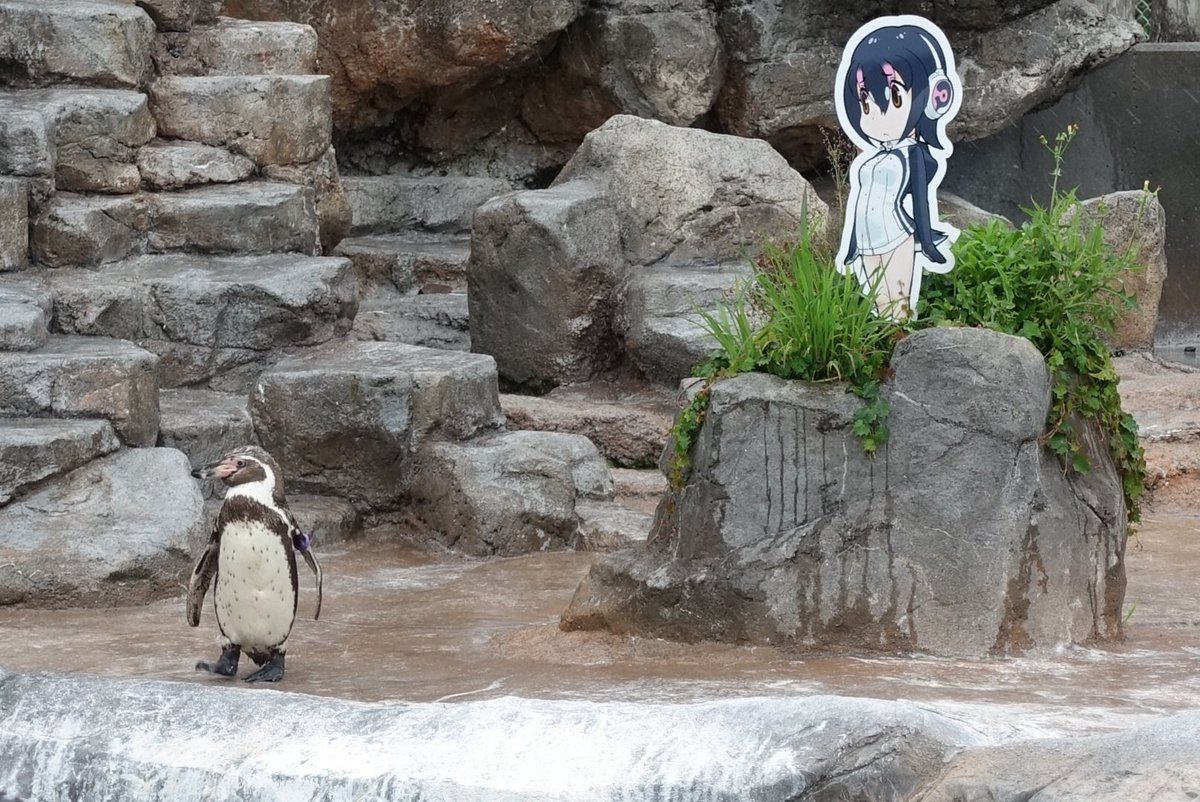
Grape-kun was just an old penguin at Tobu Zoo in Saitama Prefecture, Japan. Most Humboldt penguins live quiet lives, eat some fish, and maybe bicker with their neighbors. But Grape-kun wasn’t normal. He became a global icon for something deeply, weirdly human: a crush on a cardboard cutout of an anime girl.
It sounds like a joke. Honestly, when the photos first started circulating back in 2017, people thought it was just a funny coincidence. A bird staring at a piece of plastic? Classic internet fodder. But as the weeks turned into months, it became clear that Grape-kun was genuinely, profoundly attached to Hululu, a character from the series Kemono Friends. He stopped hanging out with other penguins. He spent his days standing at her feet. He even performed courtship displays—those specific wing-flapping rituals penguins use to attract a mate—to a 2D drawing.
The Tragic Backstory Nobody Mentions
To understand why this happened, you have to look at the bird’s history. Penguins are famous for being monogamous, right? Well, mostly. Grape-kun had a mate named Midori. They had been together for a decade. But Midori eventually dumped him for a younger penguin.
Imagine being a penguin and getting "cucked" in front of the whole colony. The zoo staff noted that Grape-kun became isolated. He was the outcast. He was lonely. So when the zoo did a promotion with Kemono Friends and placed character cutouts around the enclosures, Grape-kun found something that wouldn't reject him.
Hululu was a Humboldt penguin girl in anime form. To a bird’s brain, those high-contrast colors and familiar shapes probably registered as a high-value mate. He didn't just look at her. He refused to leave her side, even during feeding times. Zookeepers actually had to physically remove him so he would go eat, and he’d waddle right back as soon as he was done.
The Science of Interspecies Attachment
Is this just "anthropomorphizing" an animal? Maybe. But ethologists (people who study animal behavior) have seen this kind of thing before. It’s called "misdirected courtship."
Animals in captivity or isolated environments often fixate on inanimate objects. You see it with parrots falling in love with bells or dogs getting weirdly attached to a specific stuffed toy. But with Grape-kun, it felt different because of the consistency. He wasn’t just playing. He was devoted.
Why Hululu?
- Visual Stimuli: The cutout featured the black-and-white patterns of a Humboldt penguin, which triggered his natural instincts.
- Stability: Unlike Midori, the cutout never moved, never fought, and never left him.
- Isolation: Being shunned by the colony made the cutout his only social outlet.
The internet noticed. Fan art started pouring in from every corner of the globe. People weren't just laughing anymore; they were seeing their own loneliness reflected in this tiny, 20-year-old bird. He became a symbol for "waifu culture," but also for the universal desire to find companionship, even in the wrong places.
That Time the Voice Actress Visited
One of the peak moments of this saga was when Ikuko Chikuta, the actual voice actress for Hululu, visited the zoo. There are photos of her standing next to the cutout while Grape-kun looks on. It was a bizarre collision of reality, fiction, and biology. The zoo even started selling Grape-kun themed "wine" (actually grape juice) because the fans were showing up in droves.
Grape-kun wasn't just a bird anymore. He was a tourist attraction that saved the zoo’s bottom line for a season. But he was also getting old. Humboldt penguins usually live about 20 years in captivity. Grape-kun was pushing 21.
The End of an Era
In October 2017, the zoo announced that Grape-kun had passed away. He died with the Hululu cutout right next to him.
The outpouring of grief was legitimately massive. This wasn't just a dead bird. It was the end of a narrative that had captured the hearts of millions. The zoo set up a shrine. Thousands of people brought flowers. The creator of Kemono Friends, Mine Yoshizaki, even sent a special piece of art featuring Hululu and Grape-kun together, wearing matching purple bands (purple was the color of his wing tag, hence the name "Grape").
It’s easy to dismiss this as "internet weirdness." But there’s a nuance here. Grape-kun's story resonated because it was a story about resilience in the face of rejection. He found a way to be happy, even if that happiness was based on an illusion.
Common Misconceptions About Grape-kun
- He thought she was real: We don't know that. It's more likely he was responding to supernormal stimuli—a version of a penguin that was "perfect" in his eyes.
- He died of a broken heart: He died of old age and related health issues. However, the stress of his earlier rejection by Midori likely contributed to his social withdrawal.
- The zoo forced the interaction: Not at all. The zookeepers were actually worried at first and tried to move the cutout, but Grape-kun became distressed without it.
Why This Still Matters in 2026
We live in an age where the lines between the digital and physical worlds are blurring. We have AI companions, virtual influencers, and people spending more time in digital spaces than real ones. Grape-kun was the first "natural" example of this shift. He showed us that the brain—whether human or avian—doesn't always care if the source of comfort is "real."
It's about the feeling.
If you're visiting Tobu Zoo today, the legacy is still there. They know that this one penguin changed how the world looked at their facility. It wasn't about the lions or the tigers. It was about a bird and a piece of cardboard.
Actionable Takeaways for Animal Lovers
If you're interested in the behavior of captive animals or want to support conservation for species like the Humboldt penguin, here’s how to engage meaningfully:
- Support the Global Penguin Society: They work on real-world conservation for wild Humboldt penguins, which are currently classified as "Vulnerable" due to overfishing and habitat loss.
- Observe Social Cues: If you have pets, watch for obsessive behaviors with toys. While it's cute, it can sometimes signal a lack of social stimulation or underlying anxiety.
- Visit Ethical Zoos: Tobu Zoo handled Grape-kun's situation with surprising empathy. Look for zoos that prioritize psychological enrichment over just physical health.
- Learn About Ethology: Read books like The Inner Life of Animals by Peter Wohlleben to understand that what we saw in Grape-kun wasn't just a fluke—it's a window into how animals process emotion.
Grape-kun didn't change the world, but he changed how we think about what it means to be lonely. He was a tiny bird with a massive heart, standing in the sun, waiting for a girl who could never move. There's something beautiful, and maybe a little bit okay, about that.