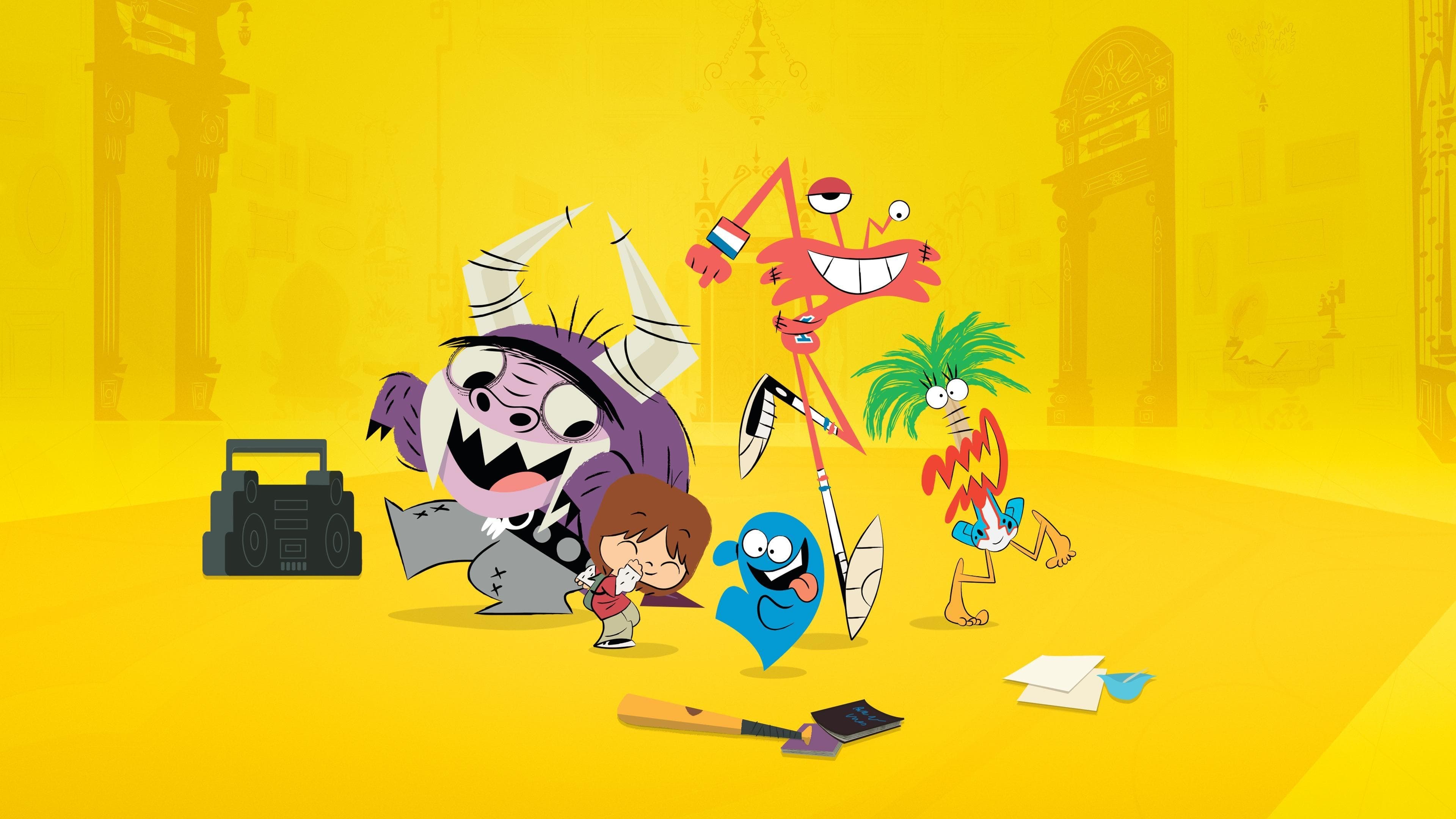
Honestly, if you grew up watching Cartoon Network in the mid-2000s, you probably have a visceral reaction just hearing the name. Foster's Home for Imaginary Friends Duchess wasn't just another background character in Craig McCracken’s colorful world of whimsical creatures. She was the absolute worst. And I mean that as a high compliment to the writers.
Most imaginary friends at Madame Foster’s were there because they were outgrown, misunderstood, or just needed a little help finding a new kid. Not Duchess. She was the high-maintenance, 1D-styled aristocrat who treated everyone like literal dirt. While characters like Bloo were annoying in a "younger brother" kind of way, Duchess brought a level of genuine malice that felt strangely sophisticated for a kids' show. She didn't want a friend; she wanted a kingdom.
The Design That Made Us Uncomfortable
There is something deeply unsettling about how Duchess looks compared to the rest of the cast. While Wilt is tall and lanky and Eduardo is a fuzzy purple monster, Duchess looks like she stepped out of a Cubist painting gone wrong. Her design is heavily inspired by the works of Pablo Picasso, specifically his "weeping woman" style. She’s flat. She’s jagged. Her eyes aren't where they should be, and her mouth seems to move independently of her face.
This wasn't an accident. McCracken and his team, including character designer Shannon Tindle, used visual contrast to signal her personality. In a house full of soft edges and bright colors, Duchess is sharp. She is black, white, and beige—monochromatic and dull in spirit despite her claims of being "high art." Her movements are jerky, almost like a puppet with tangled strings. It’s a masterclass in using character design to evoke immediate dislike before the character even opens her mouth.
And then she does open her mouth. Voiced by Grey DeLisle (who also voiced Azula in Avatar: The Last Airbender and Vicky in The Fairly OddParents), Duchess has this grating, faux-European accent that just drips with condescension. DeLisle is a legend in the voice-acting world, and her work as Duchess is often overlooked because the character is so grating. But that’s the point. Every "DAH-ling" and "PEAS-ant" was designed to make your skin crawl.
Why Duchess is Actually a Tragic Character (Sorta)
Look, nobody is defending her behavior. She tried to get Bloo kicked out, she manipulated Mac, and she treated Terrence like a personal pack mule. But if you look at the lore of the show, Duchess is a fascinating case study in what happens when an imaginary friend's "purpose" is fundamentally broken.
Imaginary friends are created by children to fulfill a need. Some need protection, some need a playmate, and some need a listener. Duchess was created to be a "high-society" accessory. She was literally imagined to be better than everyone else. Imagine being birthed into existence with the sole purpose of being superior, only to end up in a communal home sharing a bathroom with a giant blue blob and a bird-plane-thing named Coco.
Her ego isn't just a personality trait; it’s her entire physiological makeup.
The Struggle for "Adoption"
One of the funniest and most pathetic running gags in the series is Duchess's desperate desire to be adopted—but only by someone who meets her impossible standards. In the episode "Duchess of Wails," we see the toll her presence takes on the house. She’s so miserable and makes everyone else so miserable that the staff is practically begging people to take her.
The irony? She hates being at Foster’s because she thinks she’s too good for it, yet her personality ensures she will never leave. She is trapped in a cycle of her own making. Most fans remember the ending of that specific arc where she finally gets adopted by a wealthy family, only to realize that being a "trophy" friend means she has no freedom. It’s one of the few times the show touches on the idea that "be careful what you wish for" applies to the imaginary friends just as much as the kids.
Comparing Duchess to Other Foster’s Villains
To understand the impact of Foster's Home for Imaginary Friends Duchess, you have to look at who else was causing trouble in that Victorian mansion.
- Terrence: Mac’s older brother was a classic bully. He was dim-witted and physically imposing. He was a threat you could see coming.
- Berry: The obsessive, stalker-ish pink friend who wanted Bloo all to herself. She was terrifying because she was "cute" but unhinged.
- Bendie: The "gaslighting" expert. He did bad things and framed others.
Duchess was different. She wasn't a bully in the physical sense, and she wasn't "crazy" like Berry. She was a social climber. She used bureaucracy, rules, and emotional manipulation to get her way. She would cite house rules to get others in trouble while acting like she was the victim. In many ways, she’s the most "adult" villain in the show. We’ve all worked with a Duchess. We’ve all had a neighbor like Duchess. That’s why she resonates so much even years after the show ended.
The Animation Legacy of the "Paper-Thin" Diva
There’s a technical aspect to Duchess that often goes ignored. Foster’s Home for Imaginary Friends was one of the first major shows to be animated using Adobe Flash (now Animate). For a long time, Flash animation was looked down upon as "cheap" or "stiff."
However, the team at Cartoon Network Studios pushed the software to its limits. The way Duchess moves—the sliding of her features across her face and the way she flattens herself—is a perfect use of the medium. You couldn't do Duchess the same way in traditional cel animation without it looking "wrong." She was built for the digital age of animation. She’s a 2D character who knows she’s 2D and uses it to look down on the "3D" world.
What Duchess Taught Us About Foster's Philosophy
At its heart, the show is about empathy. Madame Foster created the home because she believed every friend deserved a place to belong. But Duchess tests that philosophy. Does someone who is inherently mean-spirited and refuses to change still deserve a home?
The show’s answer was always "yes." Even when she was being a nightmare, Mr. Herriman and Madame Foster never truly kicked her out. They provided her with the essentials. They treated her with the dignity she didn't show others. It’s a subtle lesson for kids: you don’t have to like someone to treat them with basic human (or imaginary friend) decency.
How to Revisit the Duchess Episodes Today
If you're looking to dive back into the madness, there are a few key episodes where Duchess really shines (or gloats, rather).
- "House of Bloo's": Her introduction sets the stage perfectly. You see her immediately clash with the status quo.
- "Duchess of Wails": This is the definitive Duchess episode. It explores her adoption and the chaos that ensues when she’s actually "happy."
- "Good Wilt Hunting": While not centered on her, her interactions during the larger house events show her consistent characterization.
You can find most of these on streaming services like Max or through digital retailers. Seeing it as an adult is a trip. You start to realize that the writing was way sharper than we gave it credit for in 2004.
A Quick Reality Check on the "Reboot" Rumors
There has been a lot of talk lately about a Foster's Home reboot. Craig McCracken has confirmed that a new project is in the works, specifically targeted at a preschool audience. While this means the tone will be different, it raises the question: Will Duchess return?
In a preschool setting, a character as acidic as Duchess might be toned down. Or, she might be the "teachable moment" character who learns to share. Honestly? I hope they keep her a bit mean. Every show needs a diva to shake things up.
Next Steps for the Superfan:
- Check out the art of Shannon Tindle. If you love the look of Duchess, Tindle’s work on Kubo and the Two Strings and Leo carries that same unique, stylized DNA.
- Listen to the "Voice of the Voices" interviews. Grey DeLisle has spoken at length on various podcasts about how she developed the voice for Duchess. It’s a great look into the craft of being "annoying" on purpose.
- Look for the cameos. Duchess appears in several crowd shots in later episodes and even in other Cartoon Network crossovers. Hunting for her flat, jagged silhouette is a fun game for a rewatch.
Whether you find her hilarious or just plain frustrating, there's no denying that Foster's Home for Imaginary Friends Duchess is one of the most unique creations in the history of 2000s animation. She’s the reminder that not every imaginary friend is a "friend"—and that’s what makes the world of Foster’s feel real.