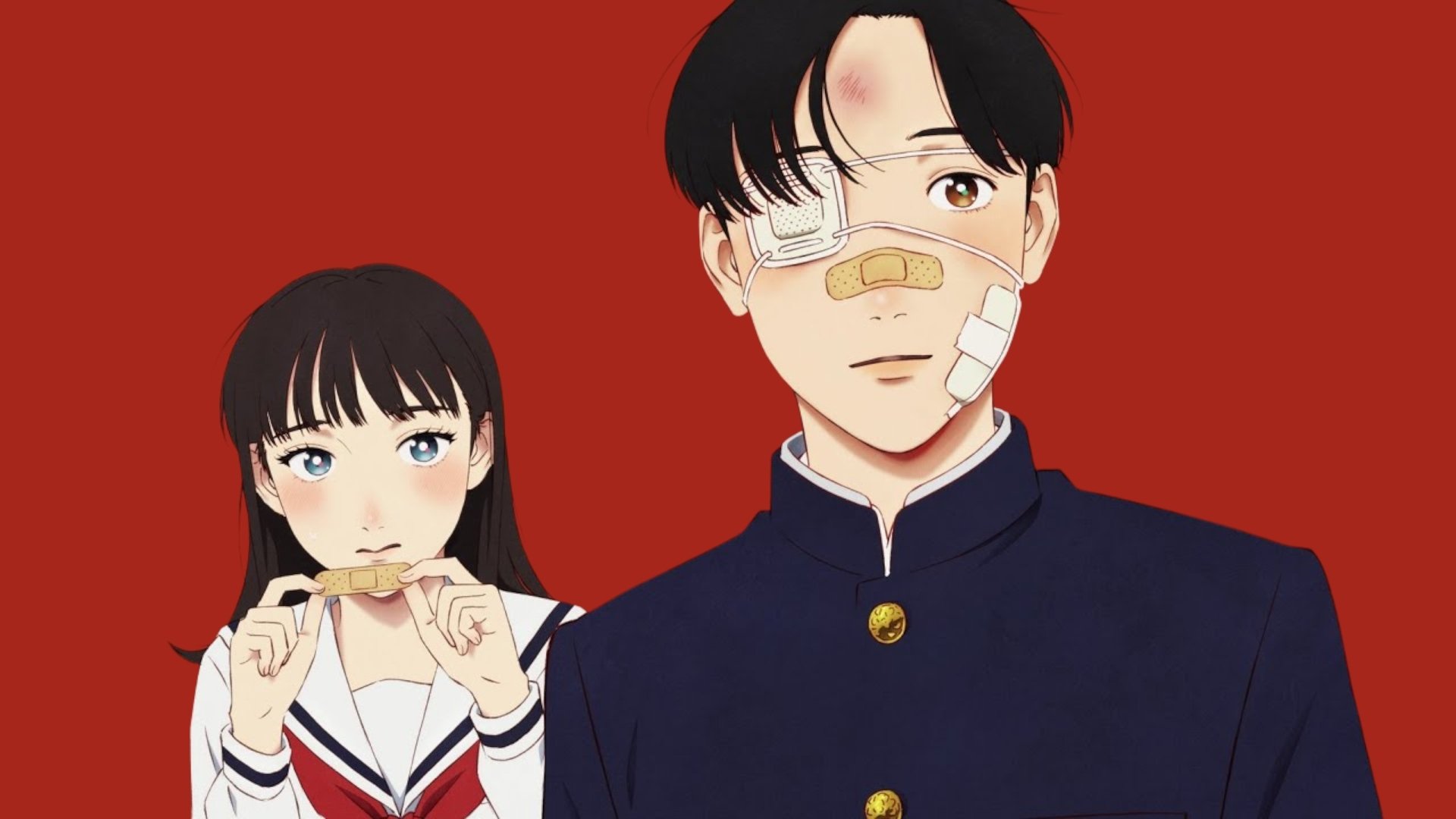
It is a simple premise. A boy walks into a classroom covered in bandages. He has a gauze pad on his forehead, a sling on his arm, and a look of mild confusion as if he isn't quite sure how he ended up in this state. This is Yano-kun. He is the heart of Yano-kun no Futsuu no Hibi, or Yano-kun’s Ordinary Days, a series that has quietly carved out a massive niche in the rom-com world. You might think we’ve seen enough "clumsy character" tropes in manga and anime. Honestly, I thought so too. But Yano is different because his "clumsiness" isn't just a gag; it is a lifestyle.
The series, written and illustrated by Tamura Yui, managed to do something rare. It took the hyper-saturated genre of high school romance and injected it with a weird, vibrating energy that feels both chaotic and incredibly sweet. If you are looking for a story where the stakes are basically "will this boy survive his walk to school," you’ve found it.
The appeal of the ultra-clumsy protagonist
Most people get Yano-kun wrong. They think he is just a bit of a klutz. No. He is a magnet for minor disasters. We aren't talking about tripping over a rug. We are talking about somehow getting a papercut from a breeze or ending up in a cast because he looked at a corner too quickly. It’s absurd. It’s ridiculous. It’s also weirdly relatable for anyone who has ever felt like they don't quite fit into the physical world.
The charm of Yano-kun no Futsuu no Hibi lies in the contrast. Yano is a handsome, soft-spoken guy. Usually, that character is the "cool" type. Instead, he is a walking medical bill. The story kicks off when Yoshida-san, a girl who is basically the human embodiment of the "mom friend," decides she cannot just stand by and watch him bleed out in the hallway. She becomes his self-appointed guardian.
What makes this work is the sincerity. There is no cynicism here. In a landscape filled with "edgy" protagonists or complex psychological dramas, Yano-kun is refreshing. It’s about people being kind to each other because they genuinely care. That’s it. That’s the hook.
Why the 2024 live-action adaptation changed the game
When they announced the live-action movie starring Ryoto Chiba (from FANTASTICS), the fans were skeptical. Live-action manga adaptations are a minefield. You either get a masterpiece or a disaster that people pretend doesn't exist. But the film, directed by Takehiko Shinjo—the guy behind Your Lie in April and Paradise Kiss—actually understood the assignment.
They didn't try to make it a high-stakes drama. They kept the smallness of it. They captured the "ordinary days" part of the title. The physical comedy is hard to pull off in live action without looking cheesy, but Chiba’s performance nailed that specific "I am hurt but I am trying my best" vibe. It brought a whole new audience to the manga. Suddenly, people who never read a page of the Kodansha serialization were scouring the internet for Yano-kun content.
Breaking down the characters (Who actually matters)
Look, the cast isn't huge, but it's effective. You have Yano, obviously. Then you have Yoshida. She is the engine of the story. Without her, Yano would probably be extinct by chapter three. Her obsession with his safety borders on the professional. She keeps first-aid kits like people keep snacks.
Then there is Hanari. Every rom-com needs a "rival" or a third wheel, but the way Tamura Yui handles the dynamics is surprisingly mature. There isn't this toxic jealousy that ruins the mood. Instead, you get a group of kids trying to navigate feelings that are as fragile as Yano’s bones.
- Yano: The injury-prone lead who just wants a normal life.
- Yoshida: The hyper-prepared protector with a heart of gold.
- Hanari: The cool-headed friend who adds a bit of perspective.
The manga, which ran in Comic DAYS, succeeds because it doesn't overcomplicate these people. They feel like teenagers. They are awkward. They say the wrong things. They get embarrassed about things that don't matter.
Why "Ordinary Days" is the most important part of the title
We live in an era of "peak content." Everything has to be a multiverse or a dark deconstruction of a genre. Yano-kun no Futsuu no Hibi goes the other way. It celebrates the mundane. The biggest plot points are things like a school festival or a walk home in the rain.
There is a specific Japanese concept called iyashikei (healing). While this is technically a rom-com, it has strong healing vibes. You watch it or read it and your heart rate just... drops. It’s like a warm blanket. In 2026, where the world feels constantly on fire, there is a massive market for stories where the biggest problem is a skinned knee.
The art style: Simplicity is key
Tamura Yui’s art isn't flashy. It isn't trying to be high fashion. It is clean, expressive, and focuses heavily on character acting. The way Yano is drawn—often with wide, vacant eyes and bandages—makes him instantly sympathetic. You want to protect him. The backgrounds are standard high school fare, but that helps ground the absurdity of Yano’s accidents in reality. If the world looked as crazy as his luck, the jokes wouldn't land. Because the world looks "normal," his bad luck feels funnier.
Common misconceptions about the series
A lot of people think this is a "sad" story. They see a boy in bandages and assume it's a tragedy about a chronic illness or something dark. It really isn't. Yano is perfectly healthy; he’s just cosmically unlucky.
Another mistake? Thinking it’s a harem. It’s not. It’s a very focused romance. The core is the bond between Yano and Yoshida. The side characters exist to support that or provide a different lens, but the heart never wanders too far from the main pair.
Also, don't go into this expecting a traditional "confession" arc that takes 300 chapters. The pacing is actually pretty decent. It doesn't feel like it's dragging its feet just to sell more volumes. Every chapter builds the relationship, even if it's just through the act of applying a fresh band-aid.
How to experience Yano-kun today
If you’re just starting out, the manga is the way to go. It gives you the full breadth of the "accidents" and the slow-burn realization of feelings. The live-action movie is a great "snack" version, but the manga is the meal.
For those who are already fans, the community has grown quite a bit. You see fan art everywhere now. The "bandage aesthetic" has even become a bit of a meme in certain circles. But beyond the memes, there is a genuine appreciation for the storytelling. It’s a reminder that you don't need a massive plot to tell a compelling story. You just need characters that people actually like.
Actionable steps for fans and newcomers:
- Start with the Manga: Look for the Kodansha releases. The digital versions on Comic DAYS are easy to access if you can navigate the Japanese site, but English scanlations and official translations are becoming more common.
- Watch the Live-Action: If you can find a subbed version of the 2024 film, watch it for the production value alone. It’s a very "pretty" movie that captures the soft lighting of the manga’s vibe.
- Focus on the Details: Pay attention to the background characters. Tamura Yui often hides little visual gags in the classroom scenes that explain just how Yano got hurt this time.
- Join the Discussion: Check out communities on Reddit or Discord. Since the series is finished (the main run wrapped up with 11 volumes), you don't have to worry about "wait-and-see" cliffhangers. You can binge the whole thing.
The reality is that Yano-kun no Futsuu no Hibi succeeds because it embraces weakness. Yano isn't a hero. He isn't cool. He is just a guy trying to get through the day without a concussion. In a world that demands we all be "main characters" and "alpha" types, Yano is a quiet, bandaged-up rebellion against that pressure. He is just Yano. And that is more than enough.
To get the most out of the series, read it when you are feeling stressed. It is designed to be a low-impact, high-reward experience. Don't look for deep metaphors or hidden lore. Just look at the boy who tripped over air and the girl who was there to catch him.