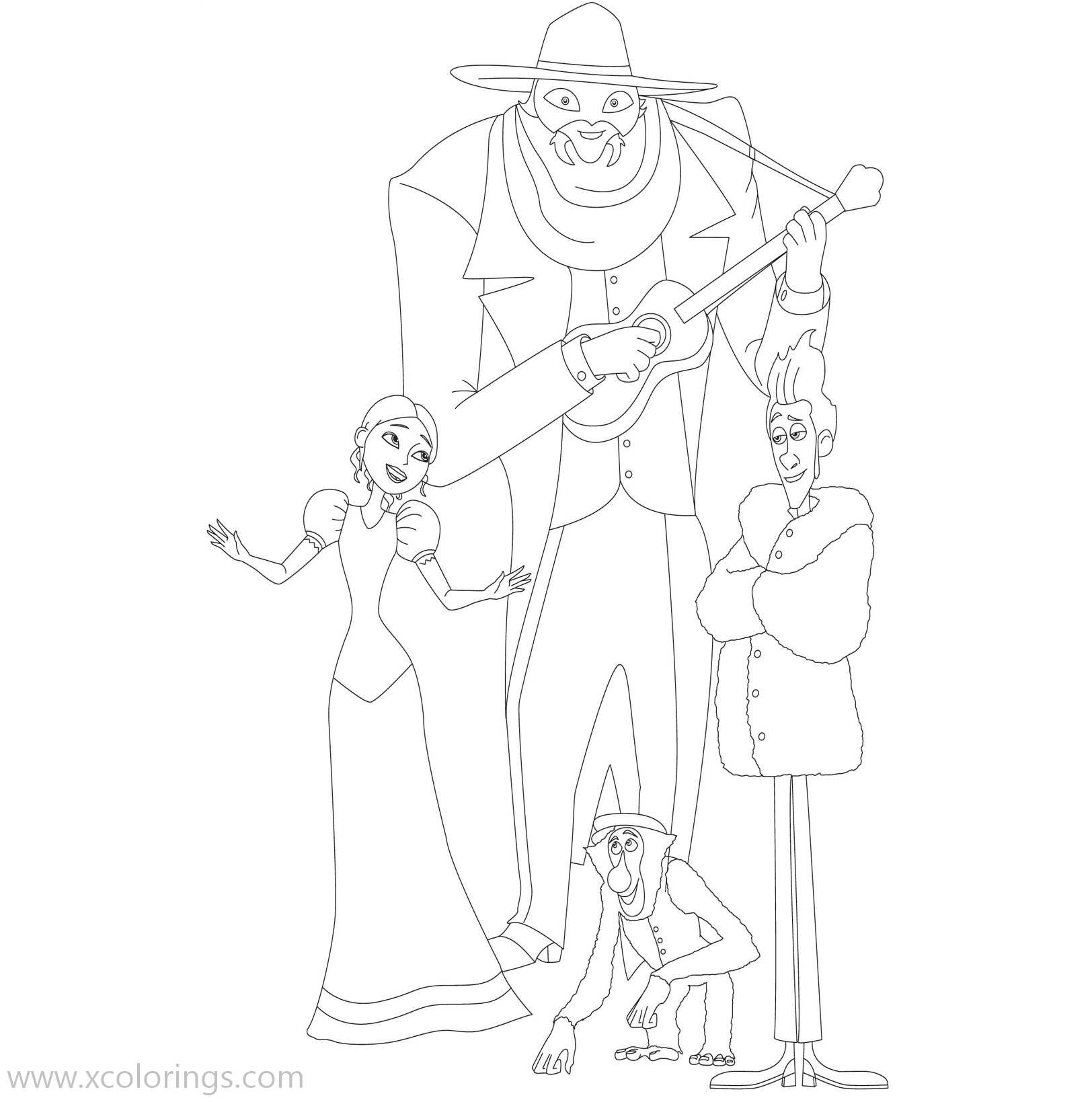
If you walked into a theater in 2011 expecting a standard DreamWorks clone, you probably left Un Monstre à Paris feeling a little bit confused and a lot bit charmed. It’s weird. Bizarre, actually. A 1910 Paris flooded by the Seine, a giant flea that plays guitar, and a villain who is basically just a guy with a really big ego and a tiny mustache. But the magic of the A Monster in Paris characters isn't just in the steampunk aesthetic or the gorgeous French pop soundtrack by Vanessa Paradis and -M- (Matthieu Chedid). It’s in how human they feel, even when they’re literally insects.
Most people remember the flea. Francœur. He’s the heart of the whole thing. But if you look closer at the ensemble, you see a masterclass in French animation tropes being turned on their heads. You have Raoul, who is insufferable until he isn't. You have Lucille, who is way more than just a "damsel" in a sparkly dress. Then there’s Maynott, a villain who feels uncomfortably relevant because his only real power is public relations and fear-mongering.
Francœur: The Giant Flea with a Soul
Let’s talk about the flea in the room. Francœur is an accident. He’s the result of a chemistry mishap in a greenhouse, and honestly, his existence is kind of terrifying if you think about it for more than two seconds. He’s seven feet tall. He has red eyes. He jumps like a grasshopper on steroids.
But the brilliance of this character is the silence. He doesn’t talk. He chirps, he purrs, and he sings through his guitar. Bibo Bergeron, the director, clearly leaned into the Phantom of the Opera vibes here, but without the murderous stalking. Francœur is pure innocence. He represents the "other," the misunderstood creature that just wants to exist without being squashed by a police commissioner's boot.
What’s fascinating is how the animation handles his movement. He doesn't move like a human in a suit. He’s jittery. He’s twitchy. He’s an insect. Yet, when he gets on stage with Lucille at L'Oiseau Rare, he becomes the smoothest thing in Paris. That duality is why people still draw fan art of this guy over a decade later. He’s the ultimate underdog.
Lucille: Not Your Typical Cabaret Star
Lucille could have been a cliché. The beautiful singer, the love interest, the "girl" of the group. But she’s the one with the spine of steel. She’s the one who sees Francœur and doesn't scream—well, she screams a little at first, but she recovers fast.
In the world of A Monster in Paris characters, Lucille is the anchor. She’s struggling to keep her aunt’s cabaret afloat while dodging the advances of a powerful politician. Her relationship with Raoul is also refreshingly annoying. They’ve known each other since childhood, and they grate on each other's nerves in a way that feels very real. It’s not "love at first sight." It’s "I’ve known you since we were five and you were a brat then, too."
Vanessa Paradis voiced her in both the French and English versions, which is a rare treat. It gives the character a consistent "voice" that is husky, tired, and deeply soulful. When she sings "La Seine," she isn't just performing; she's protecting her friend. She uses her celebrity status as a shield for Francœur. That’s a level of agency you don't always see in animated heroines from that era.
Raoul and Emile: The Chaos Duo
Raoul is a lot. He’s got that fur coat, a delivery truck named "Catherine," and an ego that occupies most of the Arrondissements. He’s the guy who thinks he’s the main character of everyone else’s life. He’s loud, he’s a bit of a liar, and he’s constantly bickering with Emile.
Emile is the opposite. He’s the shy projectionist who just wants to take Maud to the movies. He’s the "accidental" part of the accident. If Emile hadn't been there with his camera, trying to capture something beautiful, the whole mess might never have happened.
The chemistry between these two is the engine of the movie’s comedy. It’s a classic "buddy" dynamic, but with a French twist. They aren't heroes. They are two regular guys who accidentally created a monster and then realized they had to save it from a much worse monster. Raoul’s character arc is actually the most traditional—he has to learn to be selfless—but it’s handled with enough wit that it doesn't feel preachy.
Commissioner Maynott: The Real Monster
Every story needs a villain, but Maynott is special. He doesn't have superpowers. He doesn't have a magic wand. He has a badge and a megaphone.
Maynott is obsessed with order. More specifically, he’s obsessed with his own legacy. He wants to be the man who saved Paris from the "beast." He doesn't care that the beast is harmless. In fact, the harmlessness of the flea is a problem for him. A harmless monster doesn't win elections. A harmless monster doesn't justify a militarized police force.
He is the personification of "The Red Scare" or any other moral panic. He creates a threat to justify his own power. It’s a pretty heavy concept for a kids' movie, honestly. When he’s chasing Francœur through the flooded streets, he isn't doing it for justice. He’s doing it for the photo op. It makes him one of the more grounded and frustratingly realistic villains in French animation.
Why the Ensemble Works Together
You can’t just look at these characters in a vacuum. The magic is in the overlap. You have:
- The Outcast (Francœur) who finds a voice through art.
- The Artist (Lucille) who finds a purpose beyond the stage.
- The Egotist (Raoul) who finds his humility.
- The Observer (Emile) who finally steps into the action.
The setting of the 1910 Great Flood of Paris acts as a fifth character. It traps them together. It creates a playground of rooftops and boats that forces these disparate personalities to collide.
One detail people often miss is the role of Maud. She seems like a minor character—the girl Emile likes—but she represents the "normal" world. She’s the audience. Her acceptance of the situation at the end validates the journey of the others.
The Musical Connection
It is impossible to talk about the A Monster in Paris characters without mentioning the music. This isn't a Broadway-style musical where people burst into song to explain their feelings. The music happens organically because Lucille is a singer.
The song "La Seine" is the turning point. It’s where the city stops being afraid and starts dancing. It’s where Francœur becomes more than a bug. He becomes a legend. The way their voices blend—Vanessa Paradis' airy vocals and -M-'s quirky, rhythmic style—perfectly mirrors the relationship between the characters. It’s a blend of elegance and oddity.
Misconceptions About the Movie
A lot of people think this is a Disney movie. It’s not. It was produced by Bibo Films and EuropaCorp (Luc Besson’s company). This is why the humor is a little drier and the stakes feel a bit more personal. It’s also why the character designs are so "tall and skinny." It’s a very European aesthetic that favors silhouette and movement over the hyper-realistic textures you see in Pixar films.
Another misconception is that it’s a retelling of Beauty and the Beast. Not really. There’s no romance between Lucille and Francœur. It’s a deep, platonic friendship based on artistic mutual respect. That’s actually much more interesting. It’s about two performers finding a rhythm together, not a girl "fixing" a monster with a kiss.
Technical Insights for Fans and Creators
If you're looking at this from an animation or storytelling perspective, there are a few "pro" takeaways from how these characters were built.
First, look at the color palettes. Lucille is almost always in white or gold—light. Maynott is in dark blues and blacks—shadow and authority. Francœur starts in the shadows but is literally "clothed" in Raoul’s oversized suit, bridging the gap between the world of monsters and the world of men.
Second, consider the pacing. The movie is short. It doesn't waste time on long backstories. We learn everything we need to know about Raoul from the way he drives his truck. We learn about Emile from the way he looks at his camera. It’s "show, don't tell" at its finest.
How to Appreciate the Film Today
- Watch the French version with subtitles. Even if you don't speak French, the original voice acting by Matthieu Chedid is essential for Francœur. The English dub is fine, but the French version has a specific "je ne sais quoi."
- Look for the historical cameos. The film is set during a real event—the 1910 flood. The way the characters navigate the submerged streets is based on actual photos from that era.
- Focus on the background characters. The patrons at L'Oiseau Rare and the police officers under Maynott provide a lot of "flavor" that explains how Parisian society viewed outsiders at the time.
The enduring legacy of the A Monster in Paris characters is that they remind us that being "weird" is usually just a prerequisite for being wonderful. Whether it's a giant flea with a gift for the six-string or a delivery driver with too much confidence, there's room for everyone in the cabaret.
To get the most out of your next rewatch, pay close attention to the scene where Francœur first puts on his disguise. Note how his posture changes from a scared animal to a performer. It’s a subtle bit of character work that defines the entire emotional arc of the film. If you're interested in more French animation, looking into the works of Sylvain Chomet (The Triplets of Belleville) is a great next step, as it shares that same love for eccentric characters and silent storytelling.