The images are grainy, black and white, and frankly, they’re hard to look at. If you’ve spent any time in the true crime rabbit hole, you’ve probably come across the west memphis 3 crime scene pictures at some point. They aren't just artifacts of a gruesome discovery in a drainage ditch in 1993; they became the focal point of a massive legal war that lasted nearly two decades. Honestly, looking at them today feels different than it did in the mid-nineties. Back then, people saw "Satanism." Today, most people just see a botched investigation and three kids—Steve Branch, Christopher Byers, and Michael Moore—who never got home from a bike ride.
Robin Hood Hills was a patch of woods that wasn't exactly a forest, but it was enough of a wilderness for kids in West Memphis, Arkansas, to disappear into. When the bodies were found on May 6, 1993, the crime scene was handled in a way that would make a modern forensic technician cringe. Water was everywhere. The ditch, often called "The Pipe," was part of a drainage system that basically acted as a giant evidence-washer. Because the victims were submerged, the west memphis 3 crime scene pictures often depict what looks like chaos—mud, sticks, and the physical degradation of a crime scene that was being compromised by the second.
The Problem With the "Satanic" Narrative
Investigators saw the knots. They saw the way the boys were bound—shoelaces used to tie right wrists to right ankles, left to left. In the early nineties, the "Satanic Panic" was still very much a thing in the American South. The police looked at those crime scene photos and didn't see a human predator; they saw a cult.
This is where things got messy.
When you look at the evidence through a biased lens, you find what you’re looking for. The prosecution argued that the injuries on the boys, specifically Christopher Byers, were indicative of ritual mutilation. They pointed to the west memphis 3 crime scene pictures as proof of a dark, occult sacrifice. But here is the thing: they ignored the biology of the woods.
Years later, forensic experts like Dr. Werner Spitz and Dr. Richard Souviron looked at those same pictures and saw something entirely different. They saw post-mortem predation. Basically, turtles and crawfish. It sounds clinical and cold, but it's a vital distinction. What the original investigators called "ritualistic knife wounds," modern forensics identified as animal activity that occurs naturally when a body is left in a swampy, wooded area.
Why the west memphis 3 crime scene pictures remain controversial
The photos aren't just about the victims. They are about the lack of physical evidence connecting Damien Echols, Jason Baldwin, and Jessie Misskelley Jr. to the mud. If you look at the crime scene, you’d expect to find DNA. You'd expect hair, skin cells, or some kind of fiber.
But there was nothing.
Well, almost nothing.
There was a partial hair found in a ligature used to bind Michael Moore. For years, this was a huge "what if." Decades later, DNA testing—the kind of tech that didn't exist in '93—linked that hair to Terry Hobbs, the stepfather of Steve Branch. Hobbs has always denied involvement, and he's never been charged, but it shifted the entire conversation away from the "Satanic teenagers" theory that the west memphis 3 crime scene pictures were originally used to support.
The missed details in the mud
The woods were wet. It had rained. The police didn't secure the perimeter properly, and dozens of people were trampling around the site before it was fully processed. You can see the overcrowding in some of the wider shots of the recovery. It’s a mess.
One of the most debated aspects of the crime scene is the "black boogeyman" sighting or the "bloody man" at the Bojangles restaurant nearby. While the west memphis 3 crime scene pictures focus on the ditch, the surrounding area was arguably just as important. A man covered in blood and mud reportedly went into the restroom of a nearby Bojangles the night of the murders. The police took samples from the walls, but then—in a move that still baffles people—they lost them. They literally lost the physical evidence that could have pointed to a completely different suspect.
The pictures tell a story of a narrow-minded investigation. Because the police were so convinced that the murders were the work of a cult, they didn't look for a lone wanderer. They didn't look for someone with a history of violence in the neighborhood. They looked for the kid who wore Metallica shirts and read Stephen King.
Forensic evolution and the Alford Plea
If you fast-forward to 2011, the West Memphis Three were released. But it wasn't a "you're innocent" type of release. It was an Alford Plea. This is a weird legal middle ground where you plead guilty because you realize the state has enough evidence to convict you, but you still maintain your innocence. It’s a way for the state to save face and avoid a massive civil lawsuit while letting people off death row.
The west memphis 3 crime scene pictures played a role in this, too. As forensic imaging improved, the defense was able to show that the prosecution’s "expert" testimony from the original trial was essentially junk science. The "bite marks" weren't bite marks. The "satanic symbols" were just scratches from branches and rocks in the water.
What people get wrong about the evidence
People often think the crime scene was a dry, clear-cut location. It wasn't. It was a swampy drainage ditch.
- The Bindings: The shoelaces were the primary ligatures. The police claimed they were "intricate," but they were actually just basic knots.
- The Clothing: The boys were found naked. Their clothes were located nearby, submerged in the water. This suggests the killer(s) didn't care about the clothes, they just wanted to slow down the identification process.
- The "Marks": Much of the scarring seen in the west memphis 3 crime scene pictures happened after the boys had already passed away. This is crucial because it changes the timeline and the "vibe" of the crime from a torture-filled ritual to a quick, albeit horrific, homicide followed by environmental damage.
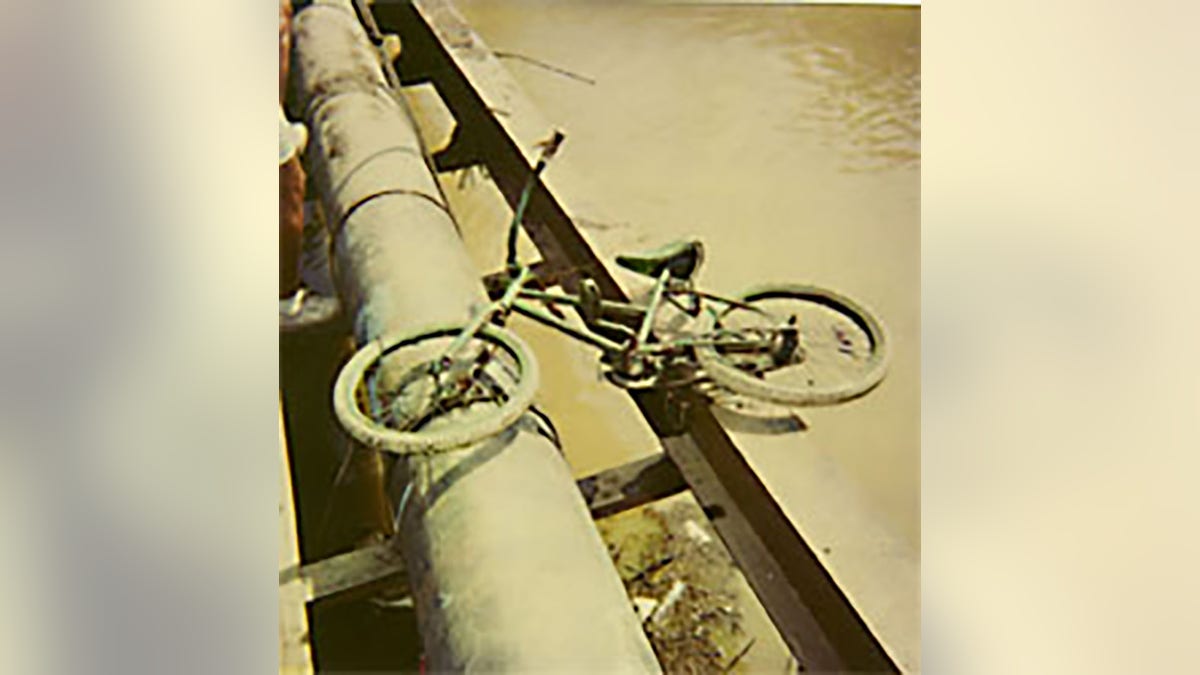
Honestly, the sheer amount of water involved in this crime scene is the biggest hurdle. Water destroys DNA. It washes away footprints. It makes everything slippery and vague. When you look at the photos of the bikes found in the water, they look like junk. They don't look like the prized possessions of three eight-year-olds. They look like discarded evidence in a place that was meant to hide secrets.
Where does the case stand now?
As of 2026, the case is technically "closed" because of the Alford Plea, but for most of the public, it’s wide open. Damien Echols has been pushing for new M-Vac DNA testing on the ligatures for years. The M-Vac is basically a high-powered forensic vacuum that can pull DNA out of the nooks and crannies of fabric or rope that traditional swabs can’t touch.
The Arkansas Supreme Court eventually ruled that Echols had the right to seek this testing. The hope is that the very items seen in those west memphis 3 crime scene pictures—the shoelaces—might still hold the genetic profile of the person who actually tied those knots.
It’s a long shot. The evidence has been sitting in storage for over thirty years. It’s been handled by countless people. But in the world of true crime, DNA is the only thing that can truly scream louder than a grainy photograph.
Actionable insights for true crime researchers
If you are looking into this case for the first time or the hundredth, it's easy to get lost in the sensationalism. The west memphis 3 crime scene pictures are often used as "shock" content, but they should be viewed as forensic data points.
Analyze the environmental factors. Don't just look at the injuries; look at the terrain. Understand that Robin Hood Hills in May is a humid, insect-heavy, and predator-rich environment. Distinguishing between what a human did and what nature did is the most important skill in evaluating this case.
Study the "Lost" evidence. The pictures only show what was found. It’s just as important to research what wasn't photographed or what was lost by the West Memphis Police Department. The Bojangles scrapings, the missing blood samples, and the poorly documented initial discovery are the real "smoking guns" of the investigation's failure.
Look at the 2020s DNA developments. Search for the latest rulings regarding the M-Vac testing. The legal battle between Damien Echols and the State of Arkansas regarding the testing of the ligatures is the current frontline of this story. This is where the next break in the case will come from, not from staring at old photos.
Read the autopsy reports alongside the photos. Photos can be misleading depending on the lighting and the angle. The written reports by the medical examiners (and the subsequent critiques by independent experts) provide the necessary context to understand what those images are actually showing.
The story of the West Memphis Three is a cautionary tale about what happens when a community's fear outweighs its commitment to the facts. The crime scene pictures are a haunting reminder of three lives lost, but they are also a map of a botched search for justice. Until the DNA gives a definitive answer, those images will remain some of the most debated pieces of evidence in American history.