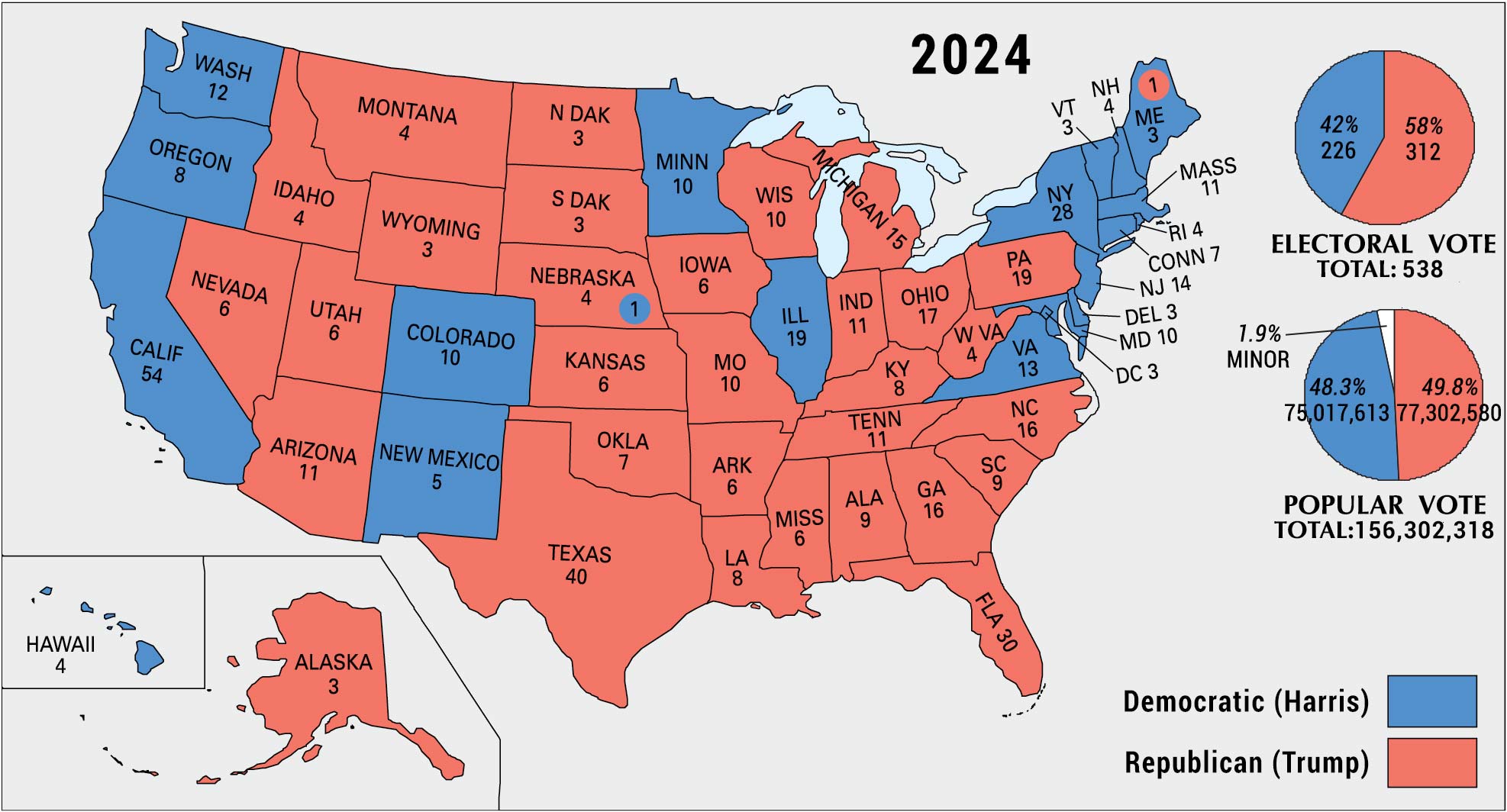
You’ve probably seen the headlines by now, but honestly, the surface-level numbers don’t even begin to tell the real story of what just happened in D.C. Everyone keeps talking about a "red wave" or a "blue wall," but if you look at the US congress election results, it’s way more of a messy, complicated tug-of-war than a knockout punch.
Republicans officially walked away with the keys to both the House and the Senate. That’s a fact. But it’s the kind of win that comes with a lot of "ifs" and "buts."
The Senate Flip and Why It’s Kinda a Big Deal
The Senate was where the real fireworks happened. Going into the night, Democrats were basically playing a high-stakes game of defense with a map that looked like a nightmare. They had to defend seats in red states like West Virginia and Montana, and well, the math just didn't hold up.
Republicans picked up four seats, bringing their total to a solid 53-47 majority.
Jim Justice basically walked into Joe Manchin’s old seat in West Virginia—no surprise there. But the real gut punches for the Dems were in the Midwest and Mountain West. Tim Sheehy took down Jon Tester in Montana. Bernie Moreno pushed past Sherrod Brown in Ohio. And Dave McCormick edged out Bob Casey in Pennsylvania.
It’s interesting because, while the GOP won the majority, some Democratic incumbents like Tammy Baldwin in Wisconsin and Elissa Slotkin in Michigan actually managed to hold on, even in states where Trump won. It shows that "split-ticket" voting isn't dead yet, though it's definitely on life support.
That Razor-Thin House Majority
If the Senate was a clear win, the House of Representatives was a slog. It took over a week to even figure out who was in charge. We’re looking at a final count of 220 Republicans to 215 Democrats.
That is tiny. Basically a rounding error.
Speaker Mike Johnson is looking at the narrowest majority since the 1930s. To put that in perspective: if just three or four Republicans decide they’re unhappy with a bill, the whole thing falls apart. It’s a legislative minefield.
- The Flips: About 17 seats changed parties. Republicans flipped 8, and Democrats flipped 9.
- The Surprise: New York and California, usually deep blue, were the primary battlegrounds for the House.
- The Margin: In districts like Iowa’s 1st or Colorado’s 8th, the results were decided by a few thousand votes. Out of 148 million cast.
What Nobody Talks About: The Redistricting Factor
Redistricting—basically the political art of drawing lines on a map—played a massive role that gets ignored by the 24-hour news cycle. In Alabama and Louisiana, court-ordered maps actually gave Democrats an extra seat in each state because the old maps were found to discriminate against Black voters.
Shomari Figures won in Alabama’s 2nd District, and Cleo Fields took Louisiana’s 6th. Without those court interventions, the Republican lead in the House would probably be even wider. On the flip side, North Carolina’s new maps essentially handed three seats to Republicans before a single vote was even cast.
The Independent Surge
Here’s something that should make both parties sweat: Gallup just reported that a record 45% of Americans now identify as Independents.
People are tired. You can feel it in the way these races played out. While the GOP has the "trifecta" (the White House, House, and Senate), the actual popular vote for the House was only a 2.6% margin for Republicans. This isn't a mandate for radical change; it’s a country that is deeply, almost perfectly, divided right down the middle.
Key Takeaways for the Next Two Years
- Judicial Appointments: With a 53-seat majority in the Senate, the GOP can confirm judges and cabinet members with zero help from Democrats. This is where the long-term impact of the US congress election results will really be felt.
- The "Veto" Power of Moderates: Because the House majority is so slim, moderate Republicans like Mike Lawler (NY) or Don Bacon (NE) have an insane amount of leverage. They can basically block any "MAGA" agenda items they don't like.
- The 2026 Horizon: It sounds crazy to talk about the next election already, but it's already starting. Democrats only need a net gain of three seats to take the House back in 2026.
Actionable Next Steps
If you’re wondering how this affects your daily life, the best thing you can do is look at the committee assignments. That's where the real power lives.
- Track the Money: Watch the House Ways and Means Committee. They handle taxes. With the 2017 tax cuts set to expire soon, this committee is going to be the center of the universe for your wallet.
- Local Impact: Check who won your specific district. Most of these "national" results are decided by local issues like a bridge repair or a factory closing.
- Engage Early: If you’re unhappy with the result (or thrilled by it), don’t wait until 2026. Congressional offices actually pay attention to call volume on specific bills.
The 119th Congress is going to be loud, chaotic, and incredibly narrow. Understanding that it’s a game of inches, not miles, is the only way to make sense of what’s coming next.