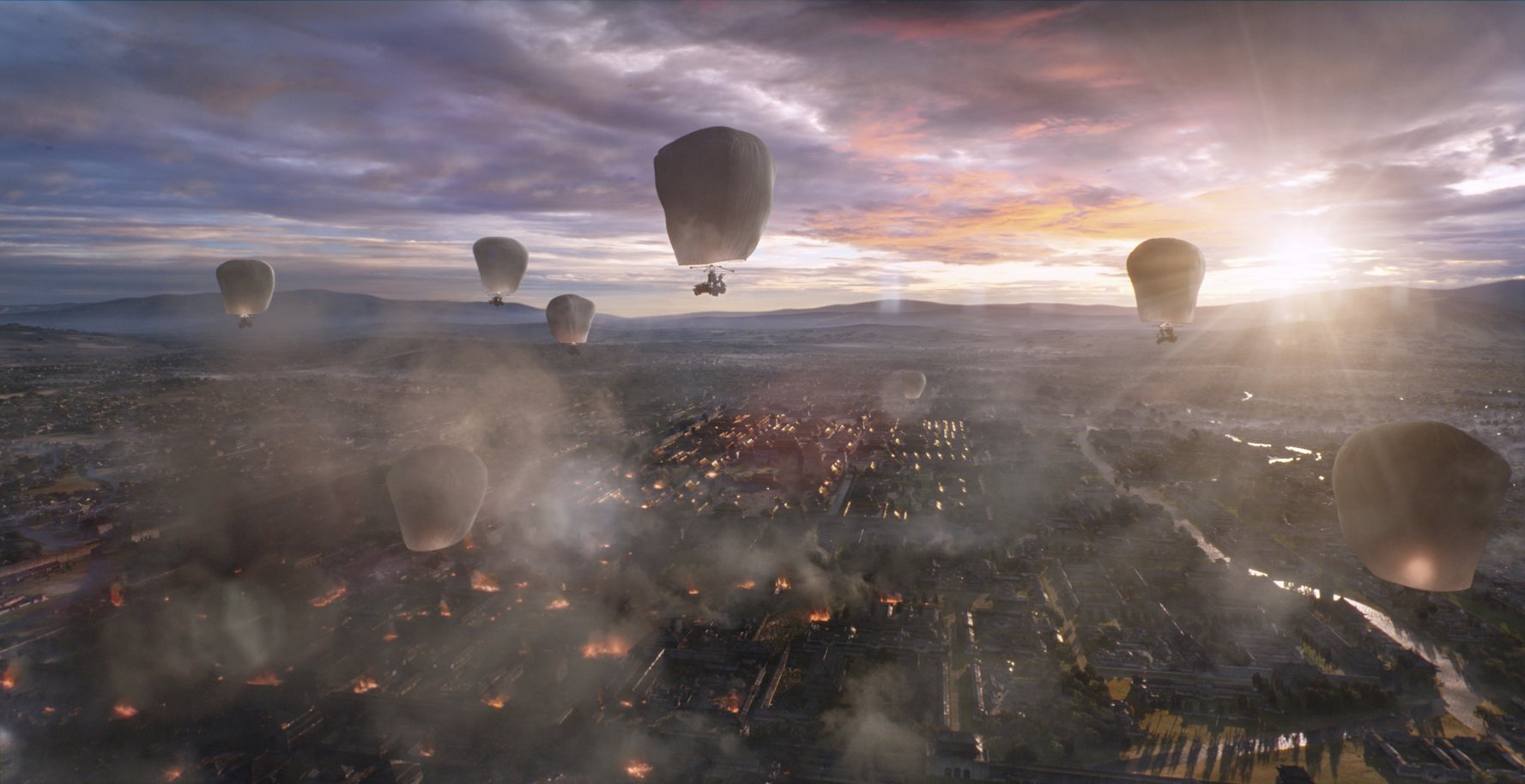
You've probably seen the 2016 Matt Damon flick where neon-green lizards swarm the ramparts of China’s most famous landmark. It’s a fun visual. But it’s also mostly nonsense. When people talk about monsters from the Great Wall, they’re usually mixing up a 150-million-dollar Hollywood budget with thousands of years of actual Chinese folklore.
Does that mean there were never "monsters" associated with the Wall? Not exactly.
The Great Wall of China wasn’t just built to keep out nomadic tribes like the Xiongnu or the Mongols. In the minds of the people who lived, fought, and died there, the wilderness beyond the stone was a place of spiritual chaos. It was a liminal space. On one side, you had the "civilized" world of the Middle Kingdom; on the other, you had the unknown. That unknown was populated by things far scarier than a few disgruntled guys on horseback.
Where the Taotie Legend Actually Comes From
If you watched The Great Wall directed by Zhang Yimou, you saw the Taotie (or Tao Tie). In the movie, they're these hive-minded alien predators that crash-landed on a meteorite.
That's a lie. Well, a creative choice.
In reality, the Taotie is one of the "Four Benevolent Animals" or, more often, one of the "Four Evil Creatures" of Chinese mythology, depending on which ancient text you’re flipping through. You’ll find them on bronze vessels from the Shang and Zhou dynasties—some dating back to the 15th century BC. That is a long time ago. Like, before the Roman Empire was even a twinkle in Romulus's eye.
The actual Taotie isn't a lizard-dog. It's often depicted as a motif consisting of a head without a body. It has a gaping mouth, huge eyes, and horns. It represents gluttony. Pure, unadulterated greed. According to the Classic of Mountains and Seas (the Shan Hai Jing), a text that’s basically the "Fantastic Beasts" guidebook of ancient China, the Taotie was so hungry it eventually ate its own body, leaving only the head.
Think about that for a second. Using a monster that represents greed as a guardian or a warning on the border of your empire? That’s some deep psychological stuff. It wasn't about a physical invasion of monsters; it was about the monstrous nature of human excess.
The Real Terrors of the Northern Frontier
Beyond the Taotie, the soldiers stationed at the wall lived in a world of constant supernatural anxiety.
Imagine you’re a conscripted peasant in 215 BC. You’re cold. You’re hungry. You haven’t seen your family in years. You’re staring out into the Gobi Desert at 2:00 AM.
The sounds you hear aren't just wind. To the Ming and Han dynasty soldiers, those sounds were often attributed to the Yaoguai. These are demons or strange spirits that have gained power through the cultivation of Taoist energy—or just by being old and mean. Some were fox spirits (Huli Jing) that could lead a man to his death by mimicking a loved one's voice.
Why the Great Wall Itself Became a Ghost Story
The Great Wall is sometimes called the "longest cemetery on earth." Estimates suggest over a million people died building it during various dynasties.
When you have that much death in one place, you get stories. The most famous "monster" story isn't about a beast at all—it’s about the ghost of Lady Meng Jiang.
As the story goes, her husband was pressed into service and died. She cried so hard at the wall that a section of it collapsed, revealing his bones so she could give him a proper burial. This isn't just a sad tale. It’s a foundational piece of folklore that humanizes the "monstrous" cost of building such a structure. The wall wasn't just a shield; for many, it was a predator that swallowed their fathers and sons.
Dragons vs. Monsters: A Cultural Mix-up
People often ask: "Were there dragons at the Great Wall?"
Westerners tend to group dragons and monsters together. In China, that's a huge mistake. Dragons (Long) are auspicious. They bring rain. They represent the Emperor.
The Great Wall is often called the "Stone Dragon." It follows the ridgelines of the mountains like a sleeping beast. In some myths, the path of the wall was even dictated by a giant dragon that flew ahead of the builders, showing them the most defensible terrain.
But you wouldn't call a dragon a "monster" in the derogatory sense. The monsters were the Kui (a one-legged mountain demon) or the Baigujing (white bone spirits). These were the things that lived in the caves and the shadow of the wall.
The Cinematic Impact and Misconceptions
Let's get back to the 2016 film for a moment, because it’s the reason most people are Googling monsters from the Great Wall today.
Zhang Yimou is a genius of color and scale. He wanted to bring Chinese mythology to a global audience, but he had to "Hollywood-ize" it. He turned the Taotie into a swarm. Swarm mechanics are great for CGI battles. They aren't great for mythological accuracy.
- The Movie: Taotie arrive every 60 years.
- The Myth: Taotie are constant symbols of human vice found on ritual bowls.
- The Movie: They have a Queen.
- The Myth: They are solitary, chaotic entities.
Honestly, the movie did a service by making the name "Taotie" famous, but it did a disservice by stripping away the moral weight of the creature. In the original myths, you couldn't just kill greed with a well-placed arrow and a black powder bomb. You had to live with it.
The Archaeological Reality
When archaeologists dig around the foundations of the Ming-era wall, they don't find giant bones or green scales. Obviously.
But they do find "Apotropaic" items. These are objects intended to ward off evil. You'll find tiles with protective faces, inscriptions meant to frighten demons, and specific architectural choices designed to confuse spirits (who, according to legend, can only move in straight lines—hence the winding nature of some paths).
The "monsters" were real to the people who lived there because the danger was real. When you're in a high-stress environment, the line between a wolf howling and a demon screaming gets very thin.
How to Explore This History Yourself
If you’re interested in the crossover between Chinese history and the legends of monsters from the Great Wall, don't just watch the movie.
- Read the Shan Hai Jing (Classic of Mountains and Seas): It’s the primary source for almost all Chinese cryptids. It’s weird, beautiful, and deeply confusing.
- Visit the Mutianyu Section: It’s better preserved than Badaling and gives you a much better sense of the isolation that fueled these myths.
- Study the Bronze Age: Look at the ritual vessels in the National Museum of China. Seeing a Taotie face carved into a 3,000-year-old pot is way more intimidating than a CGI monster.
- Look for local lore: Every watchtower on the wall has a name. Many of those names—like "The Tower of the Nine Goddesses"—hint at local legends that have survived for centuries.
The Great Wall isn't just a pile of bricks. It’s a physical manifestation of a culture’s desire to define the boundary between "us" and "them," between the known world and the world of monsters. Whether those monsters were physical invaders or spiritual entities, the wall was the only thing standing in their way.
Next time you see a picture of those crumbling stone steps, don't just think about the view. Think about the soldier standing there in the dark, wondering if the thing moving in the shadows was a scout from the north or a Taotie coming to claim its due.
Actionable Insights for the History Enthusiast
- Identify the Motif: When visiting museums with Chinese artifacts, look for the "Taotie mask." It is characterized by two large eyes, no lower jaw, and intricate swirls.
- Contextualize the "Monster": Understand that in Chinese folklore, monsters are often a physical manifestation of a moral failing (gluttony, sloth, etc.).
- Verify Sources: If you see a "legend" about the Great Wall online, check if it dates back to a specific dynasty (like the Ming or Han). If it doesn't have a dynastic origin, it might be modern fiction.
- Differentiate Entities: Learn the difference between Yaoguai (cultivated demons), Gui (ghosts), and Long (dragons) to better navigate the complex landscape of Chinese mythology.