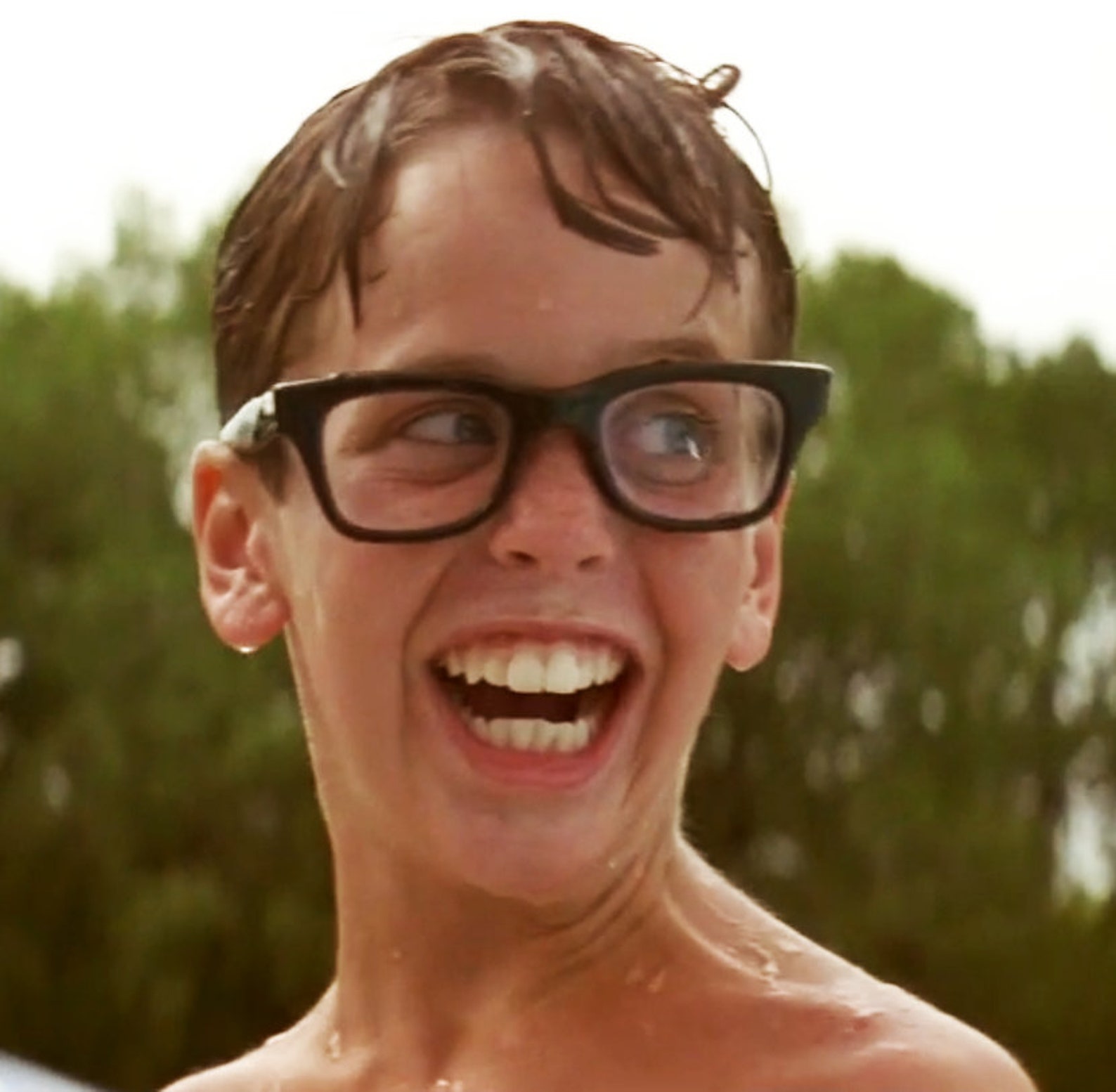
It was the summer of 1962. Or at least, the 1993 version of it. The sun is absolutely scorching, the kind of heat that makes the asphalt bubble and the air taste like dust. The boys are desperate. They aren't thinking about the Great Fear or the Beast behind the fence—they’re thinking about the local pool and, more specifically, the lifeguard stand.
The Sandlot pool scene is arguably the most famous moment in 90s cinema. You’ve seen it. You’ve probably quoted it. Even if you haven't watched the movie in a decade, the image of Michael "Squints" Palledorous behind those thick black frames, staring up at Wendy Peffercorn, is burned into your brain. It's a masterclass in nostalgic filmmaking, but it’s also a weirdly controversial piece of movie history when you look at it through a modern lens.
People forget how high the stakes felt to a bunch of pre-teens. To Squints, this wasn't just a prank. It was a suicide mission for love. Or, well, "love" as defined by a twelve-year-old boy who has spent too much time in the sun.
The Calculated Genius of the Sandlot Pool Scene
Let’s be real: Squints is a visionary. While the rest of the guys—Benny, Ham, Smalls, and the rest—were just trying to survive the heat wave without melting into the concrete, Squints was playing the long game. He didn't just fall into the deep end. He chose it. He mapped it out.
The music is what really sells the tension here. Most people remember "Tequila" by The Champs playing during the fairground scene, but the pool sequence relies on that slow, heavy buildup. You see Wendy Peffercorn, played by Marley Shelton, doing the quintessential 60s lifeguard thing. White lotion on the nose. Red swimsuit. Total authority. She’s an icon of unattainable summer perfection.
Chauncey Leopardi, the actor who played Squints, actually had to film that "kiss" multiple times. In various interviews, Leopardi has mentioned that he was actually pretty nervous, which makes sense because he was a kid and Marley Shelton was an adult. He reportedly got teased by the rest of the cast for weeks. Can you imagine? You’re twelve years old and you just pulled off the heist of the century in front of your best friends.
The mechanics of the scene are simple. Squints fakes a drowning. He goes limp. He sinks. The panic from the other boys is genuine—or as genuine as child acting gets—and Wendy dives in. It’s a rescue. Then, the "miracle" happens.
Why the "Lotioning and Oiling" Monologue Hits Different
"Lotioning. Oiling. Oiling. Lotioning."
Ham Porter’s narration of Wendy’s routine is legendary. Patrick Renna delivered those lines with a level of disgusted fascination that only a kid can manage. It captures that specific age where boys are starting to notice girls but still find the whole ritual of "beauty" or "skincare" to be some kind of alien peacocking.
They’re sitting there, roasting. They’re watching her like she’s a different species. The Sandlot pool scene works because it bridges the gap between childhood innocence and the looming chaos of puberty. They are literally on the edge of the water, looking at a world they don't quite understand yet.
But there’s a technical side to why this looks so good on screen. The cinematography by Anthony B. Richmond—who, fun fact, worked on much darker stuff like Don't Look Now—uses a lot of low angles. It makes the lifeguard stand look like a tower. It makes Wendy look like a giant. It puts us right in the eye-level of the boys, making the pool feel like a massive, high-stakes arena rather than just a community watering hole in Utah (where they actually filmed).
The Controversy: Would This Scene Fly Today?
Honestly? Probably not.
If you analyze the Sandlot pool scene by 2026 standards, it’s a bit of a legal and ethical nightmare. You have a minor faking a life-threatening emergency to force physical contact with an adult employee. In a modern remake, Squints would probably be banned from the facility and his parents would be looking at a very awkward conversation with the local police.
But that’s why the movie stays in the "classic" lane. It’s a period piece about a time when kids were largely unsupervised and "coming of age" involved a lot more physical risk. The movie treats it as a triumph of the underdog. Squints "planned it for years," according to the narrator. It’s presented as a folk tale. It’s the legend of the kid who actually did it.
Marley Shelton has spoken about this in the years since. She’s noted how the scene has followed her throughout her entire career. People still yell "Wendy Peffercorn" at her in airports. She’s leaned into it, acknowledging that the scene is more about the universal feeling of a summer crush than the literal "consent" issues that people debate on Reddit today. It’s a fantasy. It’s a tall tale told by an older version of Scotty Smalls.
The Aftermath and the "Happily Ever After"
One of the best parts of the movie is the epilogue. We find out that Squints actually married Wendy Peffercorn. They have a bunch of kids and own a drugstore.
It’s the ultimate payoff.
It validates the insanity of the Sandlot pool scene. It tells the audience that sometimes, being a "total jerk" (as the boys called him) and taking a massive, embarrassing risk actually works out. It’s the core philosophy of the movie: "Legends never die." Squints became a legend that day because he stepped out of the group dynamic and did something completely individualistic.
Behind the Scenes Facts You Might Have Missed
- The Water Temperature: While it looked like a blistering summer day, some of the cast have mentioned the water was actually freezing during certain parts of the shoot. Maintaining that "summer heat" vibe while shivering is a feat of acting.
- The Red Suit: That swimsuit is one of the most recognizable costumes in film history. It wasn't just a random choice; it was designed to pop against the blue of the water and the tan concrete, drawing every eye in the frame—and the theater—to Wendy.
- The Kiss: Chauncey Leopardi has admitted in cast reunions that he kept "accidentally" messing up the scene to get more takes. Whether that's true or just him leaning into the Squints persona years later is up for debate, but it adds to the lore.
How the Scene Impacted Summer Movies Forever
Before The Sandlot, summer movies were often about camp or high school romances. This movie shifted the focus to the "middle childhood" era. The pool scene specifically became a blueprint for every "scantily clad lifeguard" trope that followed in the 90s and early 2000s.
It’s about the gaze. The boys are the audience. We see Wendy through their eyes—distorted by heat, hormones, and a lack of experience. That’s why the colors are so saturated. That’s why everything feels slightly larger than life.
If you’re looking to capture that same feeling in your own creative work or just want to relive the nostalgia, you have to look at the pacing. The scene doesn't rush. It lingers on the "oiling and lotioning." It builds the tension of the walk to the diving board. It lets the silence hang before Squints makes his move.
Real-World Lessons from a 1960s Fake Drowning
Don't fake drowning. Seriously.
But from a storytelling perspective, the Sandlot pool scene teaches us about character commitment. Squints didn't half-heart it. He went all in. He was willing to be humiliated, he was willing to be kicked out, and he was willing to get "the mouth-to-mouth" at any cost.
In a world of "playing it cool," Squints was the absolute hottest.
The scene remains a touchstone because it’s a perfect vacuum of time. No cell phones. No social media. Just a bunch of kids, a hot day, and a dare that felt like a destiny.
Actionable Steps for Sandlot Fans
If you want to dive deeper into the history of this production or the 60s aesthetic it captured, here is what you should do next:
- Check out the 30th Anniversary Interviews: The cast did a series of reunions recently (around 2023-2024) where Tom Guiry (Smalls) and Chauncey Leopardi go into detail about the filming conditions in Utah.
- Study the 1962 Aesthetic: If you're a filmmaker or photographer, look at the color grading of the pool scene. The use of high-contrast yellows and deep blues is a masterclass in creating "heat" on film.
- Visit the Location: While the original pool has seen changes, many of the filming locations around Salt Lake City are still accessible to fans. Just don't try the Squints move. The lifeguards there have heard the joke a million times.
The movie works because we’ve all had a Wendy Peffercorn. We’ve all had a summer that felt like it would never end. And we’ve all had that one friend who was crazy enough to actually jump in the deep end.