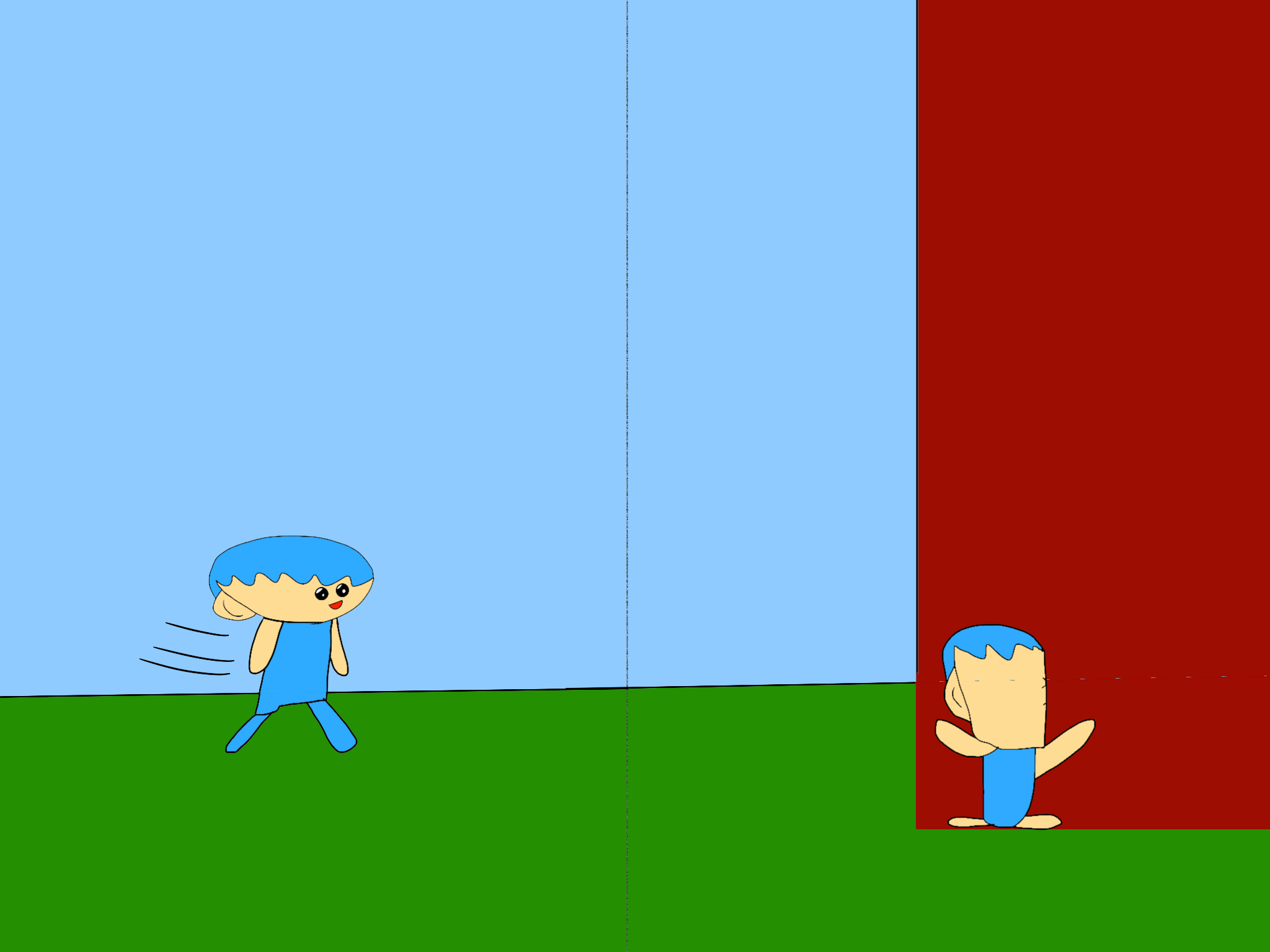
You've probably seen it while scrolling through X or TikTok. A grainy photo of a celebrity who’s aged naturally, or maybe a screenshot of a 30-year-old woman just living her life, accompanied by the smug, three-word caption: "Hit the wall." It’s everywhere. It’s mean. It’s also one of the most misunderstood corners of modern internet culture.
The hitting the wall meme isn’t actually about marathons or physical exhaustion, though that’s where the phrase started. In the world of social media discourse, "the wall" is a hypothetical point in a woman's life where her perceived sexual attractiveness and social "value" supposedly drop off a cliff. It’s a concept deeply rooted in the "manosphere"—a loose collection of podcasters, forums, and influencers who treat dating like a high-stakes stock market.
But here’s the thing.
The meme has evolved far beyond its original toxic roots. It has become a battleground for generational warfare, a tool for body shaming, and, increasingly, a way for people to mock the very idea that aging is a failure.
Where Did "The Wall" Even Come From?
Before it was a meme, "hitting the wall" was a biological reality for long-distance runners. Around the 20-mile mark of a marathon, the body depletes its glycogen stores. The legs turn to lead. The brain screams at you to stop. It’s a physical limit.
The internet, being the internet, took that visceral feeling and applied it to female aesthetics.
The term gained traction in the early 2010s on forums like Reddit and 4chan. It was popularized by figures in the "Red Pill" community, such as Stefan Molyneux or the writers at The Rational Male. They argued that while men's value increases with age (due to wealth and status), women have a "biological clock" that expires.
Honestly, it’s a pretty bleak way to look at human connection.
The meme usually features a "Before and After" comparison. On the left, a woman in her early 20s. On the right, the same woman in her late 30s or 40s. The goal is to prove that she is no longer "in her prime." It’s often used as a "gotcha" against women who are vocal about their independence or who have high standards for dating. The subtext is always: You should have settled when you were 22, because now you’re hitting the wall.
The Evolution of the Hitting the Wall Meme in 2026
By now, the meme has mutated. It isn't just a niche forum joke anymore. It’s mainstream. We see it used in "looksmaxxing" communities and across short-form video platforms.
There’s a specific brand of "wall" content that targets celebrities. Leonardo DiCaprio’s dating history is frequently used as the "inverse" of the wall meme—a running joke that his girlfriends "hit the wall" the moment they turn 25. While that started as a critique of his dating habits, the meme-ified version often turns the vitriol back toward the women, suggesting they are "expiring."
But there is a counter-movement.
Lately, the hitting the wall meme has been hijacked by the people it was meant to insult. Gen Z and Millennials are posting "Post-Wall" selfies, showing themselves looking better, happier, and more financially stable at 35 than they ever were at 21. They’re effectively saying, "If this is the wall, I’m glad I hit it."
This irony is a classic hallmark of how memes die and are reborn. When a derogatory term is adopted by the target group, the original sting starts to fade. You’ll see TikTok creators using the "hitting the wall" audio while showing off their career achievements or their peaceful, solo travels. It’s a reclamation of narrative.
Why We Can’t Stop Looking
Psychologically, these memes tap into a deep-seated fear of aging. Everyone is aging. It’s the one universal experience we can’t opt out of. By turning aging into a meme—something to be "ranked" or "timed"—people feel a false sense of control over it.
If you’re the one posting the meme, you feel safe behind the screen. You aren’t the one "hitting the wall" today.
If you’re the one viewing it, it triggers a "fear of missing out" (FOMO) regarding your youth. It’s rage-bait. And rage-bait is the most effective currency in the attention economy. Algorithms love the hitting the wall meme because it generates thousands of comments. Half the comments are people agreeing with the toxic premise, and the other half are people (rightfully) defending the person in the photo.
To the algorithm, a comment is a comment. It doesn't care if you're angry. It just knows you stayed on the app for an extra three minutes to argue.
The Physical vs. Digital Wall
We have to acknowledge the strange irony here. In the fitness world, "hitting the wall" is a badge of honor. It means you pushed yourself to the absolute limit. In the meme world, it’s treated as a tragedy.
There’s a massive disconnect between how people look in real life and how they look in these memes. Most "wall" memes rely on:
- Bad lighting vs. professional lighting.
- Mid-sentence screenshots vs. posed photos.
- Dehydration vs. heavy filters.
- The natural human process of losing buccal fat (which happens to everyone).
When you look at someone like Anne Hathaway or Jennifer Aniston, the "wall" argument falls apart. But the meme creators don’t use them. They find a paparazzi shot of someone at the grocery store without makeup and scream "THE WALL!" from their basements. It’s a skewed reality.
The Real-World Impact
It’s easy to say "it’s just a joke" or "don't take it seriously." But memes shape culture.
The prevalence of the hitting the wall meme has contributed to the rise of preventative Botox and "baby filler" in women as young as 19. If you’re constantly told that your "value" expires at 25, you’re going to spend a lot of money trying to freeze time. The aesthetic medicine industry has seen a massive boom in the "pre-juvenation" category.
Data from the American Society of Plastic Surgeons suggests that younger demographics are seeking procedures earlier than previous generations. While they don't explicitly cite memes as the cause, the "Zoom Effect" and the constant surveillance of social media—where "hitting the wall" is a constant threat—undoubtedly play a role.
Navigating the Discourse
How do you deal with this meme when it pops up in your feed?
Honestly, the best way to handle it is to recognize it for what it is: a projection of insecurity. People who are happy and secure in their own lives rarely spend their time cataloging the aging process of strangers.
Actionable Ways to De-Power the Meme
- Stop Engaging with Rage-Bait. If you see a "wall" post, don't comment. Don't quote-tweet it to argue. Every interaction tells the algorithm to show that post to more people. Just hit "Not Interested" and move on.
- Follow Diverse Ages. If your feed is only people aged 18-24, you’ll start to believe the wall is real. Follow creators in their 40s, 50s, and 60s who are thriving. Normalize the passage of time.
- Audit Your Own Language. Notice if you start using these terms in your own head. "Oh, I'm hitting the wall today" or "I look so old in this." Language shapes perception.
- Educate on the Source. When you know the meme comes from a place of trying to control and devalue women, it loses its "funny" edge. It just looks desperate.
The hitting the wall meme will eventually be replaced by something else. That’s the nature of the internet. But the underlying obsession with youth and the fear of becoming "irrelevant" will likely stay. The only real way to "beat the wall" is to realize that the wall doesn’t exist. It’s a fence built by people who are afraid of the future, and you can just walk right around it.
The next time you see someone post about "the wall," remember that they’re usually just trying to sell a lifestyle, a supplement, or a specific brand of bitterness. You don't have to buy any of it. Aging is a privilege denied to many, and treating it like a digital failure is the real "cringe" move.
Stay skeptical. Keep scrolling. And maybe go for a walk outside—away from the digital walls.
Practical Next Steps
- Audit your social media "Following" list. Unfollow accounts that focus on "looksmaxxing" or age-shaming.
- Research the "Lindy Effect." It’s a concept that suggests the longer something has lasted, the longer it is likely to last. Apply this to your skills and character rather than your looks.
- Practice "Neutral Mirroring." Look in the mirror and describe your features without using "good" or "bad" labels. It helps break the habit of checking for "the wall."