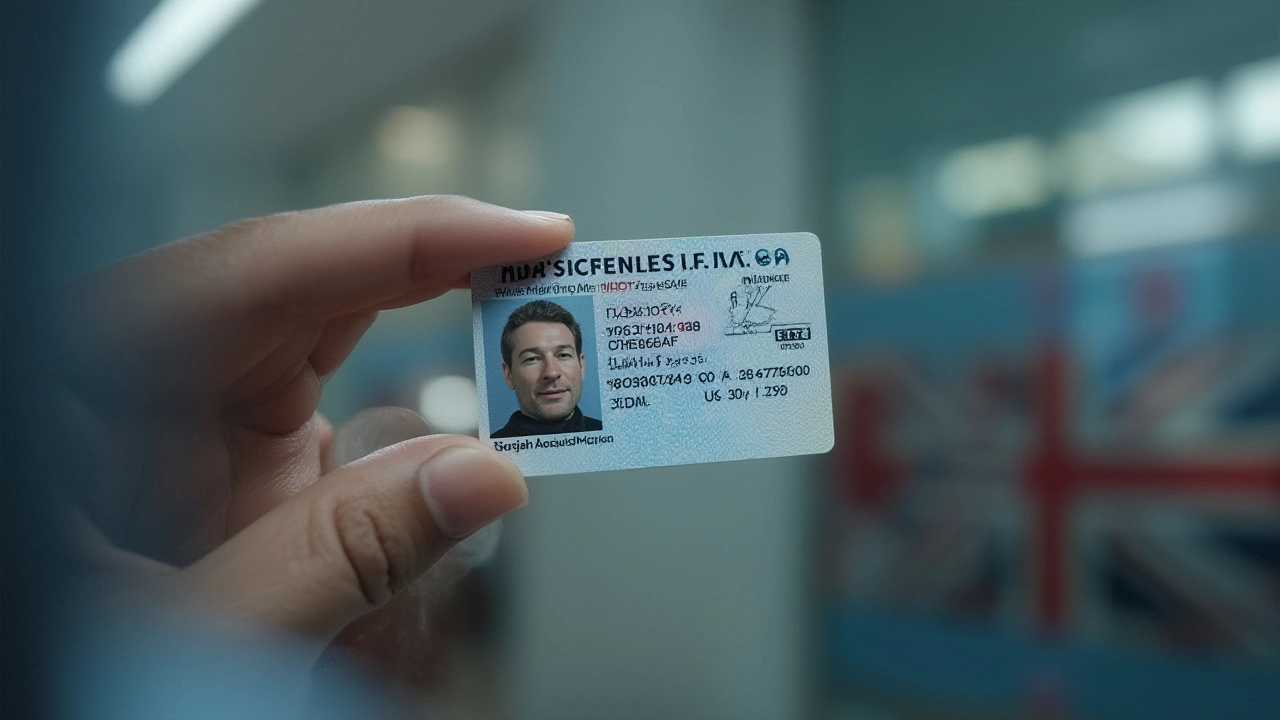
If you haven’t looked at your wallet in a while, you might be in for a surprise. Texas recently overhauled how its driver’s licenses look, and honestly, the change is pretty jarring if you’re used to the old "colorful" version.
Gone are the bright pops of red, white, and blue. Basically, the state moved toward a more "minimalist" aesthetic that emphasizes high-tech security over flashy graphics. If you just got a renewal notice or you're curious what that new card in your mailbox is supposed to look like, here is the real deal on the 2026 Texas driver's license.
The New Look: Beige is the New Blue
The first thing you’ll notice about the new Texas driver's license is that it’s... well, a bit bland at first glance. It’s mostly beige and tan.
Texas Department of Public Safety (DPS) rolled out this design—produced in partnership with IDEMIA—starting in late 2025. The shift wasn't about style; it was about survival. Counterfeiters have become incredibly good at mimicking the old 2020 design, so the state hit the reset button.
Instead of the big colorful state silhouette we used to have, the background now features a subtle, intricate image of galloping horses along the bottom. It’s a nod to Texas heritage that’s actually a nightmare for scammers to print accurately.
The "Black Star" Mystery
For years, the gold star in the top right corner was the universal sign for REAL ID compliance. If you want to board a domestic flight in 2026, you need that star.
On the newest cards, that gold star is gone.
Wait, don’t panic. It’s still there, but it’s now a black, laser-engraved star. It looks a bit more "industrial," but it serves the exact same purpose. If your card has this black star, you’re good to go through TSA.
Horizontal vs. Vertical: Why It Matters
Texas still uses two different layouts depending on how old you are. It’s the easiest way for a bartender or a store clerk to tell if they should be selling you that six-pack.
- Horizontal Layout: This is for adults 21 and over. It looks like a standard credit card.
- Vertical Layout: If you are under 21, your license is "up-and-down."
The vertical cards are specifically designed to be "un-fakeable" for minors. They feature bold bars—usually red and yellow—that explicitly state "UNDER 21 UNTIL [DATE]" or "UNDER 18 UNTIL [DATE]." Even if you look 30, that vertical orientation is an immediate red flag for anyone checking IDs at a venue.
Security Features You Can Actually Feel
If you hold a 2026 Texas license, don't just look at it. Touch it.
The card isn't made of cheap PVC plastic anymore. It’s 100% polycarbonate. When you drop it on a table, it doesn't "thud"—it has a high-pitched metallic "ring." That’s because the layers are fused together into a single solid block. You can’t peel this ID apart without destroying it.
Tactile Engraving
Run your thumb over the birth date or the license number. You’ll feel a slight "bump" or texture. That’s laser engraving. The data isn't printed on the card; it’s burned into the card. Scammers usually try to print over the top, which feels smooth. If it’s smooth, it’s probably a fake.
The Texas-Shaped Window
One of the coolest (and hardest to copy) features is a small, transparent window shaped like the state of Texas.
If you hold the card up to the light, you can see right through that little Texas. Inside that window is a "dynamic look-through element" that changes color as you tilt the card. It uses Optical Variable Material, which shifts from red to blue depending on the angle.
Hidden Details: The UV and Microprint Secrets
Most people never see the most advanced parts of their ID because they don't carry a blacklight in their pocket. But if you did, you'd see a whole different card.
Under UV light, the 2026 Texas license reveals a Texas Bluebonnet flower on the bottom left. There are also hidden patterns that glow brightly, making it nearly impossible for a basic home printer to replicate.
Then there’s the microprint.
If you grab a magnifying glass and look at the lines on the card, you’ll realize they aren't lines at all. They are actually tiny, repeating words like "Texas" or "Department of Public Safety" printed so small the human eye just sees a solid line.
What Information is Actually on There?
The layout was reorganized recently to make it easier for law enforcement to read quickly. Here is what you’ll find on the front:
- Primary Portrait: A high-resolution digital photo.
- Ghost Image: A smaller, semi-transparent version of your photo on the right side.
- DOB and DL Number: Now placed on the same line for faster verification.
- Identifiers: Small icons for things like Organ Donor, Veteran status, or Communication Impediment (for those who may be deaf or have autism).
The back of the card is mostly digital. It has two barcodes—a 1D barcode and a 2D PDF417 barcode—which contain all your personal data in an encrypted format.
Identifying a Genuine 2026 Texas License
Honestly, fakes are getting better, but the polycarbonate material is the "kinda" big giveaway.
Real Texas licenses are stiff. If you try to bend a real one, it resists. If it feels "floppy" or like a library card, it’s a fake. Also, check the edges. Authentic licenses have perfectly smooth, rounded edges because they are cut with industrial precision. Fakes often have slightly "rough" or "sharp" edges where the laminate was trimmed by hand.
Is Your Old License Still Valid?
Probably. Texas doesn't force everyone to get the new design the second it comes out. Your current license—even if it's the colorful 2020 version with the gold star—is perfectly legal until the expiration date printed on the front.
You only get the new "beige" design when you:
- Renew your license.
- Request a replacement for a lost card.
- Update your address.
Actionable Steps for Texans
If you’re looking at your current ID and realizing it’s about to expire, here is what you need to do to get the new 2026 version:
- Check your REAL ID status: If you don't have a star (black or gold) and you plan to fly after May 2025, you must renew in person to provide documents like a birth certificate or passport.
- Use the Online Portal: If you already have a REAL ID and your address hasn't changed, save yourself four hours at the DPS office. You can usually renew online at Texas.gov.
- The "Ring" Test: If you just got your new card, drop it on a granite counter. Listen for that metallic "tink" sound. That’s your confirmation that you have the high-security polycarbonate version.
- Verify Your Info: The second you get that new card, check the laser-engraved birth date. Mistakes happen even at the DPS, and it’s a lot easier to fix a typo the day you get the card than three years later during a traffic stop.
The 2026 design might look a bit "plainer" than what we had before, but it's arguably one of the most secure identity documents in the world right now. Just remember: look for the horses, feel for the engravings, and check for that black star.