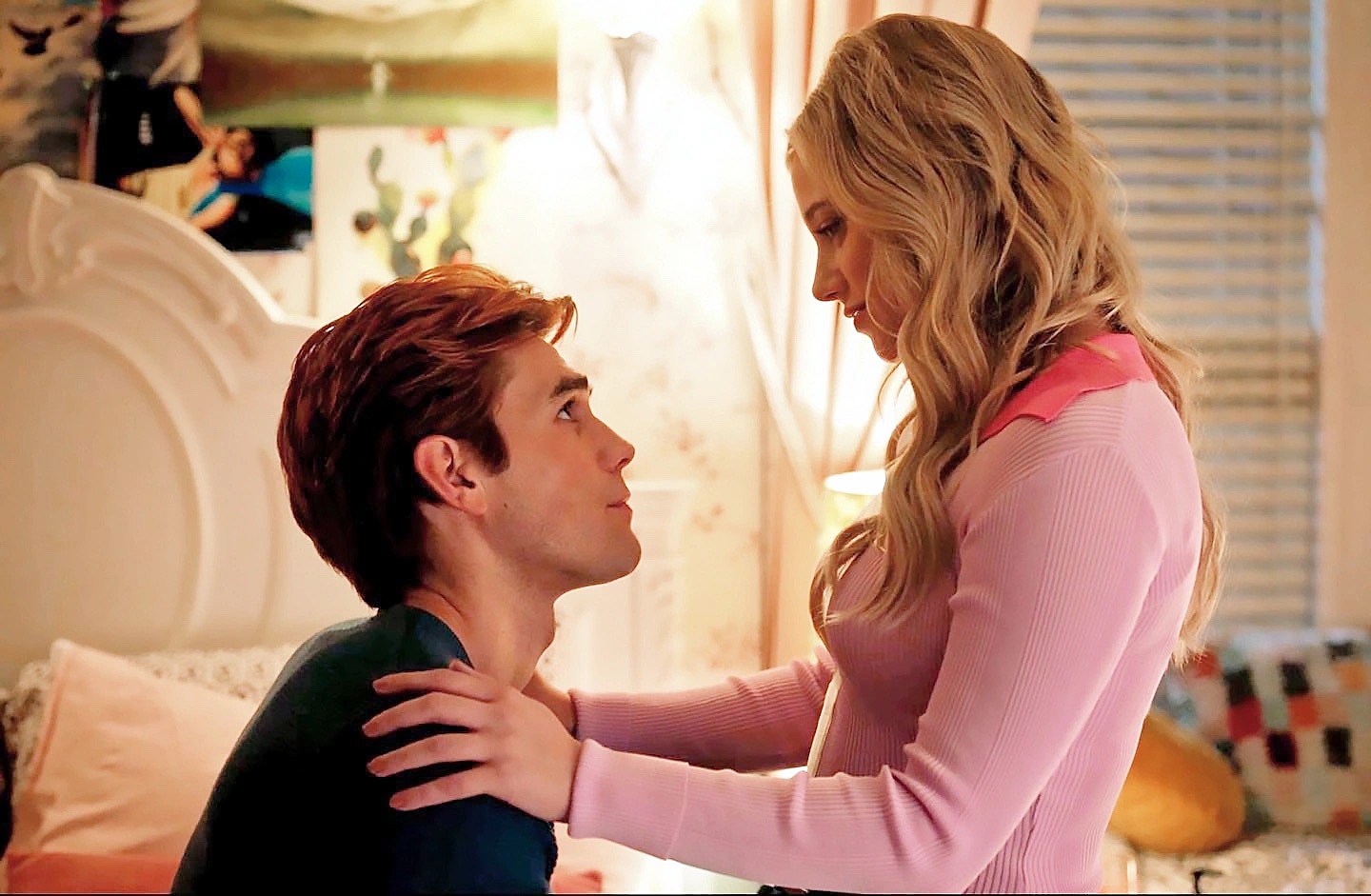
It started with a window. For anyone who grew up reading the Archie Comics, that image of Archie Andrews and Betty Cooper staring at each other from across their bedrooms was gospel. It was the "girl next door" trope before that was even a trope. Then Riverdale premiered on The CW in 2017, and everything got weird. Murder. Cults. Bear attacks. Rocket ships. But through the glittery, neon-soaked chaos of the town with pep, the relationship between Riverdale Archie and Betty—famously dubbed "Barchie" by the fandom—remained the most grounded, and often the most controversial, element of the entire series.
Honestly, it’s wild to think about how long the show made us wait. Seven seasons.
Most teen dramas burn through their "will they, won't they" couples by season three. But Roberto Aguirre-Sacasa and his writing team treated Archie and Betty like a break-glass-in-case-of-emergency kit. They were the childhood sweethearts who almost weren't. You’ve got the pilot episode where Betty pours her heart out on a driveway, only for Archie to give her that "I'm not good enough for you" speech that launched a thousand angry tweets. It was brutal. It was realistic. It set the stage for a seven-year slow burn that eventually redefined the show’s DNA.
The Pilot Rejection That Changed Everything
In that first episode, Betty Cooper is the "perfect" girl. High ponytail, pastel sweaters, 4.0 GPA. She’s been in love with Archie since they were kids. When she asks him if he loves her, and he says, "Of course, but I can't give you the answer you want," it didn't just break Betty’s heart; it forced the show into the "Bughead" (Betty and Jughead) and "Varchie" (Archie and Veronica) era.
For years, the Barchie fans were starving. They got scraps. A lingering look in the hallway here, a shared secret there. The show leaned heavily into the "opposites attract" dynamic of Archie and the wealthy, sophisticated Veronica Lodge. Meanwhile, Betty found a dark, investigative partner in Jughead Jones. It worked. It worked so well that many viewers thought the childhood romance was dead. But the writers knew better. They knew that the foundation of Riverdale Archie and Betty was built on a shared history that the other characters simply didn't have. They shared a childhood. They shared the trauma of living in a town that seemed to want them dead every Tuesday.
The Infamous Bunker Kiss and the Fallout
Season four was where the scales finally tipped. We have to talk about the "Wicked Little Town" episode. Music, teenage angst, and a rehearsal for a Variety Show. When Archie and Betty are practicing their song, "Origin of Love," the chemistry isn't just there—it’s explosive. They kiss. It’s not just a "we’re in danger" kiss; it’s a "we’ve been suppressing this for a decade" kiss.
This moment divided the fandom like nothing else. Half the audience was screaming for their endgame, while the other half was devastated for Jughead and Veronica. But that’s the thing about Riverdale. It wasn't interested in being a simple romance. It wanted to explore the messiness of being human. Archie and Betty weren't just two characters; they were two halves of a safe haven. When the world outside—Black Hoods, Gargoyle Kings, and Hiram Lodge—got too loud, they looked across the yard at each other.
The Time Jump: A Hard Reset for Riverdale Archie and Betty
Then came the season five time jump. Seven years later. The actors were finally playing closer to their actual ages, and the dynamic shifted from high school crushes to adult longing. Archie returns from the army with PTSD; Betty returns from the FBI with her own psychological scars.
They weren't kids anymore.
The "Friends with Benefits" arc in season five was probably the most adult the show ever felt. No singing, no costumes, just two broken people finding comfort in a shower (literally). It was a gritty departure from the pining of their teenage years. It showed that Riverdale Archie and Betty could exist outside of the "perfect neighbors" mold. They were messy. They were using each other to cope. And yet, there was a sweetness to it. Archie building Betty a shelf for her books? That’s the kind of small, domestic detail that makes a ship feel real.
Supernatural Stakes and the Multiverse
Look, we can't talk about Riverdale without acknowledging the "Rivervale" era and the eventual descent into superpowers and the 1950s. It sounds insane because it was. But even when Archie had super strength and Betty could see people's "evil auras," their connection was the anchor. In the "Rivervale" event, Archie literally becomes a human sacrifice, and his heart is the only thing that can save the town. Who has to do it? Betty.
The symbolism there is about as subtle as a sledgehammer, but it works.
By the time the show shifted to the 1950s for the final season, the writers leaned into the original comic book aesthetic. This was the ultimate playground for Riverdale Archie and Betty. In a world of malt shops and social repression, their forbidden-but-inevitable romance felt fresh again. They got to experience the "firsts" they missed out on in the original timeline because of all the murders.
The Ending Nobody Expected
The series finale, "Goodbye, Riverdale," is a polarizing piece of television. We find out that for a year, the "Core Four" (Archie, Betty, Jughead, and Veronica) were in a quad relationship. Everyone was dating everyone. It was a bold, polyamorous swing that most fans didn't see coming.
But even in that conclusion, the show gave a specific nod to the enduring legacy of Archie and Betty. An elderly Betty, the last of her friends still alive, visits a ghostly version of Riverdale. She sees Archie one last time. He tells her he always thought they’d end up together, even if life took them on different paths. It was a bittersweet admission. Archie went to the West, built a family, and became a construction worker. Betty stayed in the world of journalism and never married, but she adopted a daughter and found peace.
Some fans hated that they didn't get a traditional wedding. Others felt it was the only honest way to end a show that had spent seven years deconstructing the "perfect" American life.
Why Barchie Still Matters to Fans
People still obsess over Riverdale Archie and Betty because they represent the tension between who we are and who we’re expected to be. Betty was the good girl who had a "darkness" inside her; Archie was the golden boy who was constantly being pulled into violence. Together, they balanced each other.
- Shared History: You can't fake twenty years of friendship. The actors, KJ Apa and Lili Reinhart, played that familiarity with a level of comfort that made the romantic scenes feel earned.
- The "Light" vs. "Dark" Dynamic: Archie often acted as Betty's moral compass when she got too deep into her serial killer investigations. Conversely, Betty gave Archie a sense of purpose beyond just "doing the right thing."
- The Window Symbolism: It remained the visual shorthand for their connection throughout the entire series. It represents the barrier between them and the constant desire to cross it.
How to Revisit the Barchie Journey
If you’re looking to rewatch the best of Riverdale Archie and Betty, you shouldn't just binge the whole thing. It’s too much. Instead, focus on the "Barchie Essentials" to see the evolution:
- 1x01 "The Beginning of the End": The pilot. See the rejection that started it all.
- 2x09 "Chapter Twenty-Two: Silent Night, Deadly Night": The first real kiss during the Black Hood hunt.
- 4x17 "Chapter Seventy-Four: Wicked Little Town": The "Origin of Love" song. This is peak Barchie angst.
- 5x05 "Chapter Eighty-One: The Homecoming": The post-time-jump shower scene. Things get adult.
- 6x22 "Chapter One Hundred and Seventeen: Night of the Comet": Archie proposes to Betty as a comet heads for Earth. It’s peak Riverdale insanity.
- 7x20 "Chapter One Hundred and Thirty-Seven: Goodbye, Riverdale": The emotional closure for their characters.
Actionable Insights for Fans and Content Creators:
- Analyze the Subtext: When writing about these characters, look at the color palettes. Betty often wears blue/pink while Archie wears yellow/blue (the classic school colors). When they are together, their colors often sync up.
- Engage with the Fandom Archives: Sites like Archive of Our Own (AO3) or old Tumblr threads contain years of deep-dive analysis into the "window" scenes. If you’re a creator, these are goldmines for understanding what specific moments resonated with the audience.
- Differentiate Between Comic and Show: Remember that the TV version of these characters is vastly more complex (and traumatized) than their 1940s counterparts. When discussing them, always clarify which "Archieverse" you are referencing to maintain credibility.
- Respect the Ships: The Riverdale fandom is intense. Whether you’re a Barchie, Bughead, or Varchie fan, acknowledging the merits of each relationship is the key to having a civil discussion in 2026.
The legacy of Riverdale Archie and Betty isn't just about whether they ended up together in a house with a white picket fence. It’s about the fact that no matter how many times the world ended—literally or metaphorically—they always found their way back to that window. It’s a testament to the power of childhood bonds and the idea that some people are just part of your soul, regardless of where the road leads.