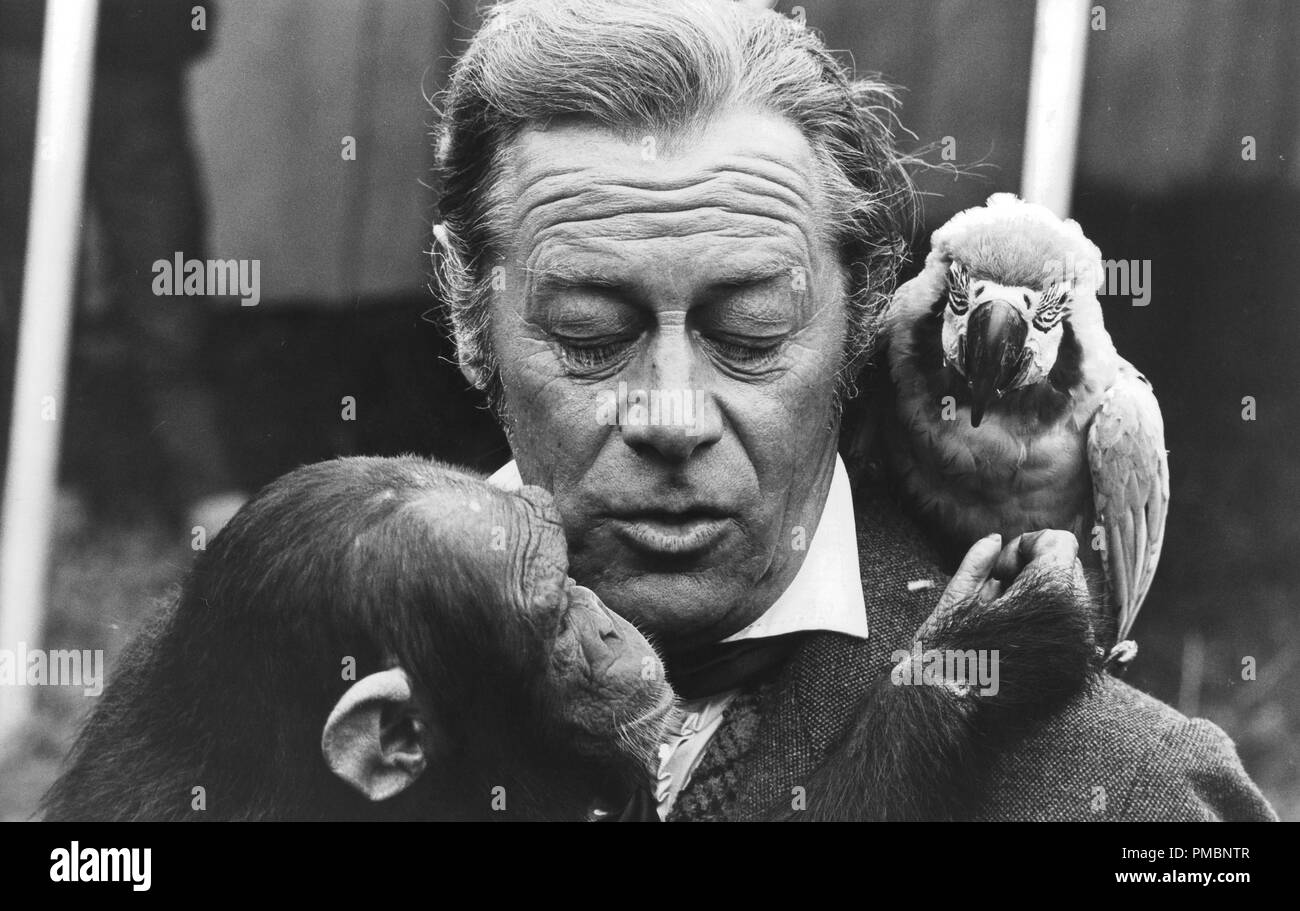
Making a movie with 1,200 live animals sounds like a recipe for a migraine. For 20th Century Fox in 1967, it was more like a death wish. Honestly, when you look back at Rex Harrison Doctor Dolittle, it’s a miracle the film even exists. It was a production plagued by rain, ego, and a parrot that thought it was the director.
You’ve probably seen the memes or heard the trivia about the "Greatest Flop." But the reality of what happened on that set is way weirder than just a high budget. It’s a story of a studio desperately trying to recreate the magic of The Sound of Music and failing in the most expensive way possible.
The Rex Harrison Factor: Charm or Chaos?
Rex Harrison was riding high. He’d just won an Oscar for My Fair Lady and basically felt untouchable. He wasn't the first choice for the vet who could talk to the animals, though. Initially, they wanted a musical star, but Harrison’s unique "talk-singing" style had worked so well as Henry Higgins that the producers bet the farm on him.
It was a rocky bet.
Harrison was... difficult. That’s putting it lightly. On set, he earned the nickname "Tyrannosaurus Rex" because of his temper. He reportedly loathed his co-stars, specifically Samantha Eggar and Anthony Newley. There are well-documented accounts of him being openly hostile, even hurling anti-Semitic slurs at Newley.
At one point, he even quit.
The studio actually replaced him with Christopher Plummer. They paid Plummer a massive sum to take over, only for Harrison to change his mind and come crawling back. Fox then had to pay Plummer again just to go away. It was a financial circus before a single animal even showed up.
Talk to the Animals (If They Don’t Bite)
You can't make a movie called Doctor Dolittle without creatures. The production gathered over 1,200 animals, and they were, predictably, a nightmare.
- The Ducks: In one famous mishap, the crew put a bunch of ducks in a pond for a scene. The ducks immediately began to sink. Why? They had lost their water-repellent feathers and literally forgot how to swim.
- The Goat: A goat actually ate a portion of the script.
- The Parrot: Polynesia the parrot was so used to hearing the director yell "Cut!" that she started doing it herself. Harrison once stopped a perfect take because he heard the command, only to realize the bird had just fired him for the day.
The animals didn't just cause delays; they caused messes. Harrison was frequently urinated on by his "co-stars." It’s hard to maintain the dignity of a British gentleman when a giraffe is using your coat as a napkin.
A Budget That Spiraled Out of Control
The original budget for Rex Harrison Doctor Dolittle was around $6 million. By the time they finished, it had ballooned to roughly $18 million. In 1967 money, that was astronomical.
They filmed in Castle Combe, a picturesque village in Wiltshire, England. It rained for 15 days out of every month. The crew tried to "fix" the English weather by building massive sets, but the locals hated the production so much they reportedly tried to sabotage it. Eventually, the whole circus moved to St. Lucia, where they were hit by tropical storms and more animal illnesses.
The Oscar Scandal Nobody Talks About
How does a movie that critics hated and audiences ignored get nine Academy Award nominations?
Bribery. Sort of.
20th Century Fox was terrified. They had so much money tied up in Dolittle that a total failure would bankrupt the studio. To save face, they launched one of the most aggressive Oscar campaigns in history. They wined and dined Academy members, hosting lavish screenings with gourmet food.
It worked. The film was nominated for Best Picture alongside absolute classics like The Graduate and Bonnie and Clyde. It’s still considered one of the most "bought" nominations in Hollywood history. It didn't win the big prize, but it did snag Best Original Song for "Talk to the Animals."
What We Can Learn From the Puddleby Disaster
Looking back, the 1967 Rex Harrison Doctor Dolittle is a time capsule of "Old Hollywood" hubris. It was the end of an era where studios thought they could just throw money and a difficult star at a script and get a masterpiece.
If you're a film buff or just someone interested in Hollywood history, there are a few ways to really "see" the impact of this movie:
- Watch for the "Talk-Singing": Listen to how Harrison handles the lyrics. It’s a masterclass in acting through a song when you can’t actually hit the notes.
- Look at the Background: In the village scenes, notice the scale. Everything was real. There was no CGI to fix the "sinking ducks" or the rainy skies.
- Read the "Roadshow" History: If you want the gritty details, check out Matthew Kennedy’s book Roadshow!: The Fall of Film Musicals in the 1960s. It puts the Dolittle disaster into the context of why big-budget musicals almost disappeared for decades.
The film didn't just end Rex Harrison's status as a top-tier leading man; it changed how movies were greenlit. Studios realized that "big" didn't always mean "better." Sometimes, it just means you're being directed by a parrot.
Practical Insight: If you're going to revisit this classic, do it for the production design and the sheer audacity of the practical effects. Even if the story drags, the visual of a man riding a giraffe in 1967 is something you don't see every day. Keep an eye out for the Giant Pink Sea Snail at the end—it’s the peak of 60s practical-effect weirdness.