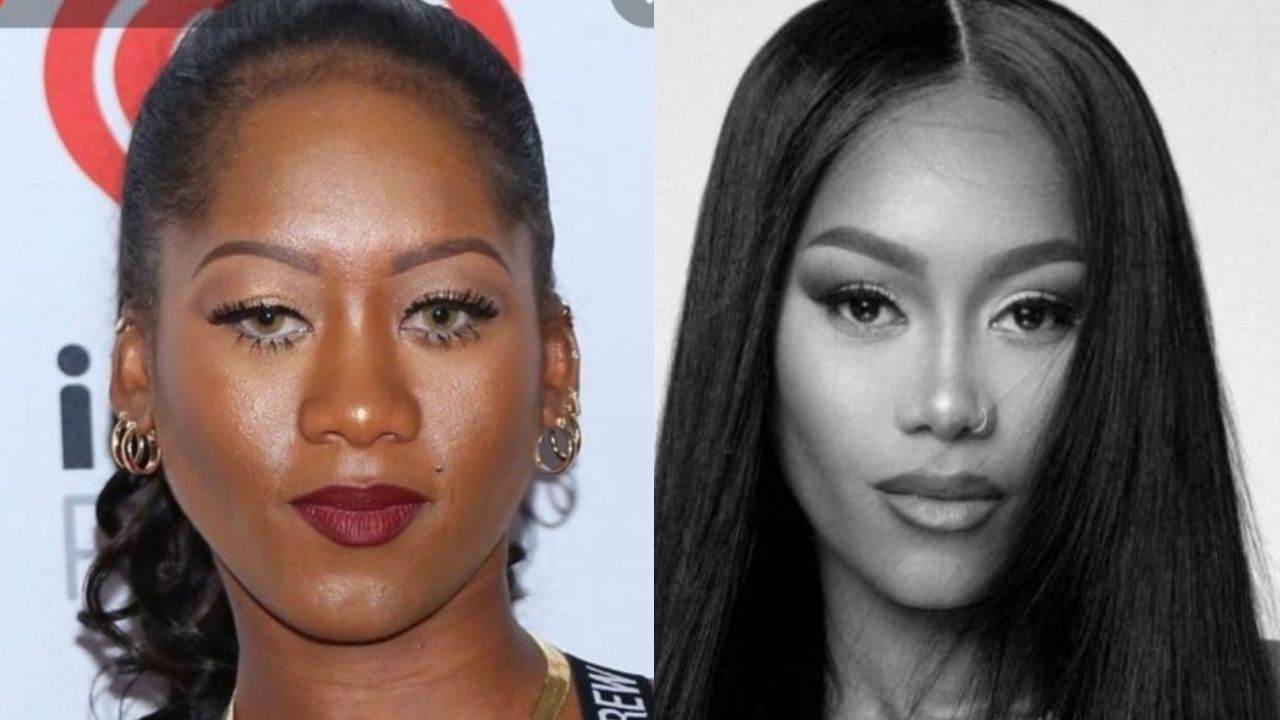
You’ve heard "Hrs and Hrs." It was everywhere. It was the kind of song that felt like it dropped out of the sky, fully formed, by an artist who just magically appeared with a perfect voice and a polished brand. But the reality of Muni Long before and after her solo explosion is a lot messier, a lot more exhausting, and honestly, way more impressive than the "overnight success" narrative people love to push.
Priscilla Renea—that’s her real name, by the way—didn't just wake up as Muni Long. She spent over a decade in the trenches of the music industry. We’re talking about a woman who was writing massive hits for Rihanna, Ariana Grande, and Mariah Carey while her own solo career was stuck in a sort of corporate limbo. It’s a wild story of rebranding, but it’s also a cautionary tale about how the music industry treats songwriters versus stars.
Most people don't realize she was the pen behind "California King Bed" or Pitbull’s "Timber." Imagine being the person creating the soundtrack to everyone’s summer while you're basically anonymous to the public. That was her life for years.
The Priscilla Renea Era: Writing Hits for Everyone Else
Before she was Muni Long, Priscilla Renea was a powerhouse songwriter. She signed to Capitol Records way back in 2009. Her debut album, Jukebox, was actually pretty good! It had this soulful, pop-country-R&B fusion that felt fresh. But the industry didn't know what to do with her. The marketing was off. The timing was wrong. The album tanked commercially, and she found herself at a crossroads.
Instead of quitting, she pivoted. She became a "ghost" in the machine.
If you look at the credits of the biggest songs of the 2010s, her name is all over them. She wrote "Worth It" for Fifth Harmony. She worked on Don’t Stop the Music era vibes. She was making a killing, sure, but she was miserable. She has mentioned in several interviews that she felt like a "vessel" for other people's visions while her own artistry was gathering dust on a shelf.
The industry saw her as a tool. A very expensive, very talented tool.
Making the Switch: Why Muni Long Before and After Matters
The transition wasn't just a name change. It was a total psychic break from the old way of doing business. In 2019, she decided she was done being Priscilla Renea, the songwriter-for-hire. She became Muni Long (pronounced "money long"). The name itself is a manifestation. It’s bold. It’s slightly aggressive. It’s a far cry from the girl-next-door vibe of her 2009 debut.
So, what actually changed?
First, she stopped trying to fit into the boxes major labels built for her. She started her own label, Supergiant Records. She bet on herself. This is the "before and after" pivot point that most artists are too scared to take. She took the money she made from writing hits for Rihanna and invested every cent into her own music videos, her own styling, and her own promotion.
She looked different. She sounded different. She wasn't trying to be a pop star anymore; she was being an R&B diva.
The Lupus Factor
There is a health component to the Muni Long before and after story that often gets overlooked. Priscilla has been open about her struggle with Lupus. During her years as a songwriter, the stress of the "studio rat" lifestyle—staying up until 4:00 AM, living on caffeine, the constant rejection—took a massive toll on her body.
Becoming Muni Long was partly about survival. She had to curate a life where she was the boss, so she could control her schedule and manage her health. You can see the difference in her energy. In her early career videos, there’s a flicker of uncertainty. In the Muni Long era? She looks like she owns the room because, legally and financially, she actually does.
The "Hrs and Hrs" Turning Point
Then came 2021. The world was still reeling from the pandemic, and R&B was craving something intimate. She released Public Displays of Affection.
When "Hrs and Hrs" went viral on TikTok, it wasn't a fluke. It was the result of a woman who had spent 15 years learning exactly how to write a hook that sticks in your brain like glue. But this time, she kept the hook for herself.
The difference in her sound is staggering.
- Before: Highly polished, radio-ready pop that felt a little generic.
- After: Raw, conversational, explicit, and deeply soulful R&B.
She stopped writing for "the masses" and started writing for herself. Paradoxically, that’s when the masses finally showed up.
The Business of Rebranding
A lot of fans ask if she had surgery or "work done" because her look changed so drastically. While she’s never been one to shy away from glamour, the "after" look is mostly about high-fashion curation. As Priscilla Renea, she wore what the label told her would sell in middle America. As Muni Long, she wears what makes her feel powerful. Think archival pieces, bold hair, and a level of confidence that only comes from being a veteran who finally got her due.
She also changed her business model. She isn't just a singer; she’s an executive. When "Hrs and Hrs" blew up, she didn't just sign the first contract thrown at her. She partnered with Def Jam in a way that allowed her to keep a level of creative control that most new artists (even though she isn't new) never get.
Why This Transformation Worked
Most artists who try to rebrand fail because they’re just putting on a new mask. Muni Long worked because she was removing a mask. She was going back to the R&B roots she had to suppress to write songs for Katy Perry.
The "after" version of her career is defined by three things:
- Ownership: Controlling her masters and her narrative.
- Authenticity: Using her real experiences, even the messy ones.
- Vulnerability: Admitting that being a songwriter behind the scenes wasn't enough for her.
It's actually kind of rare to see someone thrive after being "pigeonholed" as a writer. Usually, the industry decides you’re a "behind-the-scenes person" and that’s it. You’re done. She broke that rule.
What We Can Learn From the Muni Long Evolution
If you're looking at the Muni Long before and after trajectory, the takeaway isn't just "work hard." It’s "work strategically." She used the resources from a career she didn't love to fund the career she did.
Take Action Based on Her Journey:
- Audit Your Own Brand: If people see you as one thing but you want to be another, a name change or a "hard reset" isn't a bad idea. Sometimes you have to kill the old version of yourself to let the new one breathe.
- Invest in Your Own "Masters": Whether you’re an artist or a freelancer, owning your work is the only way to build long-term wealth. Don't trade your best ideas for a one-time check if you can help it.
- Vary Your Output: Notice how Muni didn't just release one song. She released EPs, she did live performances, she leaned into social media. You have to be everywhere at once until you’re "somewhere" for good.
- Acknowledge Your History: She doesn't pretend Priscilla Renea didn't exist. She embraces it. Use your past experiences—even the ones that feel like "failures"—as the foundation for your next move.
Muni Long proved that the "after" is always possible, even if the "before" lasted a decade longer than you wanted it to. She isn't a new artist. She’s a seasoned pro who finally decided to stop playing a supporting role in her own life.