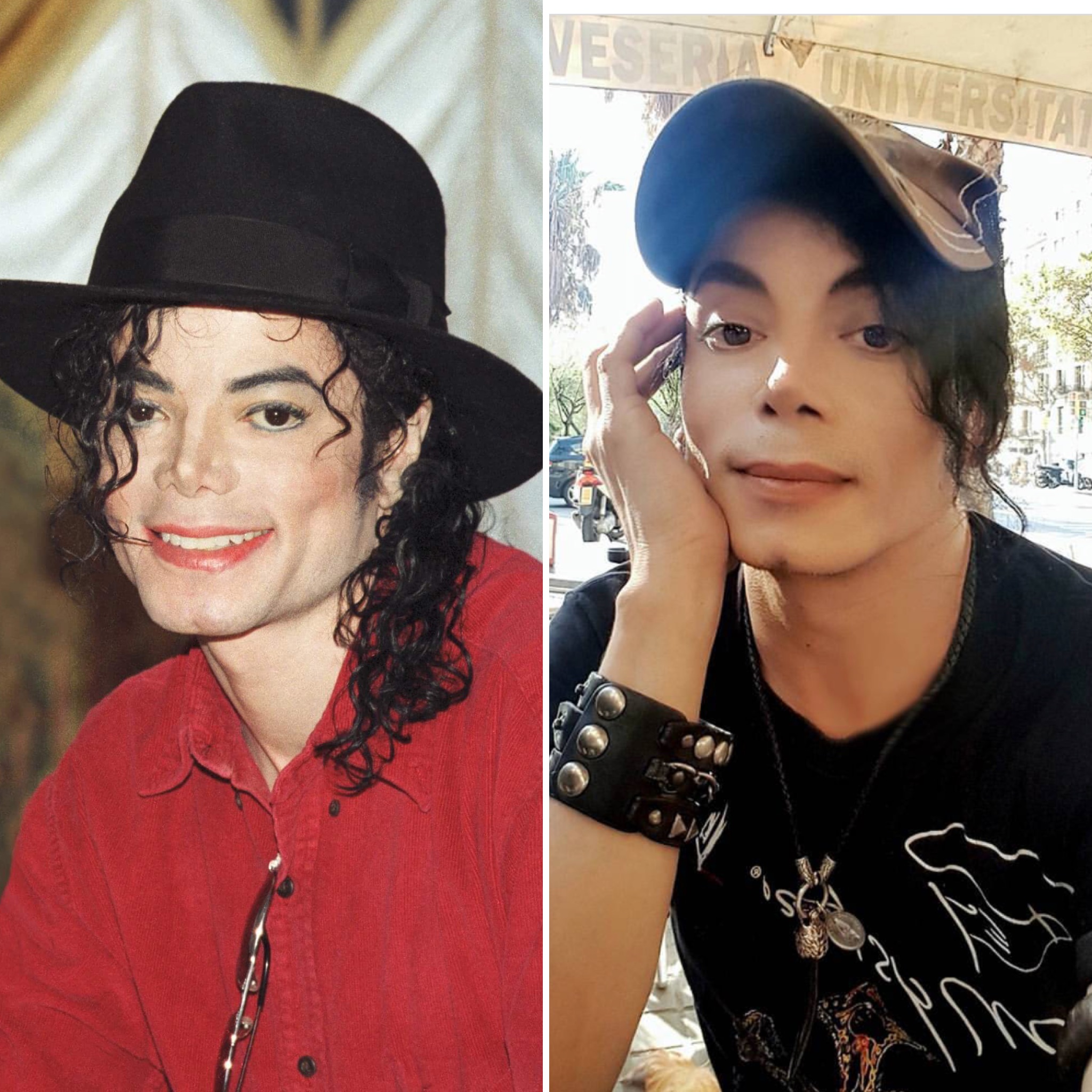
If Michael Jackson were still walking around today in 2026, he’d be 67 years old. It’s a strange thing to picture. Most people just see the frozen-in-time image of the "This Is It" era or the red-jacketed Thriller kid, but the reality of a nearly 70-year-old Michael involves a lot of complex medical layers. We aren't just talking about a few wrinkles here. Between the documented vitiligo, the lupus, and the sheer number of surgeries he had, his face would have aged in a way that’s actually pretty predictable if you look at the science.
Honestly, it's kinda fascinating when you stop speculating and look at the actual clinical history. Michael wasn't just "changing" his look; he was managing a body that was essentially at war with itself.
The Reality of Aging With Vitiligo and Lupus
The biggest factor in what Michael Jackson would look like today is his skin. By the time he passed in 2009, his autopsy confirmed he had vitiligo, an autoimmune condition that destroys pigment-producing cells. He had also been diagnosed with lupus erythematosus, another autoimmune hit that can cause significant skin scarring and hair loss.
By 67, he would likely have been completely depigmented. For most people with advanced vitiligo, the goal is often "depigmentation therapy" using creams like Benoquin to even out the remaining dark patches. You've probably seen photos of him toward the end where his skin looked almost translucent. That wouldn't change. If anything, the skin becomes thinner and more fragile with age.
Because vitiligo removes the skin’s natural protection (melanin), he would have had to be extremely careful with sun exposure. We'd still see the umbrellas, the masks, and the long sleeves. At 67, this lack of natural protection often leads to "solar elastosis"—basically a specific type of deep wrinkling and yellowing of the skin caused by UV damage, even with limited exposure.
The Structural Breakdown: Why 67 Would Look Different
We have to talk about the surgeries. Dr. Wallace Goodstein, who worked in a practice where Michael was a patient, once noted that Michael was coming in roughly every two months for procedures at one point. That’s a lot of scar tissue.
Plastic surgery doesn't always age well. Here’s why:
- The Nose: Cartilage in the nose is structural. After multiple rhinoplasties, that structure becomes incredibly weak. In your late 60s, the tip of the nose naturally drops due to gravity. For someone with Michael’s surgical history, the skin would likely look very tight and "pinched" over the bridge, with a more pronounced collapse of the nostrils.
- The Jawline and Cheeks: Michael had a chin cleft put in and cheek implants. As we age, we lose "buccal fat"—the fat in our cheeks. On a 67-year-old, those implants would likely look very prominent, almost like hard shelves under the skin, because the natural padding around them has thinned out.
- The Eyes: He’d had blepharoplasty (eyelid surgery) to keep that wide-eyed look. By now, the skin around the eyes would be paper-thin.
The Hair Factor
Remember the 1984 Pepsi commercial? That accident changed everything. The second and third-degree burns on Michael’s scalp caused cicatricial alopecia—which is just a fancy way of saying permanent scarring that kills hair follicles.
He wore hairpieces for the last 25 years of his life. Today, he’d likely still be using high-end wigs or perhaps advanced hair systems. At 67, the natural hair he did have left on the sides and back would be gray or white, matching the natural aging process seen in his siblings like Jackie or Tito.
Health and Mobility: The King of Pop at 67
Michael was a dancer. But by 50, his body was already showing the "wear and tear" of a man who’d been performing since he was five. He had chronic back pain and arthritis, largely worsened by the 1999 fall in Munich when a bridge prop collapsed during a concert.
If he were alive today, he probably wouldn't be doing the moonwalk. You’d likely see a much more stationary Michael. Maybe he’d be focused on directing or producing. People who saw him in his final months often described him as "frail," and aging into your late 60s with a history of heavy medication use for pain and insomnia usually means a slower, more deliberate pace of life.
What Most People Get Wrong
Everyone thinks he’d just look like a "whiter" version of his father, Joe Jackson. But that ignores the lupus. Lupus can cause "butterfly rashes" across the face and systemic inflammation. A 67-year-old Michael would likely have had to manage periodic facial swelling or redness, which would be quite a contrast against the depigmented skin.
Actionable Takeaway: How to Understand the "Modern" Michael
If you’re trying to visualize this for a project or just out of curiosity, stop looking at "zombie" filters or mean-spirited AI edits. Instead, do this:
- Look at Janet and La Toya: Look at their current bone structure. Michael shared those high cheekbones.
- Factor in "Paper Skin": Imagine the skin of an elderly person who has spent a lifetime avoiding the sun—very pale, almost porcelain-like, but with visible veins.
- Softness vs. Sharpness: Age softens most people, but surgical features stay sharp. The contrast between soft, aged skin and "sharp" surgical implants is the key to his 2026 look.
Basically, he would look like a man who had lived three lifetimes in one—fragile, dignified, and clearly marked by the unique medical path he had to walk.
Next Steps for You
If you want to understand the science of his appearance better, you should look into the autopsy report from 2009, which is public record and provides the only 100% factual baseline for his skin and health conditions. You might also find it helpful to look at forensic age-progression techniques used by missing persons experts, as they prioritize bone structure over "filters."