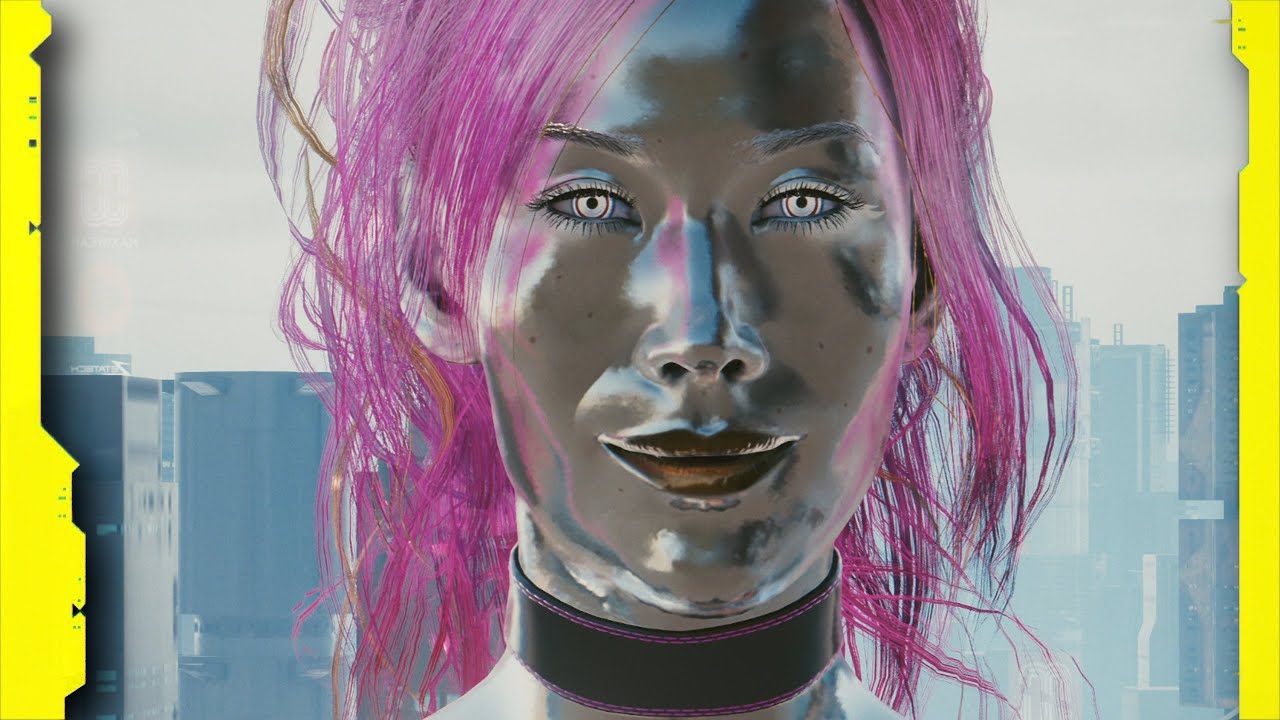
Night City isn't exactly a place for the faint of heart. Most people are just trying to keep their organic lungs from failing or their bank accounts from hitting zero. But then you meet Lizzy Wizzy. She's not just a celebrity; she’s a chrome-plated omen of what happens when the human ego outpaces the human body.
In Cyberpunk 2077, Lizzy Wizzy represents the peak of body modification and the absolute nadir of mental stability. She’s voiced by real-world musician Grimes, which was a massive casting win for CD Projekt Red. It wasn't just about the star power, though. Grimes brought a specific, ethereal detachment to the role that makes Lizzy feel less like a person and more like a ghost trapped in a jewelry box.
If you’ve played through the quest "Violence," you know it starts with a simple text. A high-profile client wants a meet-up at the No-Tell Motel. Typical mercenary work, right? Except the client is a woman covered entirely in 24-karat gold plating.
The Chrome Goddess and the No-Tell Motel
Most players expect a standard "cheating boyfriend" scenario when they first talk to her. Lizzy believes her manager and lover, Liam Northom, is being unfaithful. But this is Night City. It’s never just about an affair. As you dig deeper into the data at the Riot club, you realize Liam isn't looking for a new girlfriend. He's looking to backup Lizzy’s personality.
He wants to "save" her because she’s becoming erratic. In his mind, a digital copy—an engram—is easier to manage than the flesh-and-blood (well, mostly synthetic) diva. This ties directly into the game's broader themes of "Soulkiller" and the loss of the self.
It’s dark stuff.
Honestly, the way she reacts to this news tells you everything you need to know about her psyche. She doesn't just get angry. She snaps. If you return to her later, you find her standing over Liam's corpse. She killed him. And the kicker? She doesn't feel guilty. She feels inspired. She tells V that the struggle—the literal act of ending a life—gave her the best creative spark she’s had in years.
Behind the Chrome: Who is Lizzy Wizzy?
Before she was a metallic icon, she was Elizabeth Wissenfurth. The turning point of her career, and the reason she looks the way she does, is the stuff of urban legend within the game’s lore. During a live performance, Lizzy committed suicide on stage.
It wasn't a stunt. It was a calculated, albeit insane, career move.
She died for an hour while a specialized medical team replaced her entire body with cybernetics. She finished the concert in her new shell. This is the exact moment Elizabeth died and Lizzy Wizzy was born. She is now 100% artificial. Every sensation she feels is filtered through processors. When you talk to her, you aren't talking to a human; you're talking to a highly advanced machine that remembers what it was like to be a girl.
Cyberpsychosis is a major theme in Cyberpunk 2077, and Lizzy is the "functioning" face of it. Unlike the psychos you fight in the back alleys of Watson, Lizzy has the money and the PR team to hide her dissociation. But the cracks are there. You see them in her eyes—or rather, the glowing optical sensors where her eyes used to be.
Phantom Liberty and the Lizzy Wizzy Expansion
If you thought her story ended with a dead manager in a motel room, the Phantom Liberty DLC proved us all wrong. She shows up at the Black Sapphire during the "You Know My Name" mission. This is one of the most visually stunning sequences in the entire game.
She performs "Delicate Weapon."
The performance is a masterclass in environmental storytelling. As she sings, she uses Braindance technology to project her emotions and memories onto the crowd. It’s beautiful, sure, but it’s also invasive. It’s a literal manifestation of her ego. She is forcing the elite of Dogtown to feel what she feels because she can no longer feel it herself without an audience.
After the show, you can actually talk to her. If you completed her previous questline in a specific way, she recognizes V. She even gives you a unique piece of headgear: the Amethyst Headgear. It’s a small detail, but for players who care about the narrative arc of Night City’s celebrities, it feels like a grim badge of honor. You helped a monster realize its potential.
Why Her Story Matters for the Future of Cyberpunk
Lizzy Wizzy isn't just a side quest. She's a mirror.
V is slowly losing their mind to Johnny Silverhand. The city is full of people trading their limbs for combat specs. Lizzy represents the end-state of that philosophy. She has everything. Fame, immortality, beauty. But she has lost the ability to empathize.
The game doesn't give you a "good" ending with her. You can’t save her soul because she’s already traded it for a chrome chassis that never ages. This is the quintessential Cyberpunk tragedy. It’s not about losing your life; it’s about losing the things that make life worth living while your body stays functional.
Interestingly, many fans have speculated about whether Lizzy will appear in the upcoming sequel, Project Orion. Given her status as a "full-body conversion" icon, she could theoretically live for centuries. She is as much a part of the Night City skyline as the Arasaka Tower.
How to Handle the Lizzy Wizzy Questline Like a Pro
If you’re aiming to get the most out of her content, there are a few things you shouldn't miss.
First off, don't rush the "Violence" quest. Read the shards in Liam's office. They provide context on the legal battles regarding engram rights that make his betrayal even more sinister. He wasn't just being a bad boyfriend; he was attempting a corporate takeover of a human being.
When you find Lizzy with the body, you have a choice. You can help her dispose of it or leave her to her own devices. If you want the rewards in Phantom Liberty, you need to play along. It feels dirty, but that’s the mercenary life.
- Watch her movements: During her performances, notice how her animations are slightly too perfect. It’s a deliberate choice by the animators to show she’s no longer bound by human muscle fatigue.
- Listen to the lyrics: "Delicate Weapon" isn't just a pop song. It’s a direct commentary on her state of being. The "weapon" is her body, and it’s fragile not because it can break, but because it’s empty.
- Check the news: Throughout the game, radio segments and TV news reports will update you on her career. Following these gives you a sense of the passage of time and her growing detachment from reality.
Lizzy Wizzy is a warning. In a world where you can be anything, she chose to be a god, only to find out that gods are incredibly lonely. She is the most successful person in Night City, and that is exactly why she is the most terrifying.
To truly understand the depth of her character, pay close attention to the lighting during her motel encounter. The way the neon reflects off her gold skin while she stands in a dingy, darkened room is the entire aesthetic of the franchise summed up in a single frame. It’s high tech, low life, and no soul.
Actionable Steps for Players
To fully experience the Lizzy Wizzy arc and maximize your rewards, follow these specific steps:
- Wait for the call: The quest "Violence" triggers after the main story mission "Search and Destroy." You'll get a mysterious message from an unknown contact.
- Complete the Riot infiltration: When you go to the club, use the cameras to spy on Liam. This gives you the evidence you need. Don't just rush in; listen to the dialogue between Liam and the Arasaka representative.
- The Confrontation: When you talk to Lizzy afterward, be careful with your dialogue. If you want to see her "evolve," encourage her artistic impulses, even when they turn violent.
- Visit the Black Sapphire: Once you have the Phantom Liberty expansion, make sure you attend the party in the "You Know My Name" mission. Look for her near the bar after her performance.
- Collect the Gear: If you've played your cards right, she’ll gift you her iconic headgear. It’s one of the few items in the game that truly stands out in a crowd.
Keep an eye on the "N54 News" segments after her quest ends. You'll hear about her new "artistic direction," which is a chilling callback to the crime you helped cover up. This is world-building at its finest—the game remembers your choices, even when you wish it wouldn't.