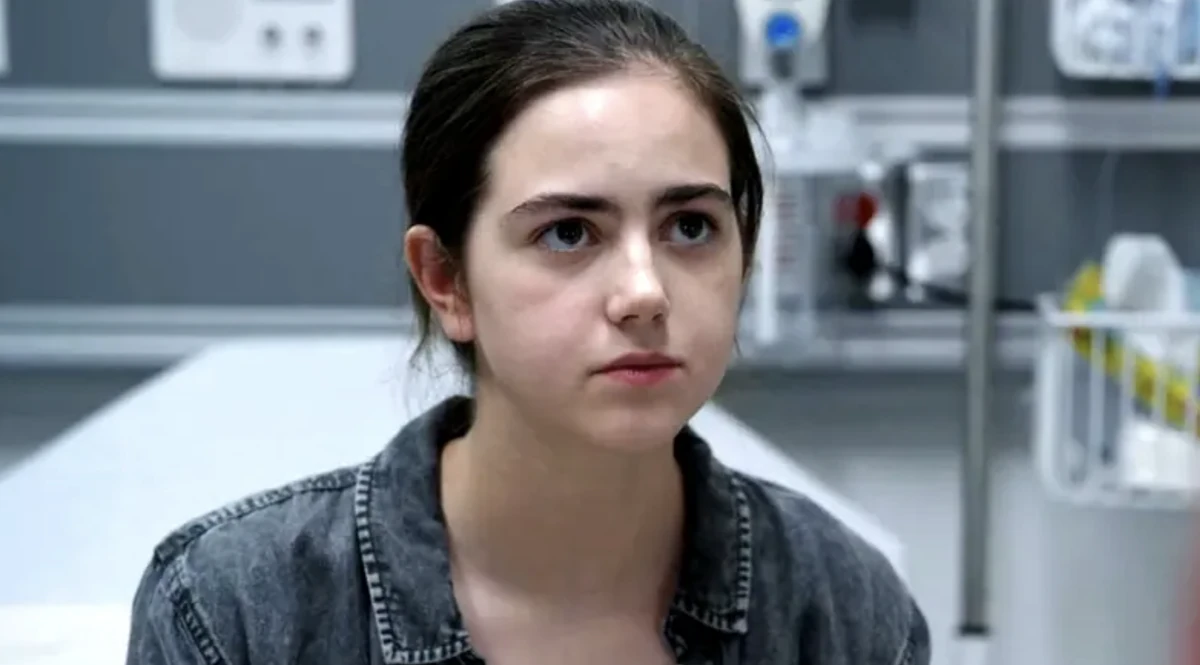
If you’ve been keeping up with the medical drama landscape lately, you know things in Pittsburgh are getting heavy. Real heavy. We’re talking about The Pitt, the Max original series that decided to skip the soapy romances for a minute and dive headfirst into some of the most gut-wrenching medical ethics we’ve seen in years. Specifically, everyone is talking about Kristi Wheeler.
You’ve probably seen the clips floating around TikTok or BINGE. The 17-year-old girl, a stack of ultrasound papers, and a room full of doctors who look like they’ve aged a decade in a single shift. Kristi isn't just a "patient of the week." Her character basically serves as the emotional lightning rod for the entire first season.
Played by the incredibly talented Abby Ryder Fortson—yeah, the same kid who stole the show as Cassie Lang in the Ant-Man movies—Kristi brings a vulnerability that makes the whole storyline feel almost too real.
Why Kristi Wheeler Matters So Much to the Plot
When we first meet Kristi, she’s presented as a teenager in a crisis. She’s pregnant, she’s scared, and she’s trying to navigate a medical system that feels designed to trip her up at every turn. But the twist? It’s not just about the pregnancy. It’s about the people around her.
Initially, we think Lynette Wheeler (played by Marguerite Moreau) is her mom. She’s supportive, she’s fighting for Kristi’s right to choose, and she’s the one holding her hand in the exam room. Then comes the "record scratch" moment in Episode 5.
It turns out Lynette isn’t the mother. She’s the aunt.
The real mother, Eloise, is a completely different story. When she finally shows up, the atmosphere in the hospital changes instantly. It’s no longer just a medical debate; it’s a full-blown family war over bodily autonomy and the legal rights of a minor. Honestly, it’s one of the tensest scenes the show has produced.
The 11-Week Deadline Dilemma
The show gets really technical with the medical side of things, which I actually appreciate. It’s not just "drama for drama's sake." The whole conflict hinges on a very specific measurement: 11 weeks.
In the world of The Pitt, hitting that 11-week mark is the "bright line." If Kristi is over 11 weeks, her options for a medication abortion disappear under the local regulations. We see the doctors, specifically Dr. Cassie McKay (Fiona Dourif) and the residents, arguing over millimeters on an ultrasound.
- One doctor measures the gestational sac at 11 weeks and 3 days.
- Another measures it at 10 weeks and 5 days.
Think about that. A few days of "interpretive" ultrasound art determines the rest of this girl's life. It’s a brutal look at how medical records aren't always the objective truths we want them to be.
The Ethics of "Bending the Rules"
This is where The Pitt really shines. It asks: Is it okay to lie to save a patient's future?
Dr. McKay is in a tough spot. She’s a second-year resident, she’s a former addict who’s fought like hell for her sobriety, and she’s finally got her life on track. She clearly feels for Kristi. She wants to help. But falsifying a medical record to "lowball" a measurement is a one-way ticket to losing her license and getting kicked out of the residency program.
You’ve got veteran doctors who have tenure and can afford to take risks, and then you’ve got the residents who are one mistake away from career suicide. The show doesn't give us an easy answer. It just shows us the wreckage.
When Kristi’s actual mother, Eloise, comes screaming into the ward demanding that the procedure be stopped, the legal reality sets in. Because Kristi is 17—just one year shy of being able to make this call on her own—her mother’s word is law. It’s frustrating. It’s heartbreaking. And it’s exactly why people are still talking about this episode months later.
Abby Ryder Fortson’s Performance
Can we talk about the acting for a second? Fortson is 17 in real life, and she brings a "lived-in" feeling to the role. She doesn't play Kristi as a victim; she plays her as a person who is being talked about rather than talked to.
There’s a specific scene where the doctors are arguing about her body right in front of her, and the camera just lingers on her face. You can see her realizing that, despite being the one who has to live with the outcome, she’s the person with the least amount of power in the room. It’s heavy stuff.
What Most People Miss About Kristi's Arc
A lot of viewers got caught up in the political side of the abortion storyline, but if you look closer, Kristi Wheeler is a mirror for the doctors' own baggage.
Dr. McKay sees a version of herself in Kristi—someone whose life could be derailed by a single series of events. The tension between the "rules" and "mercy" is the core theme of the show, and Kristi is the ultimate test case for that.
The writers didn't just pick a controversial topic to get views. They used it to show the cracks in the hospital’s hierarchy. When the "ethics committee" gets involved, it’s not about what’s right; it’s about liability.
Key Takeaways from the Kristi Wheeler Storyline
- Legal Nuance: The show highlights how minor status in medical settings can strip away autonomy, even when the patient is mature enough to understand the stakes.
- Medical Subjectivity: Ultrasounds aren't always a "hard fact." The "interoperative variability" mentioned in the show is a real thing in medicine.
- Family Dynamics: The aunt/mother switch-up served as a great narrative tool to show that "family" isn't always who the paperwork says it is.
Moving Forward With The Pitt
If you’re looking to understand the full weight of Kristi’s impact, you really need to watch the back-to-back episodes of "11:00 A.M." and "12:00 P.M." These episodes (5 and 6 of Season 1) are where the story peaks.
Watching the fallout from these episodes is essential for understanding the shift in the hospital's culture for the rest of the season. The relationships between the residents never quite go back to normal after the Kristi Wheeler case. Trust was broken, lines were crossed, and everyone walked away a little bit more cynical.
To get the most out of the series, pay attention to the background characters in these episodes. The way the nursing staff and clerks like Lupe Perez react to the Wheeler family drama tells you everything you need to know about the burnout levels in that hospital.
The best way to engage with the themes of the show is to look at the real-world medical ethics cases that inspired these scripts. Many of the writers for The Pitt consulted with actual ER physicians and medical ethicists to ensure that the "11-week line" and the parental consent loops were portrayed with total accuracy. It makes the frustration you feel while watching it that much more valid.