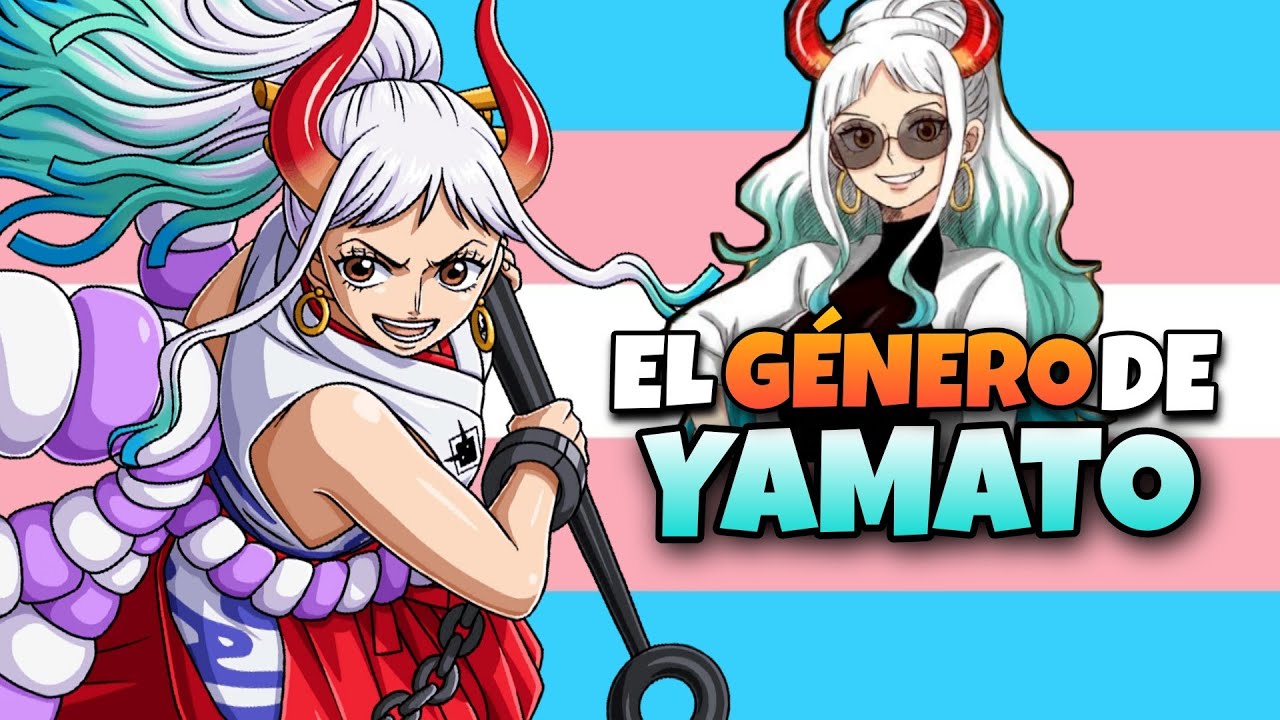
Eiichiro Oda doesn't do things by halves. When he writes a world, he populates it with everything from talking reindeer to literal gods, so it shouldn't be a shock that the one piece trans character discussion has become one of the most vibrant, heated, and ultimately meaningful parts of the fandom. For years, fans pointed to the Okama of Kamabakka Kingdom or the flamboyant heroism of Bon Clay. But Wano changed the game. It gave us Kiku and Yamato.
People get confused. They argue on Reddit for ten hours straight about pronouns and Japanese grammar. Honestly? It's simpler and more complex all at once. If you're looking for a single one piece trans character to fit a specific Western mold, you’re gonna have a hard time, because Oda writes through a lens of personal "heart" rather than just checkboxes.
Kikunojo of the Lingering Snow: The Heart of Wano
Kiku is the most straightforward example we've ever seen in the series. She’s a samurai. She’s a Scabbard. And when Luffy asks her why people call her a man when she looks and acts like a beautiful woman, she gives the most iconic answer in the manga: "I am a woman at heart."
That’s it. That’s the tweet.
In Japanese, she uses the term sessha, which is a masculine, humble samurai pronoun, but her identity is never treated as a joke by the protagonists. She’s a top-tier swordswoman. When her brother Izo—a former commander for Whitebeard—returns to Wano, there’s no "wait, what happened to my brother?" moment. He just accepts her. It’s a quiet, radical acceptance that often gets lost in the flashy battles.
The beauty of Kiku is that she isn't a caricature. Unlike the earlier portrayals of the Okama—which were rooted in a very specific Japanese subculture of drag and performance—Kiku is just Kiku. She's graceful. She's deadly. She's a one piece trans character who exists without needing to justify her existence every five minutes.
Why the "Heart" Matters
Oda uses the phrase kokoro wa onna (woman at heart). This is a common way trans people in Japan have historically described themselves. It’s not just a "vibe." It’s a statement of being.
When Kiku fights, she wears a terrifying demonic mask. It’s a contrast. The softest, most polite member of the Scabbards hides a face of fury. But underneath that mask? Still a woman. This isn't just flavor text; it's a core part of how she navigates a world where her lineage and her duty as a samurai often conflict with her true self.
The Yamato Situation: Identity vs. Idolization
Now, let's talk about Yamato. This is where the internet usually catches fire.
Yamato is Kaido’s kid. From the moment we meet them, Yamato claims to be Kozuki Oden. Not just a fan of Oden. Not just a follower. Yamato is Oden. Because Oden was a man, Yamato chooses to be a man.
Is Yamato a one piece trans character? It depends on who you ask and how you define the terms.
Kaido refers to Yamato as his "son." The beast pirates call him "Young Master." In the famous bathhouse scene at the end of the Wano arc, Yamato doesn't go to the women's bath with Nami and Robin. He goes to the men's bath with Luffy and Brook.
Brook was thrilled. Obviously.
But here’s the nuance: Yamato’s identity is intrinsically tied to a specific person. If Oden had been a woman, would Yamato identify as a woman? Probably. This is where the debate gets crunchy. Some fans see Yamato as a trans man because he uses masculine pronouns and enters male spaces. Others see him as a character undergoing a profound identity crisis rooted in trauma and hero worship.
The Vivre Card Controversy
The "Vivre Cards" (the official databooks) listed Yamato’s gender as "female (heart is female)," whereas Kiku’s card explicitly notes she is "male (heart is female)."
This sent the fandom into a tailspin.
But databooks are often compiled by editorial staff, not Oda himself. The actual manga—the "source of truth"—shows Yamato consistently choosing the path of a man. Whether that's because he's "trans" in the way we use the word in 2026, or because he’s "Oden-gendered," the result is the same: he lives as a man.
The Evolution of the Okama Way
You can't talk about a one piece trans character without looking back at Impel Down.
Emporio Ivankov is the Queen of the Kamabakka Kingdom. Iva has the Horo Horo no Mi, allowing the manipulation of hormones. Iva can literally change someone’s biological sex with a poke of a finger.
"Newkama Land" was Oda’s first big swing at gender non-conformity. It was loud. It was messy. It was very "Rocky Horror Picture Show."
- Bon Clay: The MVP. The man (or person) who gave up everything for Luffy. Bon Clay lives the "Okama Way," a philosophy that transcends traditional gender roles. "One may stray from the path of a man, one may stray from the path of a woman, but there is no straying from the path of a HUMAN!"
- Inazuma: Iva’s right hand. Inazuma switches between male and female forms constantly, depending on the need or mood.
While these early characters were often played for laughs or had "exaggerated" features, they were also some of the most heroic figures in the story. They weren't villains because of their gender. They were heroes who happened to exist outside the binary.
That’s a huge distinction.
Moving Beyond Labels in the Grand Line
One Piece is about freedom. Total, absolute, "I’ll do what I want" freedom.
If Luffy wants to be King of the Pirates, he will. If Kiku wants to be a woman, she is. The Straw Hats never judge. They don't have a "debate" about it. Luffy just calls Yamato "Yama-o" (a masculine nickname) and moves on. He’s got meat to eat and emperors to punch.
This is why the one piece trans character representation works so well for many people. It isn't a "teaching moment." It's just the world.
There are criticisms, though. Some fans feel that Oda’s art style—especially the way he draws women with "Nami-face"—limits the way trans characters can be expressed. Others find the earlier "Okama" designs to be offensive stereotypes. Both things can be true at once. Oda is an artist who has grown over thirty years. You can see that growth in the transition from the slapstick humor of Sanji’s time on Momoiro Island to the dignified, tragic beauty of Kiku’s arc in Wano.
How to Interpret "One Piece Trans Character" Lore Today
If you're trying to keep the facts straight, here’s the breakdown of how the community and the text generally handle these characters:
- Kikunojo: Widely accepted as a trans woman. The text supports this via her own words and the reactions of those closest to her.
- Yamato: A point of contention. Lives as a man, uses male spaces, but the motivation is "becoming Oden." Whether this "counts" as being trans is a personal interpretation of the text, though the narrative treats him as male.
- Morley: A member of the Revolutionary Army. Oda confirmed in an SBS (the Q&A section of the manga) that Morley is a trans woman. She’s a giant who used her powers to create the tunnels in Impel Down years ago.
- Ivankov: Genderfluid by power and by choice. The ultimate arbiter of gender in the One Piece universe.
What We Can Learn From Oda’s Approach
Oda’s world is a meritocracy of the soul. He doesn't care what’s under the clothes as much as he cares about what’s in the "will."
The "Will of D," the "Inherited Will"—these are the engines of the story. When a one piece trans character like Kiku stands on the battlefield of Onigashima, she isn't representing a demographic; she’s representing the will of the Scabbards. Her gender is a fact of her life, but her loyalty is her legacy.
That’s the expert take.
Don't get bogged down in the Twitter wars. Look at the panels. Look at the respect the characters show one another. In a world where you can be a man made of rubber or a person who turns into a jacket, being trans is actually one of the most grounded things about the series.
Actionable Steps for Fans and Researchers
If you want to dive deeper into the nuances of gender in One Piece, stop relying on translated wikis alone.
First, look at the first-person pronouns. Japanese has a dozen ways to say "I." Kiku using sessha vs. Yamato using boku vs. Big Mom using ore tells you more about their social standing and self-perception than any English translation ever could.
Second, check the SBS columns. Oda often drops bombshells about character backstories and identities in these tiny text boxes that don't make it into the anime.
Third, observe the "bathhouse" rule. In Wano, Oda used the bathhouse scenes specifically to signal where characters felt they belonged. It was a deliberate choice to place Yamato with the men and Kiku with the women. In the world of One Piece, the bathhouse is the ultimate "come as you are" space.
Stop trying to force Oda’s characters into Western political boxes. They exist in a world of high-seas adventure, and their identities are forged in the fires of battle and friendship. Whether you call Yamato a trans man or an Oden-cosplayer, the fact remains that he is one of the most popular and powerful allies Luffy has ever had.
That's the real story.