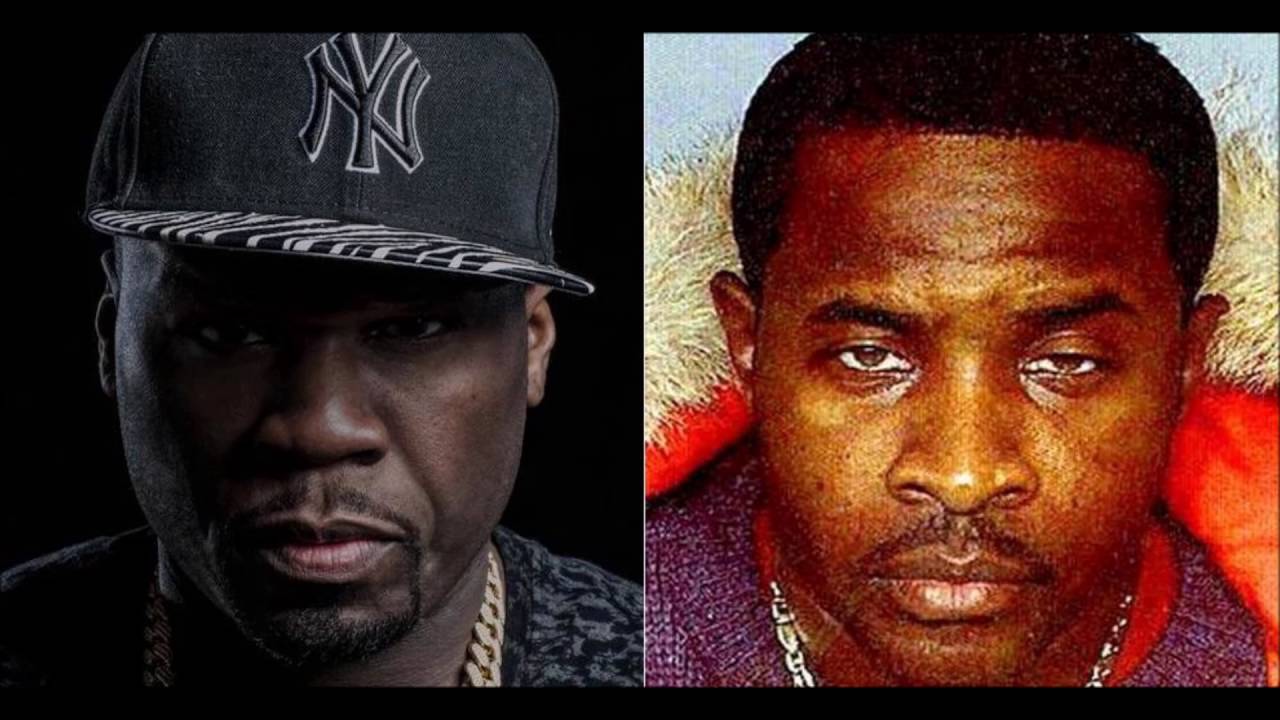
You’ve probably heard the legend. It’s one of those hip-hop stories that feels more like a Scorsese script than real life. A hungry rapper from South Jamaica, Queens, gets shot nine times at close range, survives against all odds, and goes on to become a global superstar. But the man allegedly behind that trigger wasn't just some random stick-up kid. It was Kenneth "Supreme" McGriff.
To understand why Kenneth McGriff and 50 Cent became one of the most dangerous rivalries in music history, you have to look past the "In Da Club" era. You have to go back to the 1980s, back to the Baisley Park Houses, and a song called "Ghetto Qu'ran."
Honestly, that one track changed everything.
The Song That Sparked a War
In 1999, 50 Cent was just Curtis Jackson, a guy trying to get out of the drug game by rapping about it. He dropped "Ghetto Qu'ran (Forgive Me)," which was basically a roll call of every major drug dealer in Queens from the '80s. He mentioned names like Fat Cat, Prince, and, most importantly, Kenneth "Supreme" McGriff.
See, Supreme wasn't just a dealer. He founded the Supreme Team, an organization that was reportedly moving $200,000 worth of crack cocaine a day at its peak. When 50 Cent rapped about him, he wasn't paying homage—he was exposing a history that Supreme wanted kept in the shadows.
McGriff had just been released from a long prison stint in 1995. He was trying to "go legit" in the film and music industry through a partnership with Murder Inc. Records. Imagine trying to rebrand as a businessman while a local kid is broadcasting your criminal resume to the world.
Supreme was furious. He allegedly viewed the song as "snitching" on wax. According to federal affidavits from IRS agent Francis Mace, investigators believed this specific song was the catalyst for the attempt on 50 Cent’s life.
Nine Shots and a Blacklist
On May 24, 2000, 50 Cent was sitting in a car in front of his grandmother's house in Queens. A gunman approached and fired nine shots. One hit him in the jaw, others hit his hand, arm, hip, and legs. He lived, obviously, but the industry reaction was swift and cold.
Columbia Records dropped him. He was effectively blacklisted.
For a while, nobody would touch 50 Cent. The word on the street was that Supreme had put a "green light" on him. If you worked with 50, you were working against Supreme. This is why the Jam Master Jay murder in 2002 is often linked to this beef. Federal investigators later looked into whether the Run-DMC legend was killed because he defied the industry's unofficial ban and mentored 50 Cent when no one else would.
It’s heavy stuff. We’re talking about a level of street politics that most rappers only pretend to understand. 50 didn't just survive the bullets; he survived a systematic effort to erase him from the business.
The Murder Inc. Connection
While 50 Cent was rebuilding his career with Eminem and Dr. Dre, Kenneth McGriff was deeply embedded with Irv Gotti and Murder Inc. This is where the business side gets messy.
The feds eventually raided Murder Inc. in 2003, investigating whether the label was laundering drug money for McGriff. While Irv Gotti and his brother Chris were eventually acquitted of money laundering charges in 2005, the association with Supreme essentially dismantled their empire.
For 50 Cent, this was the ultimate victory. He used the beef to fuel his "Get Rich or Die Tryin'" persona. He ruthlessly mocked Ja Rule and Irv Gotti for their ties to Supreme, essentially winning the rap war by watching his enemies get dismantled by the legal system.
It’s kinda wild when you think about it. 50 Cent used the very thing that was supposed to kill him to become a billionaire.
Where is Kenneth McGriff Now?
The law eventually caught up with the "Supreme" leader in a way the streets never could. In 2007, Kenneth McGriff was convicted of murder-for-hire, drug trafficking, and racketeering.
The most damning evidence involved the 2001 murders of Eric "E-Moneybags" Smith and Troy Singleton. Prosecutors argued McGriff paid $50,000 to have them killed in retaliation for the death of his friend, "Black Just" Johnson.
Today, Kenneth McGriff is serving life without the possibility of parole. As of 2026, he remains incarcerated in the federal system, most recently reported to be at USP Beaumont in Texas. He’s 66 years old now. The "Supreme Team" is long gone, and the era of New York they ruled is a memory.
Key Takeaways from the Feud
- The Power of the Pen: 50 Cent’s "Ghetto Qu'ran" proved that lyrics have real-world consequences. It wasn't just music; it was a breach of a code.
- The Blacklist was Real: The industry's fear of Kenneth McGriff was so intense that 50 Cent had to go to Canada and eventually link with Detroit-based Eminem just to get a fair shot.
- Collateral Damage: The rivalry didn't just affect the two men; it arguably led to the downfall of Murder Inc. and potentially played a role in the tragic loss of Jam Master Jay.
- Survival as a Brand: 50 Cent’s ability to survive the shooting and the subsequent street pressure is what gave him the "bulletproof" credibility that defined 2000s hip-hop.
If you want to understand the modern landscape of rap beef, you have to study this. It wasn't about Twitter fingers or Instagram stories. It was about a kingpin and a kid from the neighborhood who refused to stay quiet.
To dig deeper into this history, you should check out the book Queens Reigns Supreme by Ethan Brown. It provides the most detailed investigative look into how the crack era in Queens shaped the music we listen to today. You can also watch the 2022 Showtime documentary Supreme Team, which features interviews with people who were actually there when the houses were under McGriff's control.