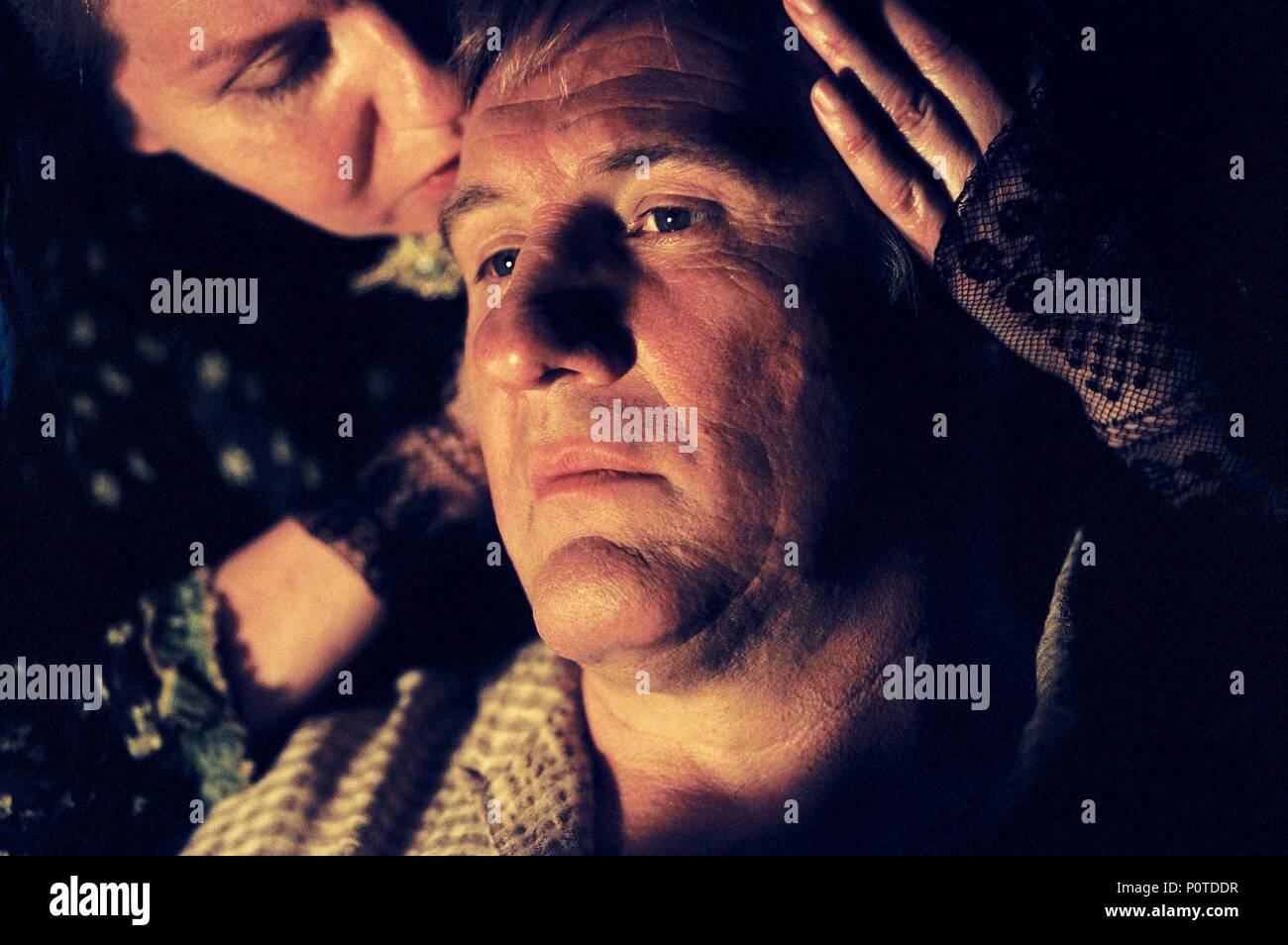
If you’ve ever gone down a rabbit hole of early 2000s European cinema, you’ve probably stumbled across a poster that looks more like a Renaissance painting than a movie still. That’s I Am Dina. It’s a film that doesn’t just sit there; it breathes down your neck. Honestly, calling it a "period drama" feels like a massive understatement. It’s more of a visceral, chaotic, and sometimes deeply uncomfortable exploration of grief and female agency that looks like a dream but feels like a fever.
Released in 2002, this co-production—involving Norway, Sweden, France, Germany, and Denmark—was one of the most expensive Scandinavian films ever made at the time. It had a massive budget, an international cast including Maria Bonnevie and Christopher Eccleston, and the kind of sweeping cinematography that makes you want to move to a fjord immediately. But despite the polish, the movie is gritty. It’s messy. It’s about a woman named Dina who is essentially a force of nature, shaped by a childhood trauma so sharp it basically severed her ability to live by society’s rules.
We’re talking about a story based on Dina’s Book (Dinas bok) by Herbjørg Wassmo. If you haven’t read the novel, the film carries its weight well, but it also takes some big swings that left critics divided back in the day. Some loved the boldness. Others thought it was a bit much.
The Haunting Core of I Am Dina
The movie starts with a literal scream. As a young girl, Dina accidentally causes the death of her mother in a horrific lye-washing accident. It’s a scene that stays with you. Her father, consumed by his own grief, can’t even look at her. He rejects her, leaving her to grow up wild and unwashed on their estate. This isn't your typical "rebellious girl" trope. This is a child who has been emotionally abandoned and left to navigate a world that thinks she’s "broken."
Then comes Jacob. Played by the legendary Gérard Depardieu, Jacob is an old friend of the family who eventually marries Dina. It’s an odd pairing on paper, but on screen, it works because Depardieu brings that specific brand of earthy, slightly overwhelming masculinity that matches Dina’s untamed energy.
Maria Bonnevie’s performance is the heartbeat of I Am Dina. She plays Dina with this wide-eyed, terrifying intensity. She plays the cello like she’s trying to summon a storm. She rides horses like she’s trying to outrun her own skin. It’s a performance that doesn’t care if you like her. Dina is selfish. She’s impulsive. She’s haunted by the ghost of her mother, who literally appears to her throughout the film. It’s a haunting that feels less like a horror movie and more like a manifestation of chronic PTSD.
Why the Critics Weren't Always Kind
When I Am Dina hit the festival circuit and international theaters, it didn't get a universal standing ovation. Why? Because it’s "big." Everything about it is cranked up to eleven. The music, the sweeping shots of the Norwegian coast, the emotional outbursts—it’s operatic.
Some reviewers felt the English-language dialogue felt a bit stiff coming from a mostly European cast. It’s a common critique of European co-productions from that era. When you have a French actor (Depardieu), a British actor (Eccleston), and a Swedish-Norwegian lead (Bonnevie) all speaking English in a 19th-century Norwegian setting, there’s a bit of a linguistic "uncanny valley" happening.
But if you can get past the accents, the visual storytelling is world-class. Director Ole Bornedal—who you might know from the original Nightwatch (Nattevagten)—didn't want a polite movie. He wanted something that felt as raw as the landscape.
- The cinematography by Dan Laustsen (who later worked on The Shape of Water) is breathtaking.
- The score by Marco Beltrami is haunting and heavy on the strings.
- The costumes and production design make 1860s Norway feel lived-in and freezing cold.
The film actually swept the Amanda Awards (Norway's equivalent of the Oscars), taking home Best Film, Best Actress, and Best Cinematography. It clearly resonated at home, even if the international reception was a bit more "what did I just watch?"
Christopher Eccleston and the Leo Factor
One of the more interesting parts of the film is Leo, played by Christopher Eccleston. He enters the picture later, representing a different kind of challenge for Dina. While Jacob was a provider and a stabilizer, Leo is the one who truly sparks Dina’s passion—and her destructive tendencies.
Eccleston is great here. He brings a revolutionary, intellectual edge to the rugged landscape. His chemistry with Bonnevie is palpable, but it's also dangerous. The way Dina interacts with the men in her life is always a power struggle. She was denied love by her father, so she takes what she wants from everyone else. Sometimes she takes too much.
Dealing with the Trauma Narrative
We talk a lot today about "trauma-informed" storytelling. I Am Dina was doing this before it was a buzzword. The film portrays Dina’s behavior not as "crazy," but as a logical (if extreme) response to a childhood where she was blamed for a tragedy and then ignored.
She sees the world through a lens of life and death. There is no middle ground. When she loves, she consumes. When she’s hurt, she strikes. It’s a heavy watch, honestly. There are moments where you want to look away, particularly during the scenes involving her mother's ghost or the more graphic depictions of 19th-century life. But it’s that refusal to be "pretty" that gives the film its staying power.
People still talk about this movie in cinema circles because it refuses to categorize its protagonist. Is Dina a villain? A victim? A hero? She’s all of them. In a world that wanted her to be a quiet wife or a grieving daughter, she chose to be a problem.
A Legacy of Visual Splendor
If you’re watching I Am Dina today, you have to watch it on the best screen possible. The restoration work done on the film in recent years highlights the incredible color palette. The deep blues of the Norwegian winter and the warm, flickering ambers of the indoor scenes are stunning.
It’s also worth noting the soundtrack. The cello is essentially a character in the film. It represents Dina’s voice when she can't find the words. It’s scratchy, deep, and mournful. Even if you don't love the plot, the sensory experience of the film is undeniable.
The movie explores themes that are still incredibly relevant:
- The long-term impact of childhood isolation.
- The struggle for female autonomy in patriarchal structures.
- The blurry line between grief and madness.
Is it a perfect movie? Probably not. It’s a bit long, and the pacing in the middle drags a little as it moves from one romantic interest to the next. But it’s a brave movie. It doesn't hold your hand. It assumes you can handle a protagonist who is deeply flawed and sometimes genuinely unlikeable.
How to Experience I Am Dina Today
If you're looking to dive into this piece of Scandinavian cinema history, don't just put it on in the background while you fold laundry. It demands your attention.
Seek out the original Norwegian version if possible. While the English dub/language version is the most common, some purists feel the emotional weight hits differently in its native context, though the film was largely shot in English for the international market.
Read the source material. Herbjørg Wassmo’s Dina’s Book is a masterpiece of Nordic literature. Reading the book provides a lot of the internal monologue that is hard to capture on film, especially regarding Dina’s complex relationship with her mother’s memory.
Look for the "Making Of" features. The production of this film was an ordeal. Filming in remote parts of Norway with an international cast and a massive crew was a logistical nightmare that is almost as interesting as the movie itself.
Analyze the cinematography. If you're a film student or a photography buff, pay attention to the lighting. Notice how the camera moves—or stays unnervingly still—during Dina’s most volatile moments.
Check out Maria Bonnevie’s other work. After this film, she became a powerhouse in Scandinavian film, appearing in things like The 13th Warrior and A Second Chance. Seeing her range makes her performance in I Am Dina even more impressive.
The film is a testament to what happens when a director is given a massive budget and a dark, uncompromising vision. It’s a relic of a time when "big" movies could be weird, psychological, and devastating all at once. It remains a polarizing but essential piece of 21st-century European cinema.