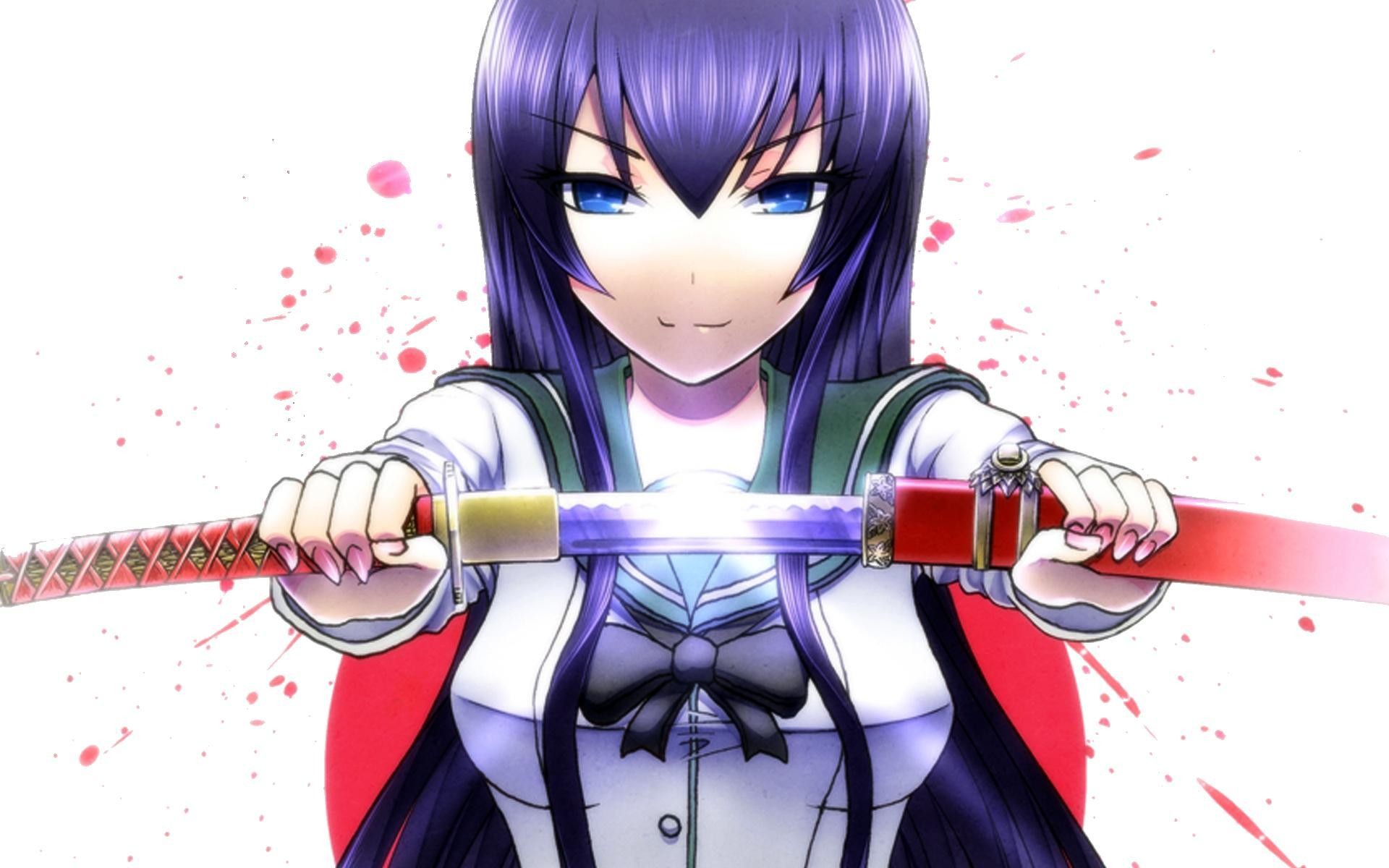
Let's be real. If you were hanging out on anime forums or browsing the back shelves of a Borders bookstore in 2010, you couldn't escape it. The Highschool of the Dead manga was everywhere. It was loud, it was unapologetically trashy, and it was genuinely one of the most well-drawn pieces of zombie media ever to hit the page.
But then, it just... stopped.
Fans have been stuck in a weird kind of limbo for over a decade. It’s a frustrating spot to be in because the series didn't just fade away due to low sales. It was a massive hit. It was one of the first manga series to consistently rank on the New York Times Bestseller list for graphic novels. Yet, the story remains frozen in time, a relic of an era when the "zombie craze" was peaking and "fan service" was the primary marketing engine of the industry.
The Tragedy Behind the Hiatus
You can't talk about the Highschool of the Dead manga without addressing the elephant in the room: Daisuke Satō.
He was the writer, the brain behind the survivalist logic and the geopolitical commentary that—honestly—made the series better than it had any right to be. Satō suffered from ischemic heart disease. This wasn't a secret; the manga went on numerous hiatuses starting around 2011 because his health was failing.
He passed away in 2017.
When a creator dies, the industry usually does one of two things. Either they find a ghostwriter to finish the job based on notes, or they bury the project out of respect. For Highschool of the Dead, it was the latter. Shōji Satō, the illustrator (no relation, by the way), has been very vocal about this. In interviews, particularly with Telen-Anime, he basically said that it’s not easy to just "pick up" where someone else left off. It’s painful. He’s since moved on to Triage X, which carries a similar aesthetic but lacks that specific "end-of-the-world" grit that Daisuke brought to the table.
Why People Still Obsess Over This Specific Zombie Story
Most zombie stories are pretty much the same. Virus breaks out, people bite people, society collapses, and the "real monsters" turn out to be the humans. Standard stuff.
So why do we still talk about this one?
The Shoji Sato Factor
The art is ridiculous. It’s hyper-detailed. Every shell casing falling from a shotgun, every bead of sweat, and—yes—the physics-defying anatomy of the female characters. It was visceral. While the anime adaptation by Madhouse is famous for that bullet-dodging scene (you know the one), the manga had a weight to it that felt more like a classic action movie.
Survivalist Gear-Head Energy
Daisuke Satō was a history and weapons buff. Most manga artists just draw "a gun." Satō specified the exact model of the Ithaca 37 riot shotgun or the Springfield M1A. He cared about the weight of the ammo. He cared about how a high school teacher would actually barricade a door using specific furniture. It gave the Highschool of the Dead manga a layer of tactical realism that contrasted wildly with its over-the-top fanservice. It was a weird mix. It shouldn't have worked.
The Characters: Archetypes or Icons?
Take Takashi Komuro. He’s your standard "unmotivated teen who finds his purpose in the apocalypse." It’s a trope we’ve seen a million times. But in the manga, his descent into a more cold, pragmatic leader happens much faster.
Then there’s Saeko Busujima.
Honestly, she’s the reason half the fanbase stayed. She represents the "Yamato Nadeshiko" ideal twisted into a high-speed killing machine with a katana. Her character arc—dealing with her own latent sociopathy and the fact that she enjoys the violence—was surprisingly deep for a series that also spent five pages on a bath scene.
The manga explored these psychological cracks more than the anime did. In the books, you see the characters slowly losing their grip on "civilized" morality. Hirano, the resident otaku and gun expert, goes from being a bullied kid to someone who feels a terrifying sense of empowerment because he’s the only one who knows how to operate a sniper rifle. It asks a dark question: Is the apocalypse actually better for some people?
Breaking Down the "Full Color" Editions
If you’re looking to get into the Highschool of the Dead manga today, you’ll probably see the "Full Color Omnibus" versions. These are hefty. They’re expensive. Are they worth it?
- The Aesthetic: The coloring isn't just a cheap overlay. It’s vibrant and emphasizes the gore.
- The Paper Quality: It’s way better than the standard tankōbon.
- The Longevity: Since the series will never be finished, these volumes are basically the "definitive" archive of what exists.
The story ends abruptly at Chapter 30. That’s it. Volume 7. There is no secret ending. There are no lost chapters hidden in a vault in Tokyo. You get to the mall arc, things get intense, and then the screen goes black. It’s the ultimate narrative blue-balling.
Is There Any Hope for a Revival?
Let's be blunt: No.
I’ve seen the rumors on Reddit and TikTok. People claim a "Season 2" or "Volume 8" is coming every few months. It’s all clickbait. Shōji Satō has made his peace with the series being over. He respects Daisuke too much to bring in a new writer.
There’s also the fact that the "zombie" genre in Japan has shifted. We’ve seen the rise of Zom 100: Bucket List of the Dead, which is a complete tonal shift—bright, colorful, and anti-work-culture. The grim, hyper-sexualized, tactical survivalism of the late 2000s just isn't the current trend.
However, the legacy lives on through its influence. You can see DNA of Highschool of the Dead in almost every ecchi-action series that followed. It set a bar for production value that few could match.
What You Should Do Instead of Waiting
Since you can't get more of this specific story, you have to look elsewhere. But don't just grab any random zombie manga. You need the stuff that captures that specific "edge."
1. Read Triage X
This is Shōji Satō’s current project. It has the same art style. The characters look almost identical to the HOTD cast. It’s about a group of "black label" assassins. It has the action, the fanservice, and the guns, even if it lacks the zombies.
2. Check out I Am a Hero
If what you liked about the Highschool of the Dead manga was the "holy crap, society is falling apart" realism, this is the gold standard. It’s way more grounded and significantly more terrifying. It doesn't have the "cool" factor, but it has the dread.
3. Collect the Hardcover Omnibuses
If you’re a completionist, just buy the two "Full Color Edition" hardcovers. They look great on a shelf and they cover everything up to the final hiatus.
The Harsh Reality of Serialized Art
The story of this manga is a reminder that creators are human. We often treat manga as these endless content machines, but they rely on the health and passion of individuals. When Daisuke Satō died, the soul of the series went with him.
It’s a tragedy, both for the man and for the story. But maybe there’s something poetic about a zombie manga that simply stops. No resolution, no "happily ever after," just a group of kids still fighting in a mall somewhere in the back of our minds, forever.
Actionable Next Steps for Fans:
- Avoid the Scams: Don't sign petitions or pay for "leaked" chapters. They don't exist.
- Support the Artist: If you love the art, follow Shōji Satō’s current work. It’s the only way to see that style continue.
- Physical Media: If you want to own the series, buy it now. Manga volumes go out of print faster than you’d think, especially "unfinished" ones that publishers might stop prioritizing.
- Explore the Genre: Look into Apocalypse no Mori or School-Live! if you want to see how other creators have handled the "students vs. zombies" trope in the years since HOTD changed the game.