Politics in the 2020s has always been weird. But in late 2025, it reached a level of surrealism that honestly felt like a fever dream. If you were online during the government shutdown that fall, you definitely saw it. A video of House Minority Leader Hakeem Jeffries appearing to wear a large sombrero and a cartoonish, curly handlebar mustache.
It wasn't a real photo. It wasn't a "gaffe." It was a deepfake.
The Hakeem Jeffries sombrero meme didn't just appear out of nowhere. It was a calculated, albeit bizarre, piece of political theater dropped right in the middle of a high-stakes budget battle. While federal workers were worrying about their next paycheck, the leader of the free world was sharing AI-generated clips set to mariachi music.
The Origins of the Sombrero Clip
On Monday, September 29, 2025, President Donald Trump shook up the news cycle by posting a video on Truth Social. This wasn't your standard campaign ad. The video depicted Jeffries and Senate Minority Leader Chuck Schumer in a manipulated scene. While Schumer’s AI-generated voice made claims about the Democratic Party's agenda, Jeffries stood there—digitally altered to wear a Mexican traditional hat.
Why the hat? It was a heavy-handed metaphor.
The Trump administration was pushing a narrative that Democrats were prioritizing benefits for undocumented immigrants over American citizens. By slapping a sombrero on the first Black person to lead a major party in Congress, the meme was designed to visually link Jeffries to the "border crisis" rhetoric.
It was crude. It was loud. And it was instantly viral.
A Tense White House Meeting
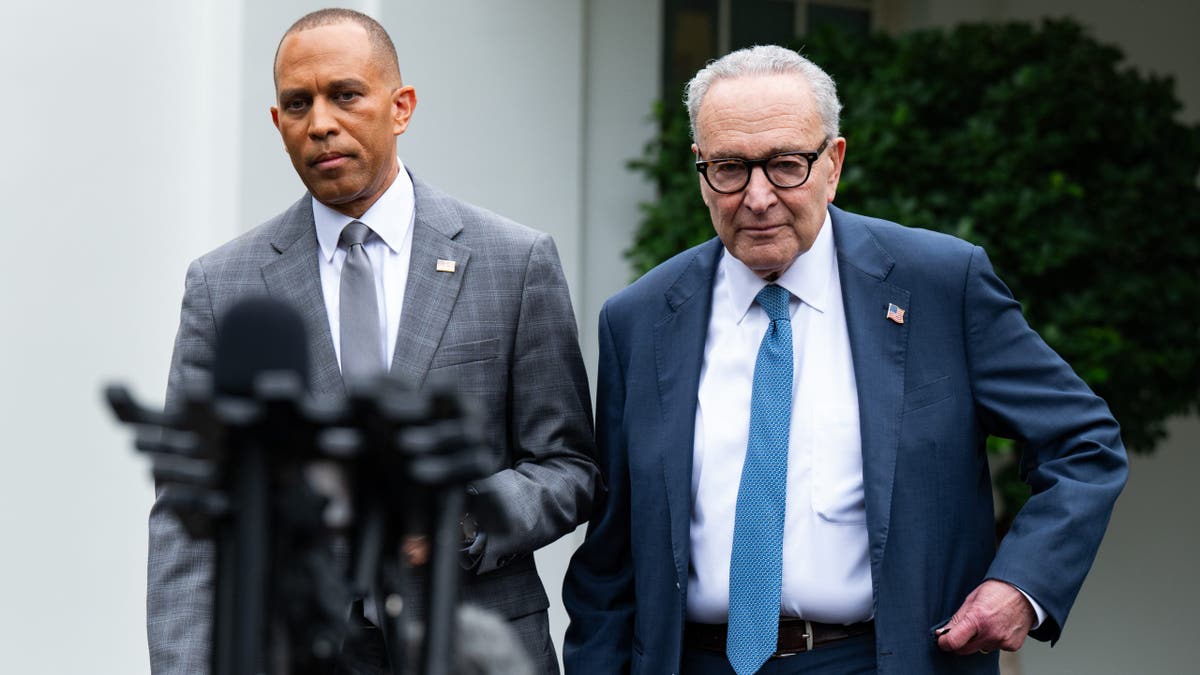
Ironically, the meme dropped just hours after Jeffries and Schumer had actually been at the White House. They were there to negotiate with Trump to prevent the very shutdown that was currently unfolding. Imagine walking out of the Oval Office after a "serious" policy discussion only to find the President has posted a video of you with a fake mustache.
Jeffries didn't find it funny. He called it "racist and fake." He told reporters outside the Capitol that if Trump had something to say, he should "say it to my face" instead of copping out through AI.
JD Vance and the "Funny" Defense
This is where it gets even more chaotic. The White House didn't back down. In fact, they doubled down. During a press briefing on October 1, 2025, Vice President JD Vance was asked if these memes were actually helpful for negotiations.
His response? "I think it's funny."
Vance’s defense was basically that everyone knew it was fake. He pointed out the "curly animated mustache" as proof that it was just a joke. He even made a bizarre "solemn promise" to Jeffries: if the Democrats helped reopen the government, the Hakeem Jeffries sombrero meme would stop.
Think about that for a second. The Vice President of the United States used a deepfake meme as a literal bargaining chip in a federal budget negotiation.
"I honestly don't even know what that means. Like, is he a Mexican American that is offended by having a sombrero meme?" — JD Vance, October 2025.
The administration even started playing the video on a loop on the TVs in the White House briefing room. For hours. It was a total breakdown of traditional decorum.
Why This Meme Actually Matters
It’s easy to dismiss this as just more internet noise. But the Hakeem Jeffries sombrero meme represents a massive shift in how political communication works.
- Normalization of Deepfakes: This wasn't a fringe "troll" account. This was the executive branch using generative AI to mock political opponents. When the highest levels of government use deepfakes, the line between "parody" and "disinformation" gets incredibly thin.
- Racial Undertones: The use of the sombrero and mustache on a Black leader wasn't an accident. Critics argued it played into "Great Replacement" theory tropes, suggesting Democrats were trying to "replace" voters.
- The Shutdown Strategy: The meme served as a distraction. While the media argued about whether the hat was racist or funny, the actual details of the budget—healthcare subsidies and spending cuts—often took a backseat in the public discourse.
Beyond the Humor: What People Got Wrong
A lot of people on social media actually thought the photo was real at first glance. That's the danger of "high-fidelity" AI. Even though the mustache was "cartoonish," the lighting and the way the hat sat on Jeffries' head were convincing enough to fool a casual scroller.
Democrats tried to fight back with their own memes. California Governor Gavin Newsom posted images of Vance and Speaker Mike Johnson as "minions" from Despicable Me. It turned the entire government shutdown into a battle of the JPGs.
Honestly, the whole episode was a reminder of how "unserious" (to use Jeffries' word) the political climate had become.
Actionable Insights for the AI Era
If you're trying to navigate the world of political memes and deepfakes today, here’s how to stay grounded:
- Check the Source: If a photo looks "too perfect" or suspiciously ridiculous, look for the original post. Truth Social and X are hubs for this kind of AI-generated content.
- Look for "The Glitch": AI still struggles with hands, fine textures, and the way light interacts with edges (like where the sombrero meets the hair).
- Understand the Context: The Hakeem Jeffries sombrero meme wasn't just a random insult; it was tied to a specific legislative fight over immigration and the 2025 shutdown.
- Verify with Multiple Outlets: Reliable news sources like The Guardian or The New York Times will usually label these as "manipulated media" or "deepfakes" within minutes of them going viral.
The 2025 shutdown eventually ended, and the memes faded from the front pages. But the precedent was set. We are now in an era where a sombrero on a deepfake is just another Tuesday in Washington.