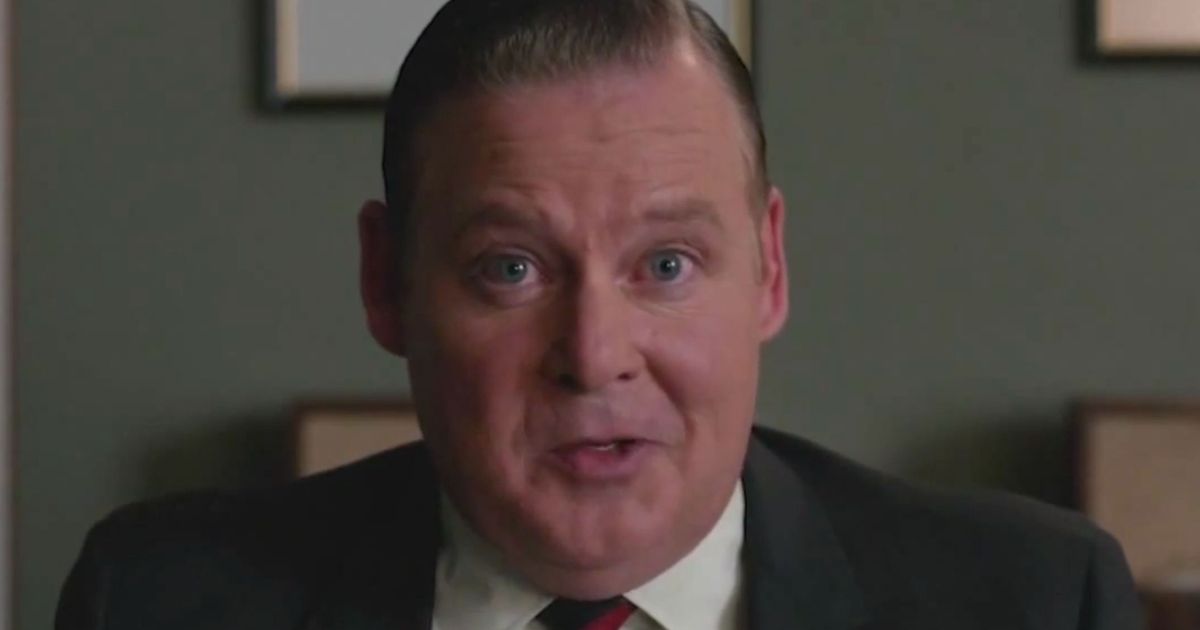
Freddy Rumsen is usually the guy people remember for the zipper. You know the scene. It’s Season 2, the guys are gathered in a smoke-filled room at Sterling Cooper, and Freddy—played with a heartbreakingly perfect mix of bravado and fragility by Joel Murray—literally pisses his pants before a big pitch. It’s played for dark laughs initially, then it turns into one of the most sobering moments in a show that’s basically a love letter to the three-martini lunch.
But if you think Freddy Rumsen in Mad Men is just a punchline about 1960s alcoholism, you’re missing the entire point of the character.
Freddy was the ghost of advertising past. He was the bridge. While Don Draper was busy reinventing the world in his own image, Freddy was the one who actually understood the "old magic" of the industry. He wasn't just some drunk who got fired; he was the mentor who paved the way for Peggy Olson, the man who survived the war, and eventually, the unlikely "cyborg" who helped Don find his way back to the top. Honestly, Freddy is the moral compass of a show that supposedly didn't have one.
The Tragedy of the "Accidental" Icon
When we first meet Freddy, he’s a senior copywriter. He’s comfortable. He represents a specific type of WWII veteran who came home, got a job in "the city," and proceeded to drink his way through the trauma of the 1940s. Unlike Roger Sterling, who wears his hedonism like a tailored suit, Freddy’s vice feels heavy. It’s functional until it isn't.
The "zipper incident" in the episode "The Maidenform Affair" is a massive turning point. It wasn't just about a guy losing control of his bladder. It was about the transition of power. Duck Phillips, looking for any excuse to tighten his grip on the agency, uses Freddy’s relapse to push him out. It’s brutal. Roger and Don, who are hardly sober themselves, have to be the ones to "put the dog down," so to speak.
The irony? Freddy was actually good at his job. He was the one who heard Peggy Olson’s "basket of kisses" remark about lipstick and realized she wasn't just a secretary—she was a writer.
Think about that. In a room full of Ivy League ego-trippers, the guy who couldn't stay sober was the only one with the intuition to spot the greatest talent of the decade. He gave Peggy her first break. He saw her. Without Freddy Rumsen, Peggy Olson is just another name in the steno pool who eventually moves back to Brooklyn and wonders "what if."
The Return of the New Freddy
Most shows would have dropped Freddy there. He would have been a "cautionary tale" character who vanished into the background of 1962. But Matthew Weiner and the writing team did something much more interesting. They brought him back in Season 4, and he was... different.
Freddy 2.0 was sober. He was "carrying the message," as they say in AA.
Seeing Freddy Rumsen navigate the high-octane, booze-soaked world of the mid-60s as a sober man was fascinating. He became a freelancer. He had a briefcase, a new lease on life, and a weirdly zen-like perspective on the industry. He wasn't bitter. Well, maybe a little, but he channeled it into work.
There's this specific scene where he’s pitching to Ponds with Peggy (who is now his superior, technically). He’s sharp. He’s professional. But you can see the effort it takes. He’s a man living in a world designed to kill him. This is where the Mad Men writing shines—it doesn't give him a "happily ever after." It gives him a "one day at a time" existence.
The "Cyborg" and the Accutron Pitch
Fast forward to the final seasons. Freddy becomes Don’s secret weapon.
Remember the Accutron pitch? "It's not a timepiece, it's a conversation piece."
For a moment, we think Don Draper has his mojo back. He’s sitting in his apartment, feeding lines to Freddy, who then goes into agencies and pitches them as his own. Don is the brain; Freddy is the mouth. Don calls him a "cyborg." It’s a bizarre, symbiotic relationship born out of necessity. Don is "on leave" (aka suspended) and Freddy needs the work.
But look closer at what’s happening there. Freddy is actually taking care of Don. He’s keeping Don’s mind sharp while Don is spiraling into a mess of adultery and existential dread. Freddy, the former "clown" of the office, becomes the adult in the room. He eventually tells Don, "Do the work, Don." It’s the most honest advice anyone gives the protagonist in seven seasons.
Why Freddy Rumsen Still Matters to Fans
People talk about the fashion of Mad Men or the slickness of the pitches. But Freddy represents the reality of the era. The 1960s weren't just about skinny ties and sharp wit; they were about the cracks in the American Dream.
- The Veteran Experience: Freddy’s drinking was a direct byproduct of his service. The show hints at the horrors he saw, and his inability to process them without a bottle of rum.
- The Gender Shift: His relationship with Peggy is the most "pure" mentorship in the show. He didn't want to sleep with her; he just thought she was talented.
- The Sobriety Narrative: Mad Men treated alcoholism with a brutal realism that few period pieces manage. Freddy’s journey isn't a straight line. It's messy.
He was the "everyman" in a land of giants. When you watch Freddy, you aren't watching a myth like Don Draper. You're watching a guy trying to pay his mortgage and keep his demons at bay. That’s why his character resonates. We've all known a Freddy Rumsen. Heck, on some Mondays, we are Freddy Rumsen.
What You Can Learn from Freddy's Arc
If you're looking for "actionable insights" from a fictional 1960s ad man, it's actually pretty simple. Freddy’s story is about adaptability.
- Spot the Talent, Not the Title: Freddy looked past Peggy's secretarial desk. If you're in a leadership position, look for the people making the "offhand remarks" that actually solve the problem.
- The "Do the Work" Philosophy: When everything falls apart—and for Freddy, it fell apart in the most public way possible—the only way back is through the work. Not the ego, not the reputation. Just the craft.
- Know When the Game Changes: Freddy realized he couldn't be the "big man" at the agency anymore. He pivoted. He became a specialist. He found a way to stay relevant in a young man's game by being the most reliable person in the room.
To really appreciate the depth of the character, re-watch the Season 7 premiere, "Time & Life." Watch Freddy deliver that opening monologue. It’s masterful. It’s a man who has lost everything and found himself in the process. He didn't need the corner office to be an ad man. He just needed a good idea and the discipline to stay upright.
Freddy Rumsen wasn't just a supporting character. He was the soul of the agency, even after he left it. He showed us that you can piss your pants in front of your peers and still come back to teach the best in the business how it's done. That’s not just TV drama; that’s a lesson in resilience.
Next time you’re watching a rerun, don't just wait for the zipper scene. Look at Freddy’s eyes when he talks to Peggy. Look at the way he carries his briefcase in the later seasons. He’s the most "human" person in the whole building.
Pro Tip: If you're diving deep into the lore, check out Joel Murray’s interviews about the role. He’s one of the few actors who truly understood the "quiet" tragedy of the era. He played Freddy not as a drunk, but as a man who was simply tired of pretending.