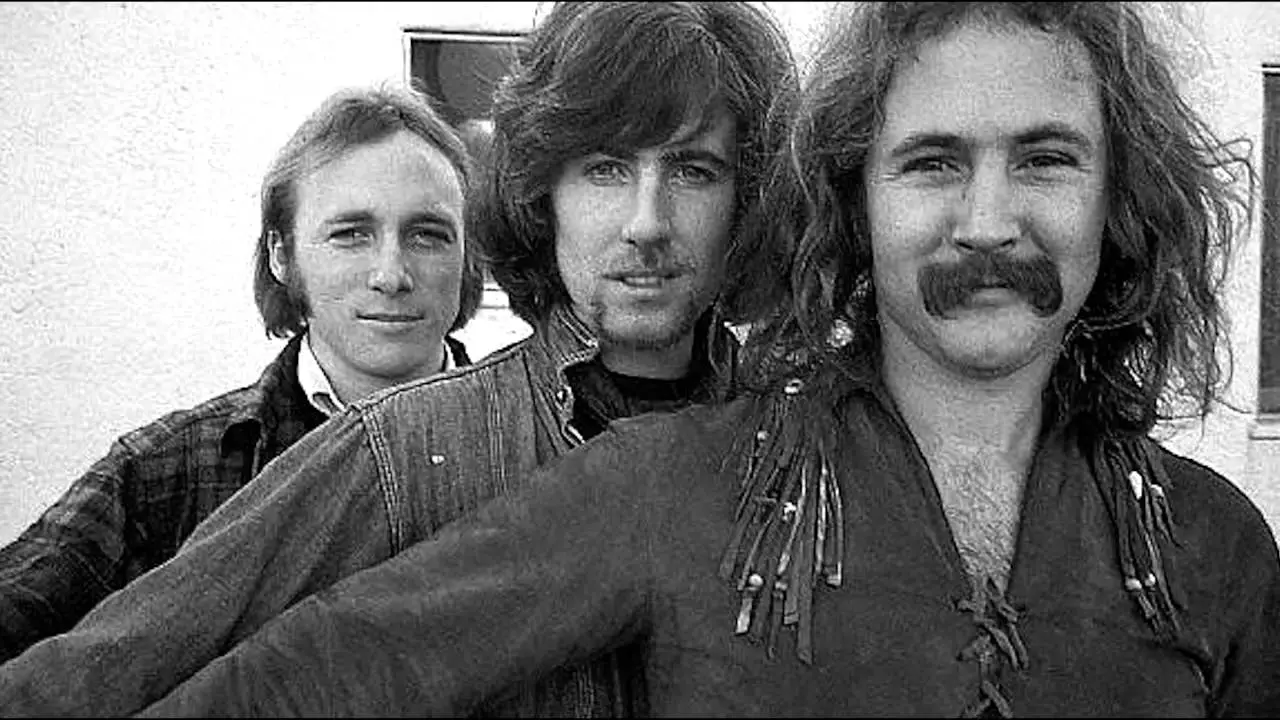
You know that feeling when you're driving with the windows down and a certain song comes on that just feels like... sunlight? That’s basically the entire catalog of Crosby Stills Nash songs. It’s not just folk rock. It’s a specific kind of magic that happened when three guys from three different legendary bands—The Byrds, Buffalo Springfield, and The Hollies—decided to sit on a couch in Laurel Canyon and see what happened when they sang together.
Honestly, the "supergroup" label gets thrown around a lot lately. But in 1969, these guys were the blueprint. They weren't just a band; they were a cultural earthquake.
The Acoustic Soul of Suite: Judy Blue Eyes
If you want to talk about Crosby Stills Nash songs, you have to start with the big one. "Suite: Judy Blue Eyes" is basically a short film in musical form. Clocking in at over seven minutes, it was an absolute beast for 1969 radio.
Stephen Stills wrote it about his impending breakup with singer Judy Collins. You can hear the desperation. It’s right there in the lyrics. He’s pleading. He’s frustrated. But then, those harmonies kick in—that "ruby throat sparrow" line—and suddenly the pain sounds like a literal choir of angels.
What most people miss about this track is the tuning. Stills used a totally weird, "open" guitar tuning (EEEEBE) that gives the song that percussive, ringing chime. He played almost every instrument on that first record himself. David Crosby and Graham Nash basically just had to show up and sing like their lives depended on it. Which, given the egos involved, they kind of did.
That Weird Ending
Everyone knows the "Ba-da-da-da" ending. It’s infectious. It’s fun. But it’s also a bit of a trick. Stills threw in those Spanish lyrics ("Que linda me la traiga Cuba") because he grew up in Central America and Florida. It adds this tropical, breezy vibe to a song that is, at its core, a devastating breakup letter. It’s that contrast—the happy sound and the sad heart—that makes it a masterpiece.
Why Marrakesh Express Almost Didn't Happen
It’s kind of funny thinking about it now, but Graham Nash’s former band, The Hollies, actually rejected "Marrakesh Express." They thought it wasn't commercial enough. Talk about a bad call.
Nash wrote it after a train trip from Casablanca to Marrakesh in 1966. He was in first class, but he kept wandering back to the third-class carriages where people were lighting fires and traveling with chickens and goats. It’s a literal travelogue.
- The Vibe: Pure 1960s optimism.
- The Hook: That "skipping" rhythm that feels like a train on tracks.
- The Secret Sauce: Stills’ quirky organ work and those bright, British-invasion-style harmonies Nash brought from Manchester.
When you listen to it, it’s hard not to smile. It’s the "pop" side of the trio, and it balanced out Crosby’s darker, more experimental tendencies perfectly.
The Politics of Long Time Gone
David Crosby was the "rebel" of the group. No question. While Nash was writing about domestic bliss and Stills was writing about girls, Crosby was staring at the television and getting angry.
He wrote "Long Time Gone" the night Robert Kennedy was assassinated. You can hear the snarl in his voice. It’s a heavy, soulful blues-rocker that proved these guys weren't just "peace and love" hippies. They were paying attention.
"Speak out, you got to speak out against the madness."
That line wasn't just a lyric; it was a mandate. Crosby’s vocal performance here is legendary. It’s raw, it’s slightly out of control, and it’s deeply human. It’s the sound of a man who realized the 1960s dream was starting to fracture.
A Quick Reality Check
A lot of people think CSN was always a four-piece. Nope. Neil Young didn't join until later. He was brought in mainly because Stills wanted another "heavy" guitar player for live shows. If you're looking for "Ohio," that’s technically a CSNY song. But the DNA is the same. It’s about being loud when the world is telling you to be quiet.
The Domestic Bliss of Our House
Fast forward to the Déjà Vu era. Graham Nash was living with Joni Mitchell in Laurel Canyon. One morning, they went out for breakfast, bought a cheap vase at an antique store, and went home.
It was a cold day. Nash said, "I'll light the fire, you put the flowers in the vase."
And boom. One of the most famous Crosby Stills Nash songs was born in about an hour.
It’s almost too sweet, isn't it? The piano, the simple lyrics about cats in the yard. But it captures a very specific moment in time—the "domestic hippie" phase of the counterculture. It’s cozy. It’s relatable. It’s the song your parents probably played on Sunday mornings while making pancakes.
Wooden Ships: A Post-Apocalyptic Jam
This one is a trippy collaboration between Crosby, Stills, and Paul Kantner of Jefferson Airplane. They wrote it on Crosby’s boat, the Mayan.
It’s essentially a science fiction story. The world has ended (presumably a nuclear war), and a few survivors are escaping on wooden ships because they don't reflect radiation like metal does.
- The Dialogue: The song starts with a conversation between two people from opposing sides of the war.
- The Peace: "If you smile at me, I will understand / 'Cause that is something everybody everywhere does in the same language."
- The Instrumentation: It’s got this jazzy, floating quality that makes you feel like you’re actually out on the water.
It’s long, it’s weird, and it’s brilliant. It shows the "musician's musician" side of the band.
Teach Your Children and the Pedal Steel
You can’t talk about these guys without mentioning the country influence. "Teach Your Children" is a perfect example.
Interestingly, Jerry Garcia of the Grateful Dead plays the pedal steel guitar on this track. The story goes that he did it as a trade: he’d play on their record if they taught the Grateful Dead how to sing better harmonies. Looking at the Dead’s Workingman's Dead album, it’s pretty clear who won that deal. Everyone.
The song was inspired by a famous Diane Arbus photograph of a kid holding a toy hand grenade. Nash saw it and realized that we need to be careful about what we pass down to the next generation. It’s a message that, frankly, hasn't aged a day.
Actionable Insights for Your Next Listen
If you're diving back into the world of Crosby Stills Nash songs, don't just stick to the "Greatest Hits" playlist. Here is how to actually experience this music:
- Listen to the 1969 Debut Album on Vinyl (or Good Headphones): The way those three voices are panned in the stereo mix is incredible. You can hear exactly where Crosby, Stills, and Nash are standing in the room.
- Check Out "Helplessly Hoping": It’s a masterclass in alliteration. "Helplessly hoping her harlequin hovers nearby." It’s also the purest example of their three-part harmony without any heavy instruments in the way.
- Look for the Live Versions: These guys were notoriously volatile. Sometimes they were perfect; sometimes they were a mess. But the live energy on an album like 4 Way Street shows the "edge" that the studio recordings sometimes smoothed over.
- Don't Ignore the Later Stuff: "Southern Cross" from the 1980s is an absolute banger. It’s Stephen Stills at his nautical best, and it proves they still had that vocal "lock" even after years of fighting.
Basically, CSN represents a moment in history when people actually believed music could change the world. Maybe it didn't fix everything. But when those three voices hit that perfect chord? It sure feels like it could.
To get the most out of your CSN journey, start with the self-titled 1969 "Couch Album." Listen to it from start to finish without skipping. Pay attention to how the moods shift from the frantic energy of "49 Bye-Byes" to the ethereal beauty of "Guinnevere." This isn't background music; it’s a landscape. Once you've mastered the debut, move on to Déjà Vu to hear how Neil Young’s "darker" influence changed their chemistry forever.