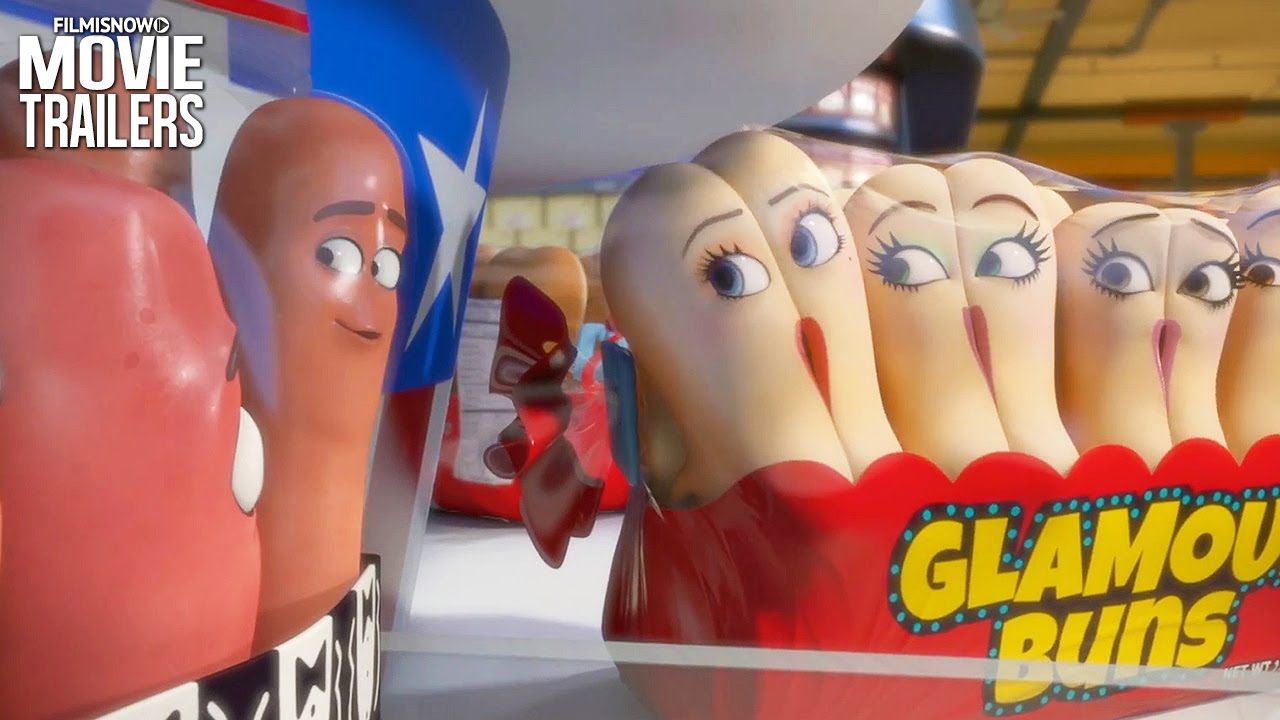
People usually remember Sausage Party for the food orgy. Or the bath salts scene. But if you look past the R-rated shock humor, Brenda Bunson, the hot dog bun from Sausage Party, is actually the emotional anchor of the whole ridiculous movie. Voiced by Kristen Wiig, Brenda isn't just a sidekick. She’s a believer. She’s the one who has to grapple with the existential dread of realizing her "gods" are actually hungry giants who want to eat her alive.
It's a weird role. Honestly, playing a piece of bread with a "vaguely anatomical" vertical slit shouldn't result in a nuanced performance, yet here we are. Brenda represents the struggle between traditional faith and the cold, hard reality of the kitchen floor.
The Theology of a Hot Dog Bun
The movie kicks off with "The Shopwell’s Song." It’s catchy. It’s also a lie. Brenda and her fellow buns live in a state of perpetual hope, waiting to be "chosen" by the shoppers. To Brenda, being chosen means eternal life in the "Great Beyond." She’s obsessed with remaining "pure" for her hot dog counterpart, Frank.
This purity culture parody is surprisingly sharp. Brenda is terrified of "touching tips" or coming out of her package before the proper ritual. It's a direct jab at religious fundamentalism, but played for laughs with gluten-based puns. When the truth comes out—that the Great Beyond is just a place where humans peel your skin off and bite your head—Brenda's world doesn't just crack. It shatters.
She goes through the classic stages of grief. Denial? Check. She spends a good chunk of the second act trying to find a "rational" explanation for the horrors she’s heard. Wiig plays this with a frantic, nervous energy that makes you almost feel bad for a cartoon bun. You've probably felt that way before—clinging to a belief because the alternative is just too dark to handle.
Why Kristen Wiig Was the Only Choice
Could anyone else have played Brenda? Maybe. But they wouldn't have nailed the "polite but on the verge of a breakdown" tone quite like Wiig. She brings a specific kind of Midwestern-nice desperation to the hot dog bun from Sausage Party.
Think about her work on SNL. She excels at characters who are trying desperately to keep it together while their environment descends into chaos. That’s Brenda. She’s trying to maintain the decorum of a "proper bun" while literal genocide is happening in the aisles around her.
The chemistry between Wiig and Seth Rogen (Frank) is the only thing that keeps the movie from being a series of disconnected sketches. Their relationship is the "heart," if you can call it that in a movie where a taco shell is voiced by Salma Hayek. It works because Brenda is the skeptic's foil. Frank is the one looking for the truth; Brenda is the one who needs the lie to survive.
The Evolution of the Food Heroine
In most animated movies, the female lead is the voice of reason. In Sausage Party, Brenda is often the voice of tradition, which is a refreshing change. She’s flawed. She’s judgmental. She’s occasionally mean to the other food items because she thinks she’s "chosen."
Watching her evolve from a submissive bun waiting for a hot dog to fill her life (pun very much intended) to a warrior fighting back against the "gods" is the actual arc of the film. By the time the final battle happens, Brenda isn't worried about her "freshness" anymore. She’s worried about survival.
Dealing With the "Design" Controversy
Let's address the elephant in the room. Or the slit in the bun. The character design of the hot dog bun from Sausage Party was intentionally provocative. Producers Evan Goldberg and Seth Rogen have talked openly about how they wanted the food to look like what they "represented" in a crude, adolescent way.
Some critics found it juvenile. Well, yeah. It’s a movie about talking sausages. But there’s a subtext there about how we personify inanimate objects. Brenda's design is a literal manifestation of the "purity" she’s trying to protect. The joke is on the nose, but in the context of a world where a douche is a literal villainous douche, it fits the internal logic of the universe.
The Cultural Impact of the Grocery Store Rebellion
Sausage Party was a massive hit, raking in over $140 million on a relatively small budget. It proved that there was a hungry audience for "Hard-R" animation that wasn't just South Park or Family Guy. Brenda became a meme almost instantly.
But beyond the memes, Brenda represents a shift in how adult animation handles female characters. She isn't just a trophy for Frank. She has her own crisis of faith. She has her own journey. She even has her own "awakening" regarding her sexuality and her place in the food chain.
The scene in the Mexican food aisle with Teresa del Taco is a pivotal moment for Brenda. It's the moment she realizes that the "rules" she lived by in her package were completely arbitrary. If the gods aren't real, then the rules aren't real. That’s a heavy concept for a movie that also features a scene where a piece of gum looks like Stephen Hawking.
Real-World Context: The Production Struggles
It’s worth noting that while Brenda is a fun character, the making of the film was plagued by reports of poor working conditions for the animators. Reports surfaced from unnamed animators claiming they were forced to work overtime without pay, and many weren't even credited in the final film.
This creates a weird dissonance for fans. We love Brenda, but the humans who brought her to life were allegedly treated like the "food" in the movie—disposable. When we talk about the legacy of the hot dog bun from Sausage Party, we have to acknowledge the labor that went into those pixels. The Nitrogen Studios controversy remains a dark spot on an otherwise successful comedy.
What’s Next for Brenda?
With the release of Sausage Party: Foodtopia, Brenda’s story continues. The transition from a 90-minute movie to a streaming series allows for more "slice of life" (pun intended again) storytelling. In this new era, Brenda and Frank aren't just trying to survive; they're trying to build a society.
Building a "Foodtopia" is harder than it looks. How do you govern a grocery store? How do you keep the peace between the perishables and the non-perishables? Brenda often finds herself as the moral compass of this new world, trying to ensure they don't become as cruel as the humans they replaced.
It's a bizarre expansion of a character that started as a simple joke about hot dog buns coming in packs of eight while sausages come in packs of ten.
Actionable Insights for Fans and Creators
If you're looking to dive deeper into the world of Sausage Party or even create your own character-driven satire, keep these points in mind:
- Study the Voice Acting: Watch Brenda's scenes and pay attention to Kristen Wiig's breath control and timing. She makes a piece of bread feel frantic and alive.
- Analyze the Satire: Look at how Brenda represents "The Believer." If you're writing satire, your characters should represent specific societal archetypes, not just act as mouthpieces for jokes.
- Context Matters: Understand the "Shopwell's" universe. Characters like Brenda work because the rules of their world are established early. You can't break the rules until the audience knows what they are.
- Watch the Sequel Series: If you only saw the movie, you're missing the "political thriller" aspect of Brenda's later arc in Foodtopia. It's a much weirder, more experimental version of the character.
- Support the Artists: Always look into the production companies behind your favorite animated works. Supporting studios that treat their animators fairly ensures we get more high-quality characters like Brenda in the future.