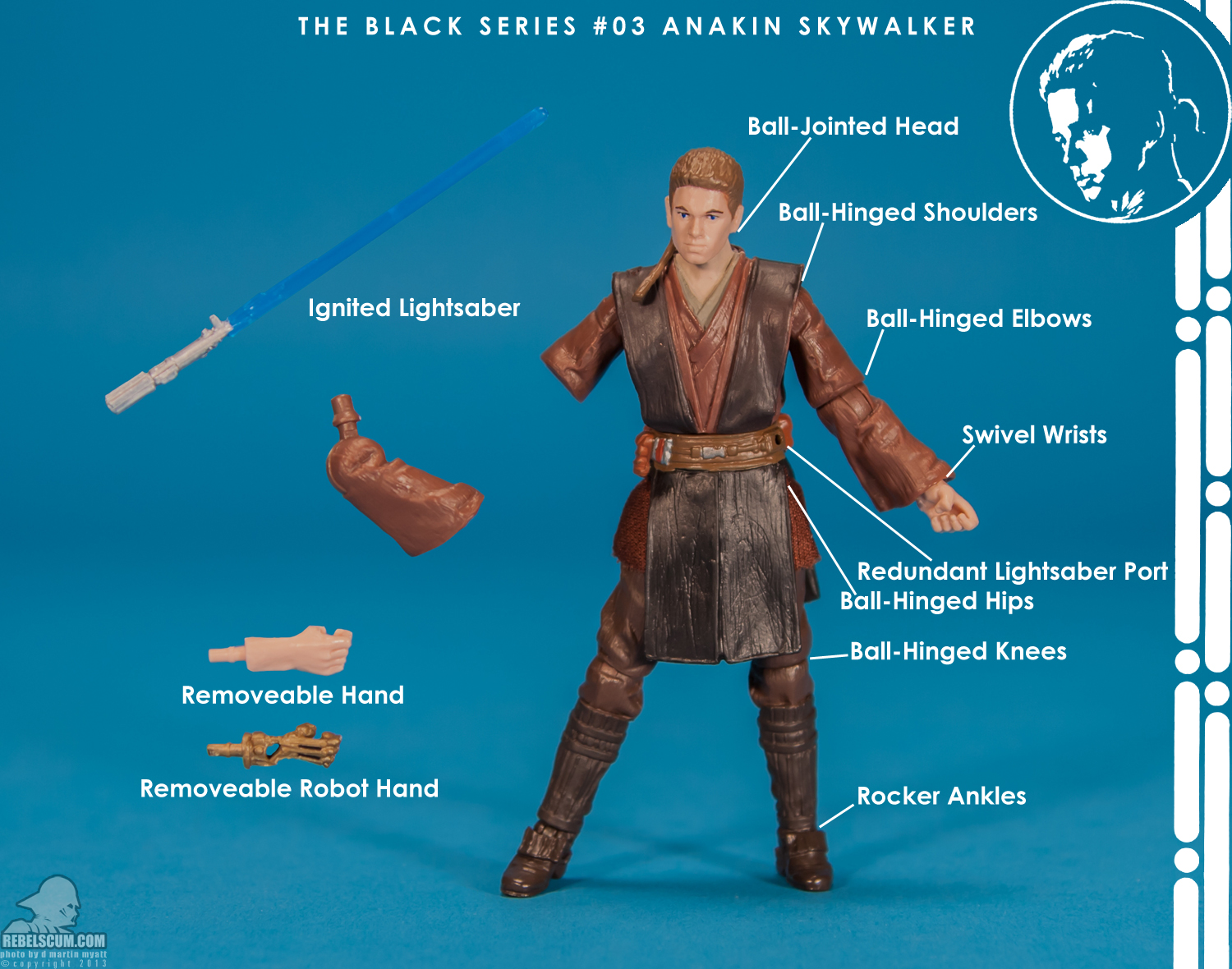
Losing a limb is usually a tragedy, but for a guy like Anakin Skywalker, it was basically Tuesday.
Most people remember the iconic scene in Attack of the Clones where Count Dooku neatly snips off Anakin’s right arm at the elbow. It’s a brutal moment. It’s also the first time we see the "Chosen One" actually look vulnerable. But what happened next—the transition from flesh to the Anakin Skywalker robot arm—is where the real story starts.
What Most People Get Wrong About the Mechno-Arm
You’ve probably wondered why Anakin’s arm looked like a stripped-down droid limb while his son, Luke, got a hyper-realistic version that looked exactly like a human hand.
It wasn't because the technology sucked in the Republic era. Honestly, the Old Republic was the height of medical tech. They had synth-flesh. They had advanced bacta treatments. They could have made Anakin look like he never touched a lightsaber.
The truth? Anakin chose the skeletal look.
He was a tinkerer. A gearhead. Since he was a kid on Tatooine building Podracers and protocol droids, he saw machines as things to be optimized. To Anakin, a realistic skin covering was just a layer of "fake" that got in the way of the hardware. He wanted to see the servos. He wanted to feel the torque.
The Specs of the Mechno-Arm
The specific model he was fitted with was a mechno-arm (specifically the Mechno-arm model by the Jedi medical corps). It wasn't just a hunk of metal. It was a sophisticated piece of neuro-interfaced tech.
- Sensory Input: It used a "synth-net neural interface." This basically means it plugged directly into his nerves. He could "feel" things, but it wasn't exactly like human touch.
- The Gold Fingertips: If you look closely at the end of Episode II, the fingertips are gold. These were electrostatic sensors. They gave him a simulated sense of pressure and texture.
- Strength: Those motorized knuckles weren't just for show. That arm had a crushing strength that would make a Wookiee jealous.
Why He Hated It (and Loved It)
There’s a bit of a contradiction in how Anakin felt about his new limb. On one hand, he was constantly messing with it. In the novel Queen’s Hope by E.K. Johnston, we find out he had a literal laundry list of modifications he wanted to make the second he got back to the Jedi Temple. He didn't just want a replacement; he wanted an upgrade.
But there was a psychological cost.
Every time he looked at that metal hand, he saw a failure. He saw the moment Dooku humbled him. In the Clone Wars series, you see him wearing a heavy leather glove over it almost 100% of the time. He didn't want his clones or the public to see him as a droid. There’s a specific kind of "machine-phobia" in the Star Wars galaxy, and Anakin was terrified of becoming "more machine than man" long before Obi-Wan ever said the line.
The Evolution to Darth Vader
By the time Revenge of the Sith rolls around, the arm is different. It’s bulkier. It’s more "muscular" in its design.
Anakin spent years during the Clone Wars swapping out parts and strengthening the alloy ligaments. He basically turned his prosthetic into a weapon. This is why, when he’s fighting Dooku again at the start of Episode III, he’s able to overpower the old man. It wasn't just the Dark Side; it was literally superior mechanical leverage.
Then Mustafar happened.
When Obi-Wan took the high ground, Anakin lost his remaining organic limbs. But ironically, his original mechno-arm—the one Dooku gave him—was the only limb he had left to crawl out of the lava with. He used that metal hand to dig into the black sand of Mustafar while his world burned.
The Vader Upgrade
Once Palpatine put him in the suit, the arm situation changed. The Emperor didn't give him top-of-the-line gear. In the 2017 Darth Vader comic series by Charles Soule, it's hinted that his new limbs were clunky and even painful on purpose.
Palpatine wanted Vader focused on his pain. He didn't want him too comfortable. Vader eventually had to use his own mechanical expertise to "fix" the cheap work the Imperial droids had done. He was essentially his own mechanic for decades.
Why the Arm Still Matters Today
The Anakin Skywalker robot arm isn't just a cool prop. It's a symbol of his loss of humanity. Every time he loses a piece of himself, he replaces it with something cold, hard, and efficient.
It also serves as the ultimate mirror for Luke. When Luke chops off Vader's hand in Return of the Jedi and sees the wires sparking, he looks at his own mechanical hand. That's the moment he realizes he’s becoming his father. It’s the hand—not the Force, not the lightsaber—that brings Luke back from the brink.
What You Can Learn From This
If you're a Star Wars fan looking to understand the lore deeper, pay attention to the gloves. Anakin wears a glove because of shame. Luke eventually stops wearing a glove on his prosthetic in the sequel trilogy because he’s accepted his scars.
The tech is cool, but the story is in the choice to show it or hide it.
If you're looking to replicate the look for cosplay or a collection, focus on the "weathering." Anakin's arm was never shiny for long. It was the arm of a general who spent three years in the mud and grit of the Clone Wars.
Next time you watch Episode III, watch the way Anakin flexes that right hand before a fight. It’s not just a reflex; it’s a man checking his calibration.
Actionable Takeaway for Lore Fans
- Read the Books: Check out Queen's Hope and the Darth Vader (2017) comic run. They provide the best "technical" and emotional context for his prosthetics.
- Watch the Hands: Re-watch the throne room scene in Return of the Jedi. The visual parallel between Vader's stump and Luke's hand is the most important "rhyme" in the entire saga.
- Know the Difference: Remember that Anakin's arm was custom-tuned by a prodigy (himself), while Vader's was a mass-produced Imperial prison. That explains a lot about his movement style.