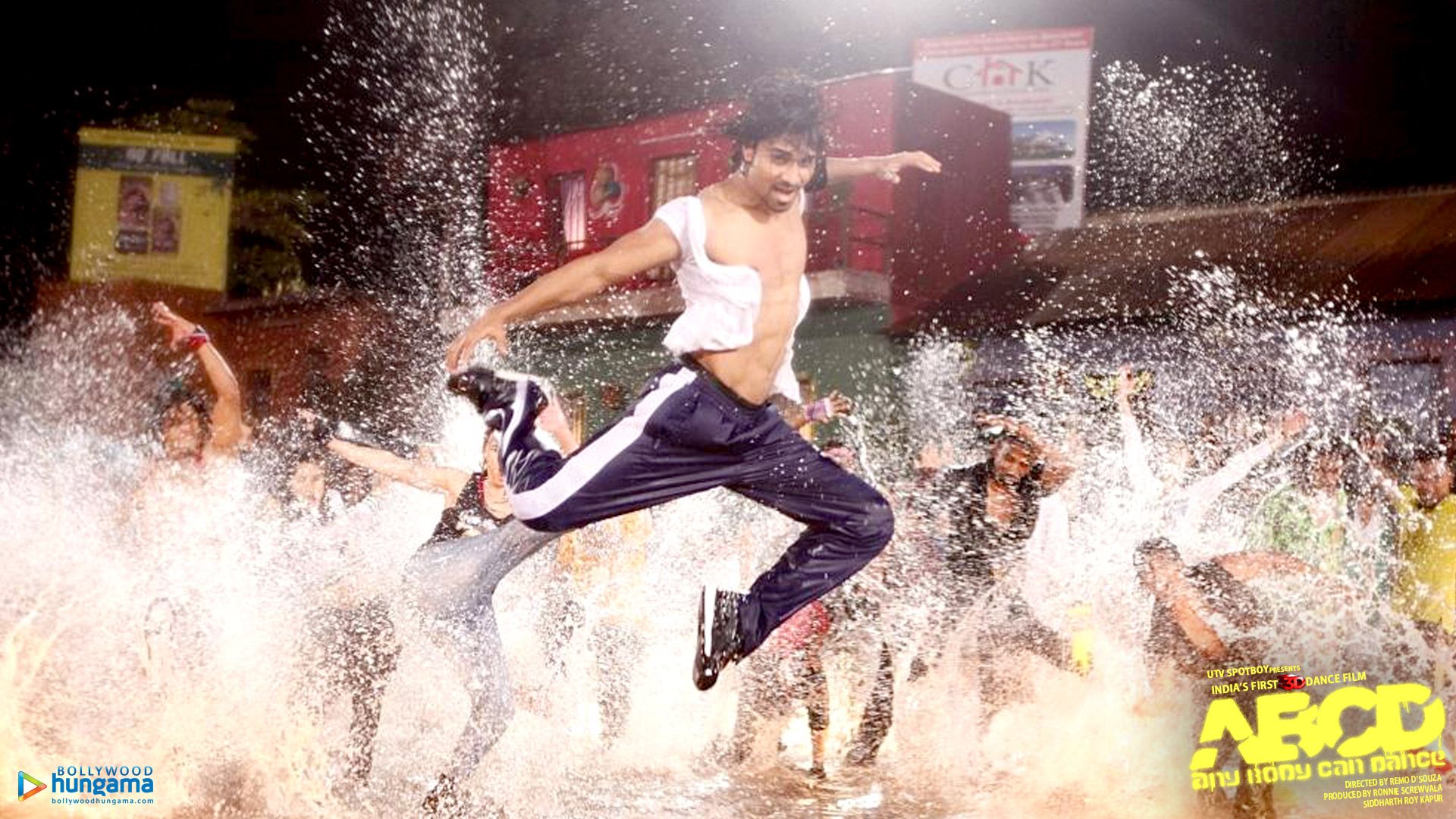
It was 2013, and Bollywood was busy churning out the usual masala hits. Big stars, overseas locations, and the same three dance steps everyone had seen for twenty years. Then came a film with no "A-list" hero, a director making his debut, and a title that sounded like a primary school workbook. ABCD Any Body Can Dance movie shouldn't have worked. On paper, it looked like a low-budget imitation of the Step Up franchise.
But it worked. Man, did it work.
Remo D'Souza, the man who eventually became a household name, took a massive gamble. He didn't just want to make a movie about dancing; he wanted to make a movie for dancers. He cast the winners and finalists of Dance India Dance—kids who were stars on television but complete unknowns on the big screen. It was raw. It was unpolished. And honestly, it was exactly what the audience didn't know they wanted.
The Story Behind ABCD Any Body Can Dance Movie
The plot isn't exactly reinventing the wheel. You've got Vishnu (played by the legend Prabhu Deva), a brilliant choreographer who gets kicked out of a fancy dance academy by his slimy business partner, Jehangir Khan (Kay Kay Menon). Vishnu is ready to pack it all in and head back to Chennai until he sees a group of local kids dancing during Ganpati Visarjan.
These aren't trained professionals. They're rivals from the slums of Mumbai, specifically the "Dhongri" area. They have zero discipline and a lot of anger.
Vishnu sees something in them. He forms a group called DDR—Dhongri Dance Revolution. The rest is your classic underdog story: internal bickering, family pressure, a tragic death (RIP Chandu), and the eventual showdown at the "Dance Dil Se" competition.
Why the Cast Was a Huge Risk
- Prabhu Deva: While a legend in the South, he hadn't led a Hindi film in ages. His Hindi was, let's be real, a bit shaky, but his feet did all the talking.
- The DID Clan: Dharmesh Yelande, Salman Yusuff Khan, Punit Pathak, and Raghav Juyal. These guys weren't "actors." They were technicians of movement.
- Lauren Gottlieb: An American dancer from So You Think You Can Dance who didn't speak a word of Hindi at the time.
It was a motley crew. But that’s what made it feel authentic. When Punit Pathak’s character, Chandu, struggles with his demons, or when Dharmesh and Salman’s characters clash over leadership, it didn't feel like "acting." It felt like watching real people who lived and breathed dance.
What Most People Get Wrong About the 3D
People think the 3D in ABCD Any Body Can Dance movie was just a gimmick to charge more for tickets. It actually served a purpose. Most Indian films at the time used 3D for horror or cheap jump scares. Remo used it to put the audience inside the choreography.
When the dancers jumped toward the camera or performed intricate hand-tutting sequences, the depth made you feel the sweat and the effort. It was India's first-ever 3D dance film. It cost somewhere between ₹12 crore and ₹42 crore depending on who you ask, which was a decent chunk of change for a film without a Khan or a Kapoor.
The Music That Wouldn't Quit
You can't talk about this movie without Sachin-Jigar. The soundtrack was a beast. "Bezubaan" became an anthem for every kid who felt like they had no voice but could express themselves through movement. Then you had "Shambhu Sutaya," which blended traditional Ganesh Chaturthi vibes with heavy bass and hip-hop.
Honestly, the music didn't just support the movie; it carried it. Even if you hated the predictable plot, you couldn't sit still when "Psycho Re" started playing.
Impact on the Indian Film Landscape
Before ABCD, dance in Bollywood was an accessory. It was something you did to break up the drama or sell a music video. After ABCD Any Body Can Dance movie, dance became the protagonist. It proved that you could sell a movie based on sheer talent alone.
It paved the way for ABCD 2, which went even bigger with Varun Dhawan and Shraddha Kapoor, and eventually Street Dancer 3D. But the original has a soul that the sequels sometimes lacked. It felt more grounded. It was about the "Gully" before Gully Boy was even a thing.
Real-World Success
The film wasn't just a critical darling; it was a "Super Hit." It raked in over ₹50 crore at the box office, which was massive for its scale. It proved to producers that there was a hungry market for genre-specific films.
It also turned the supporting cast into legitimate stars. Dharmesh, Punit, and Raghav aren't just background dancers anymore; they are judges, choreographers, and leads in their own right. That’s the real legacy of the movie.
What You Should Do If You're Watching It Now
If you’re revisiting the ABCD Any Body Can Dance movie in 2026, don’t go in looking for a complex, Oscar-winning script. The dialogue is sometimes cheesy. The "good vs. evil" trope with Kay Kay Menon is laid on pretty thick.
Instead, look at the technicality of the dance. Look at the "Muqabala" tribute. Pay attention to the climax sequence where they blend traditional Indian forms with contemporary hip-hop. That stuff still holds up remarkably well.
Actionable Takeaways for Fans
- Watch the original first: Don't skip to the sequels. The raw energy of the first film is unmatched.
- Check out the "making of" videos: Seeing how these non-actors prepared for their roles gives you a much deeper appreciation for the film.
- Look for the cameos: Keep an eye out for Saroj Khan and Remo himself in the "Psycho Re" track.
The film reminds us that "Anybody Can Dance" isn't just a catchy title. It's a philosophy. It’s about the fact that your background, your bank account, or your "hero" looks don't matter once the beat drops. If you've got the heart for it, the stage is yours.
To get the most out of your viewing, try to find the 3D version if you have the hardware, or at least a high-bitrate 4K stream. The cinematography by Vijay Kumar Arora is surprisingly sophisticated for a mid-budget 2013 flick, especially in the rain-soaked dance sequences. Focus on the footwork—Prabhu Deva at age 39 was still out-dancing kids half his age, and it’s a masterclass in fluidity.